Results by title
22 books match the query 'Identities'
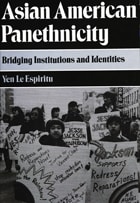
Asian American Panethnicity
Bridging Institutions and IdentitiesYen Espiritu
Temple University Press, 1993
Yen Le Espiritu explores the construction of large-scale affiliations, in which previously unrelated groups submerge their differences and assume a common identity. Making use of extensive interviews and statistical data, she examines how Asian panethnicity protects the rights and interests of all Asian American groups, including those, like the Vietnamese and Cambodians, which are less powerful and prominent than the Chinese and Japanese. By citing specific examples—educational discrimination, legal redress, anti-Asian violence, the development of Asian American Studies programs, social services, and affirmative action—the author demonstrates how Asian Americans came to understand that only by cooperating with each other would they succeed in fighting the racism they all faced.
Building Nineteenth-Century Latin America
Re-Rooted Cultures, Identities, and NationsWilliam Garrett Acree
Vanderbilt University Press, 2009
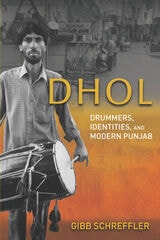
Dhol
Drummers, Identities, and Modern PunjabGibb Schreffler
University of Illinois Press, 2021
Gibb Schreffler draws on two decades of research to investigate dhol's place among the cultural formations within Punjabi communities. Analyzing the identities of musicians, Schreffler illuminates concepts of musical performance, looks at how these concepts help create or articulate Punjabi social structure, and explores identity construction at the intersections of ethnicity, class, and nationality in Punjab and the diaspora. As he shows, understanding the identities of dhol players is an ethical necessity that acknowledges their place in Punjabi cultural history and helps to repair their representation.
An engaging and rich ethnography, Dhol reveals a beloved instrumental form and the musical and social practices of its overlooked performers.
Divided Conversations
Identities, Leadership, and Change in Public Higher EducationKristin G. Esterberg
Vanderbilt University Press, 2013
Many faculty believe that one of their own who becomes an administrator has gone over to "the dark side." One provost recalled going for a beer with a faculty colleague and hearing the colleague complain about the latest memo "from the administration." He had to remind his friend of many years that he was the author of the offending document. Now he was "the administration." He realized that former colleagues now appeared in his office wearing suits and ties and referring to him by his title rather than his first name.
The disciplines serve as the tribes into which individual scholars are organized; the discipline is where a faculty member finds his community and identity. Administrators, on the other hand, identify with each other in trying to get the tribes to work together. Though most administrators came from the faculty ranks, their career paths take a different shape, especially in terms of mobility to another institution. It's not surprising that the two groups talk past each other.
A chapter is devoted to chairs of departments, who occupy an interesting middle ground. To their faculty, they can come across as a nurturing parent or a petty bureaucrat. The authors recommend training for chairs and administrative internships offered by the American Council on Education and other organizations.
The men and women on the campuses of the public universities described in the book make clear the challenges that universities face in terms of budgets, legislative politics, collective bargaining, rankings, and control of academic programs. If public institutions are truly to serve a public purpose, faculty and administrators must find ways to engage each other in shared conversation and management and find ways of engaging the university with the community.
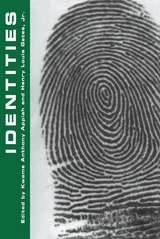
Identities
Edited by Kwame Anthony Appiah and Henry Louis Gates Jr.
University of Chicago Press, 1995
Leading scholars in literary criticism, anthropology, sociology, and philosophy explore such topics as "Gypsies" in the Western imagination, the mobilization of the West in Chinese television, the lesbian identity and the woman's gaze in fashion photography, and the regulation of black women's bodies in early 20th-century urban areas. This collection of twenty articles brings together the special issue of Critical Inquiry entitled "Identities" (Summer 1992), two other previously published essays, and five previously published critical responses and rejoinders, all of which is interrogated in two new essays by Michael Gorra and Judith Butler.
Contributors include Elizabeth Abel, Kwame Anthony Appiah, Akeel Bilgrami, Daniel Boyarin, Jonathan Boyarin, Judith Butler, Hazel V. Carby, Xiaomei Chen, Diana Fuss, Henry Louis Gates, Jr., Avery Gordon, Michael Gorra, Cheryl Herr, Saree S. Makdisi, Walter Benn Michaels, Christopher Newfield, Gananath Obeyesekere, Molly Anne Rothenberg, Gayatri Chakravorty Spivak, Sara Suleri, Katie Trumpener, and Joseph Valente.
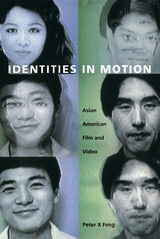
Identities in Motion
Asian American Film and VideoPeter X Feng
Duke University Press, 2002
Peter X Feng considers a wide range of works—from genres such as detective films to romantic comedies to ethnographic films, documentaries, avant-garde videos, newsreels, travelogues, and even home movies. Feng begins by examining movies about three crucial moments that defined the American nation and the roles of Asian Americans within it: the arrival of Chinese and Japanese women in the American West and Hawai’i; the incorporation of the Philippines into the U.S. empire; and the internment of Japanese Americans during World War II. In subsequent chapters Feng discusses cinematic depictions of ideological conflicts among Asian Americans and of the complex forces that compel migration, extending his nuanced analysis of the intersections of sexuality, ethnicity, and nationalist movements.
Identities in Motion illuminates the fluidity of Asian American identities, expressing the diversity and complexity of Asian Americans—including Filipinos, Indonesians, Chinese, Japanese, Vietnamese, Laotians, Indians, and Koreans—from the nineteenth to the twenty-first century.
Identities, Borders, Orders
Rethinking International Relations TheoryMathias Albert
University of Minnesota Press, 2001
An interdisciplinary exploration of the role of sovereignty, national identity, and borders in international politics.
Political Science
An interdisciplinary exploration of the role of sovereignty, national identity, and borders in international politics.Informed by current debates in social theory, Identities, Borders, Orders brings together a multinational group of respected scholars to seek and encourage imaginative adaptations and recombinations of concepts, theories, and perspectives across disciplinary lines. These contributors take up a variety of substantive, theoretical, and normative issues such as migration, nationalism, citizenship, human rights, democracy, and security. Together, their essays contribute significantly to our understanding of sovereignty, national identity, and borders. Contributors: Didier Bigo, Institut d’Etudes Politiques de Paris; Lothar Brock, U of Frankfurt am Main; Chris Brown, London School of Economics; Neil Harvey, New Mexico State U; Martin O. Heisler, U of Maryland; Rey Koslowski, Rutgers U; Friedrich Kratochwil, Ludwig Maximilians U, Munich; Ronnie D. Lipschutz, UC Santa Cruz; Richard W. Mansbach, Iowa State U; David Newman, Ben Gurion U of the Negev, Israel; Antje Wiener, Queen’s U of Belfast; and Frankie Wilmer, Montana State U.
Identities, Politics, and Rights
Austin Sarat and Thomas R. Kearns, Editors
University of Michigan Press, 1997
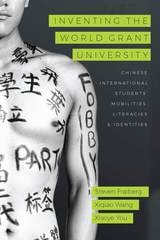
Inventing the World Grant University
Chinese International Students’ Mobilities, Literacies, and IdentitiesSteven Fraiberg
Utah State University Press, 2017
Through an exploration of the literacy practices of undergraduate Chinese international students in the United States and China, Inventing the World Grant University demonstrates the ways in which literacies, mobilities, and transnational identities are constructed and enacted across institutional and geographic borders.
Steven Fraiberg, Xiqiao Wang, and Xiaoye You develop a mobile literacies framework for studying undergraduate Chinese international students enrolling at Western institutions, whose numbers have increased in recent years. Focusing on the literacy practices of these students at Michigan State University and at Sinoway International Education Summer School in China, Fraiberg, Wang, and You draw on a range of mobile methods to map the travel of languages, identities, ideologies, pedagogies, literacies, and underground economies across continents. Case studies of administrators’, teachers’, and students’ everyday literacy practices provide insight into the material and social structures shaping and shaped by a globalizing educational landscape.
Advocating an expansion of focus from translingualism to transliteracy and from single-site analyses to multi-site approaches, this volume situates local classroom practices in the context of the world grant university. Inventing the World Grant University contributes to scholarship in mobility, literacy, spatial theory, transnationalism, and disciplinary enculturation. It further offers insight into the opportunities and challenges of enacting culturally relevant pedagogies.
Israeli Cinema
Identities in MotionEdited by Miri Talmon and Yaron Peleg
University of Texas Press, 2011
With top billing at many film forums around the world, as well as a string of prestigious prizes, including consecutive nominations for the Best Foreign Film Oscar, Israeli films have become one of the most visible and promising cinemas in the first decade of the twenty-first century, an intriguing and vibrant site for the representation of Israeli realities. Yet two decades have passed since the last wide-ranging scholarly overview of Israeli cinema, creating a need for a new, state-of-the-art analysis of this exciting cinematic oeuvre.
The first anthology of its kind in English, Israeli Cinema: Identities in Motion presents a collection of specially commissioned articles in which leading Israeli film scholars examine Israeli cinema as a prism that refracts collective Israeli identities through the medium and art of motion pictures. The contributors address several broad themes: the nation imagined on film; war, conflict, and trauma; gender, sexuality, and ethnicity; religion and Judaism; discourses of place in the age of globalism; filming the Palestinian Other; and new cinematic discourses. The authors' illuminating readings of Israeli films reveal that Israeli cinema offers rare visual and narrative insights into the complex national, social, and multicultural Israeli universe, transcending the partial and superficial images of this culture in world media.
Making Modern Love
Sexual Narratives and Identities in Interwar BritainLisa Z. Sigel
Temple University Press, 2012
After the Great War, British men and women grappled with their ignorance about sexuality and desire. Seeking advice and information from doctors, magazines, and each other, they wrote tens of thousands of letters about themselves as sexual subjects. In these letters, they disclosed their uncertainties, their behaviors, and the role of sexuality in their lives. Their fascinating narratives tell how people sought to unleash their imaginations and fashion new identities.
Making Modern Love shows how readers embraced popular media—self-help books, fetish magazines, and advice columns—as a source of information about sexuality and a means for telling their own stories. From longings for transcendent marital union to fantasies of fetish-wear, cross-dressing, and whipping, men and women revealed a surprising range of desires and behaviors (queer and otherwise) that have been largely disregarded until now.
Lisa Sigel mines these provocative narratives to understand how they contributed to new subjectivities and the development of modern sexualities.

Morrissey
Fandom, Representations and IdentitiesEdited by Eoin Devereux, Aileen Dillane, and Martin Power
Intellect Books, 2011
An influential star of British pop for more than three decades, Morrissey is known for his outspoken and often controversial views on class, ethnicity, and sexuality. Among critics and his many fans, he has long been seen as an anti-establishment figure who continues to provoke devotion, argument, and spirited debate.
This is the first collection of academic essays to focus exclusively on Morrissey’s solo career, and this important book offers a nuanced and rich reading of his highly influential creative and cultural output. Covering a broad range of academic disciplines and approaches, including musicology, ethnography, sociology, and cultural studies, these essays will be a must for fans of Morrissey or the Smiths, or those seeking to make sense of the many fascinating complexities of this global icon and controversial figure.
Political Peoplehood
The Roles of Values, Interests, and IdentitiesRogers M. Smith
University of Chicago Press, 2015
This book gathers Smith’s most important writings on peoplehood to build a coherent theoretical and historical account of what peoplehood has meant in American political life, informed by frequent comparisons to other political societies. From the revolutionary-era adoption of individual rights rhetoric to today’s battles over the place of immigrants in a rapidly diversifying American society, Smith shows how modern America’s growing embrace of overlapping identities is in tension with the providentialism and exceptionalism that continue to make up so much of what many believe it means to be an American.
A major work that brings a lifetime of thought to bear on questions that are as urgent now as they have ever been, Political Peoplehood will be essential reading for social scientists, political philosophers, policy analysts, and historians alike.
Politics Of Selfhood
Bodies And Identities In Global CapitalismRichard Harvey Brown
University of Minnesota Press, 2003
Looks at the ways social change is expressed through debates over identities and bodies
In bodies and selves, we can see politics, economics, and culture play out, and the tensions and crises of society made visible. The women’s movement, lobbies for the elderly, pro-choice and pro-life movements, AIDS research and education, pedophilia and repressed memory, global sports spectacles, organ donor networks, campaigns for safe sex, chastity, or preventive medicine—all are aspects of the contemporary politics of bodies and identities touched on in this book. Three broad themes run through the collection: how the body is constructed in various ways for different purposes, how the electronic media and its uses shape selves and sensualities and contribute to civic discourse, and how global capitalism acts as a direct force in these processes. By taking a distinctly cross-cultural and comparative approach, this volume explores more fully than ever the political, economic, institutional, and cultural settings of corporeality, identity, and representation.
Contributors: Antonella Fabri, John Jay College and New York Academy of Medicine; Eva Illouz, Hebrew U of Jerusalem; Philip W. Jenks, Portland State U; Lauren Langman, Loyola U; Timothy W. Luke, Virginia Polytechnic Institute and State U; Timothy McGettigan, Colorado State U, Pueblo; Margaret J. Tally, SUNY, Empire State College.
Precarious Professionals
Gender, Identities and Social Change in Modern BritainEdited by Heidi Egginton and Zoë Thomas
University of London Press, 2021
Precarious Professionals uncovers the inequalities and insecurities which lay at the heart of professional life in nineteenth and twentieth-century Britain. This book challenges conventional categories in the history of work, exploring instead the everyday labor of maintaining a professional identity on the margins of the traditional professions. Situating new historical perspectives on gender at the forefront of their research, the contributors explore how professional cultures could not only define themselves against but often flourished outside of, the confines of patriarchal codes and structures.
Precarious Professionals offers twelve fascinating case studies, ranging between the 1840s and the 1960s. From pioneering female lawyers and scientists to ballet dancers, secretaries, historians, humanitarian relief workers, social researchers, and Cold War diplomats, this book reveals that precarity was a thread woven throughout the very fabric of modern professional life. Together, these essays enrich our understanding of the histories and mysteries of professional identity and help us to reimagine the future of work in precarious times.
Representations on the Margins of Europe
Politics and Identities in the Baltic and South Caucasian StatesEdited by Tsypylma Darieva and Wolfgang Kaschuba
Campus Verlag, 2007
Sociology Confronts the Holocaust
Memories and Identities in Jewish DiasporasJudith M. Gerson and Diane L. Wolf, eds.
Duke University Press, 2007
Contributors explore diasporic Jewish identities in the post-Holocaust years; the use of sociohistorical analysis in studying the genocide; immigration and transnationalism; and collective action, collective guilt, and collective memory. In so doing, they illuminate various facets of the Holocaust, and especially post-Holocaust, experience. They investigate topics including heritage tours that take young American Jews to Israel and Eastern Europe, the politics of memory in Steven Spielberg’s collection of Shoah testimonies, and the ways that Jews who immigrated to the United States after the collapse of the Soviet Union understood nationality, religion, and identity. Contributors examine the Warsaw Ghetto Uprising of 1943 in light of collective action research and investigate the various ways that the Holocaust has been imagined and recalled in Germany, Israel, and the United States. Included in the commentaries about sociology and Holocaust studies is an essay reflecting on how to study the Holocaust (and other atrocities) ethically, without exploiting violence and suffering.
Contributors. Richard Alba, Caryn Aviv, Ethel Brooks, Rachel L. Einwohner, Yen Le Espiritu, Leela Fernandes, Kathie Friedman, Judith M. Gerson, Steven J. Gold , Debra R. Kaufman, Rhonda F. Levine , Daniel Levy, Jeffrey K. Olick, Martin Oppenheimer, David Shneer, Irina Carlota Silber, Arlene Stein, Natan Sznaider, Suzanne Vromen, Chaim Waxman, Richard Williams, Diane L. Wolf
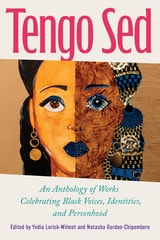
Tengo Sed
An Anthology of Works Celebrating Black Voices, Identities, and PersonhoodEdited by Yndia Lorick-Wilmot and Natasha Gordon-Chipembere
University of Illinois Press, 2026
A blend of text and visuals in genre fiction, nonfiction, poetry, memoir, art, and music, Tengo Sed engages in the expansive and nuanced meanings of Blackness across the diaspora, traversing linguistic, geographic, material, and formal boundaries. The collection interrogates how African-descended individuals theorize and articulate their racial, gender, ethnic, and national identities in relation to dominant discourse. Underscored by a transnational feminist cultural studies approach, the collection builds upon the legacy of The Sisterhood—an activist-literary collective founded by Alice Walker and June Jordan—by providing a contemporary platform for Black creatives to amplify their voices.
Singular and inspirational, Tengo Sed centers storytelling, self-making, and artistic practice, and contributes to ongoing dialogues on Black identity, liberation, and creative sovereignty.
Contributors: Vilna Bashi, Khytie Brown, Masauko Chipembere, Maria DeLongoria, Rosalina Diaz, Summer Edward, Natasha Gordon-Chipembere, Tonya Hegamin, Tiffani J. Johnson, Daphne Lamothe, Gabrielle Lawrence, Yndia S. Lorick-Wilmot, April Mojica-Clement, Courtney Desiree Morris, Anton Nimblett, Kasandra Pantoja, Michael D. Poole, Nelly Rosario, Alicia Anabel Santos, Michele L. Simms-Burton, Andrea Stith, Tawana Thompson, Tracey L. Walters, and N’deye Walton, and Janvieve Williams Comrie

Transmen and FTMs
Identities, Bodies, Genders, and SexualitiesJason Cromwell
University of Illinois Press, 1999
In clarifying how transmen and FTMs define and validate their lives, as opposed to how society attempts to pigeonhole and belittle them, Cromwell shows how female-to-male transpeople have been made virtually invisible by male-dominated discourses. He considers cross-cultural data on female gender diversity, historical evidence of female-bodied people who have lived as men, and contemporary transmen and FTMs. He also addresses how FTMs and transmen are working to challenge the mental illness model of transness as well as other misconceptions.
Transmen and FTMs seeks to reframe the dialogue about gender identity and move away from regarding fixed gender categories as normative. By redefining gender diversity from a manifestation of pathology to a human condition Transmen and FTMs promotes a fuller understanding of these individuals as persons in their own right.
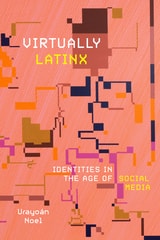
Virtually Latinx
Identities in the Age of Social MediaUrayoán Noel
University of Texas Press, 2026
Examining how Latinx identity reimagines and connects communities through social media.
The very idea of Latinidad flattens identities, subsuming diverse peoples under a single racialized framework useful for corporate and political marketing. But it is not only ethnic identity that Latinidad tends to erase. In the first-ever study of Latinx social media, Urayoán Noel shows how historically marginalized Latinxs—including Black, Trans, undocumented, and disabled people—have used digital platforms to challenge hegemonic Latinidad and to build alternatives communities.
Incorporating elements of history, ethnography, and performance studies, Virtually Latinx traces the evolution of Latinx social media and blogging since the early 1990s, focusing on creative movements and vocabularies emerging and consolidating online. From Chicano/LatinoNet, Latina Lista, and Remezcla, to activists and performers on TikTok, online creators and platforms have spurred modes of art and activism that counter both Latinidad’s essentialized body politics and Big Tech’s domination of the information sphere. In dialogue with scholars of media, virtuality, and identity, Noel theorizes how hashtags like #Afrolatina, #Latinx, and #Latine have not only facilitated online exchange but also nurtured new knowledge formations surrounding Black, feminist, undocuqueer, Trans, and disability poetics and politics.
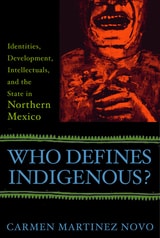
Who Defines Indigenous?
Identities, Development, Intellectuals, and the State in Northern MexicoMartinez Novo, Carmen
Rutgers University Press, 2006
For years, conventional scholarship has argued that minority groups are better served when the majority groups that absorb them are willing to recognize and allow for the preservation of indigenous identities. But is the reinforcement of ethnic identity among migrant groups always a process of self-liberation? In this surprising study, Carmen Martínez Novo draws on her ethnographic research of the Mixtec Indians’ migration from the southwest of Mexico to Baja California to show that sometimes the push for indigenous labels is more a process of external oppression than it is of minority empowerment.
In Baja California, many Mixtec Indians have not made efforts to align themselves as a coherent demographic. Instead, Martínez Novo finds that the push for indigenous identity in this region has come from local government agencies, economic elites, intellectuals, and other external agents. Their concern has not only been over the loss of rich culture. Rather, the pressure to maintain an indigenous identity has stemmed from the desire to secure a reproducible abundance of cheap “Indian” labor. Meanwhile, many Mixtecs reject their ethnic label precisely because being “Indian” means being a commercial agriculture low-wage worker or an urban informal street vendor—an identity that interferes with their goals of social mobility and economic integration.
Bringing a critical new perspective to the complex intersection among government and scholarly agendas, economic development, global identity politics, and the aspirations of local migrants, this provocative book is essential reading for scholars working in the fields of sociology, anthropology, and ethnic studies.
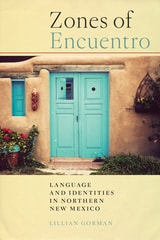
Zones of Encuentro
Language and Identities in Northern New MexicoLillian Gorman
The Ohio State University Press, 2024
Winner, 2025 New Mexico Book Awards, Multicultural Category
Finalist, New Mexico Book Awards, BIPOC Author or Subject Category and First Book Category
Working at the intersection of Latina/o/x cultural studies, sociocultural linguistics, and Chicana feminist studies, Lillian Gorman’s Zones of Encuentro takes an in-depth look at the cultural and linguistic interactions between two distinct Latina/o/x communities in the region: Nuevomexicanos (Hispanic people who trace their presence in the region to colonial times and whose families have historically spoken Traditional New Mexican Spanish, or TNMS) and first-generation Mexicano immigrants (who tend to speak Mexican Spanish). Gorman examines the everyday lived language experiences and ethnolinguistic identities of Mexicanos and Nuevomexicanos together, specifically through the case of mixed Mexicano-Nuevomexicano families. Through an interdisciplinary critical reading of ethnographic data, pláticas (informal conversations that gather family and community knowledge), interviews, articles, and historical memoirs, Gorman analyzes language ideologies, identity formations, and language practices by exploring complex spaces of encounter within Mexicano-Nuevomexicano families. Zones of Encuentro complicates homogeneous notions of language and identity and contemplates what a shared cultural and linguistic homeplace looks like for Mexicanos and Nuevomexicanos in northern New Mexico.