Results by title
5 books match the query 'Idols and images'
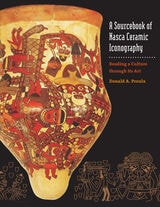
A Sourcebook of Nasca Ceramic Iconography
Reading a Culture through Its ArtProulx, Donald A.
University of Iowa Press, 2006
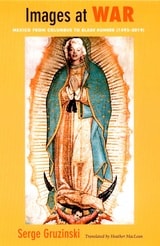
Images at War
Mexico From Columbus to Blade Runner (1492–2019)Serge Gruzinski
Duke University Press, 2001
Although the baroque image played a decisive role in many arenas, especially that of conquest and New World colonization, its powerful resonance in the sphere of religion is a focal point of Gruzinski’s study. In his analysis of how images conveyed meaning across linguistic barriers, he uncovers recurring themes of false images, less-than-perfect replicas, the uprooting of peoples and cultural memories, and the violence of iconoclastic destruction. He shows how various ethnic groups—Indians, blacks, Europeans—left their distinct marks on images of colonialism and religion, coopting them into expressions of identity or instruments of rebellion. As Gruzinski’s story unfolds, he tells of Aztec idols, the cult of the Virgin of Guadalupe, conquistadors, Franciscans, and neoclassical attempts to repress the baroque. In the final chapter he discusses the political and religious implications of contemporary imagery—such as that in Mexican soap operas—and speculates about the future of images in Latin America.
Originally written in French, this work makes available to an English audience a seminal study of Mexico and the role of the image in the New World.
Phoenician Aniconism in Its Mediterranean and Ancient Near Eastern Contexts
Brian R. Doak
SBL Press, 2015
The Hebrew Bible contains a prohibition against divine images (Exod 20:2-5a). Explanations for this command are legion, usually focusing on the unique status of Israel's deity within the context of the broader Near Eastern and Mediterranean worlds. Doak explores whether or not Israel was truly alone in its severe stance against idols. This book focuses on one particular aspect of this iconographic context in Israel's Iron Age world: that of the Phoenicians. The question of whether Phoenicians employed aniconic (as opposed to iconic) representational techniques has significance not only for the many poorly understood aspects of Phoenician religion generally, but also for the question of whether aniconism can be considered a broader trend among the Semitic populations of the ancient Near East.
Features:
- More than fifty images and illustrations
- Examination of textual and archaeological evidence
- Application of art historical methods

The Idols of ISIS
From Assyria to the InternetAaron Tugendhaft
University of Chicago Press, 2020
Beginning with the Islamic State’s claim that the smashed objects were idols of the “age of ignorance,” Aaron Tugendhaft questions whether there can be any political life without idolatry. He then explores the various roles Mesopotamian sculpture has played in European imperial competition, the development of artistic modernism, and the formation of Iraqi national identity, showing how this history reverberates in the choice of the Mosul Museum as performance stage. Finally, he compares the Islamic State’s production of images to the ways in which images circulated in ancient Assyria and asks how digitization has transformed politics in the age of social media. An elegant and accessibly written introduction to the complexities of such events, The Idols of ISIS is ideal for students and readers seeking a richer cultural perspective than the media usually provides.
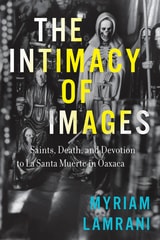
The Intimacy of Images
Saints, Death, and Devotion to La Santa Muerte in OaxacaMyriam Lamrani
University of Texas Press, 2024
2026 Edie Turner First Book Prize in Ethnographic Writing, Society for Humanistic Anthropology
La Santa Muerte becomes a lens for understanding how Oaxacans relate to saints, loved ones, and other “special dead.”
In Oaxaca, images of saints and loved ones, as well as of victims of political or criminal violence, are seemingly everywhere. While Oaxacans relate to all sorts of “special dead,” they are particularly devoted to La Santa Muerte (Saint Death), a female reaper-like figure whose popularity has risen in tandem with violence throughout Mexico.
The Intimacy of Images recontextualizes Oaxacans’ relationships with their “special dead” through the lens of La Santa Muerte, examining how devotees closely interact with what Lamrani terms “intimate images”: not only devotional effigies but also photographs, films, tattoos, and murals, and even dreams and visions. Though Mexicans have a well-known cultural familiarity with death, Lamrani argues that devotion to La Santa Muerte builds upon this intimacy even as it also participates in the production of terror and reflects political and criminal violence. Ultimately, Lamrani finds that these human-image interactions represent more than Catholic devotion; they reveal the secrets of Oaxacan political, religious, and social life, embody changing relationships to mortality and violence, and even offer insight into the practice of anthropology itself.