Results by title
3 books match the query 'Ignatius'
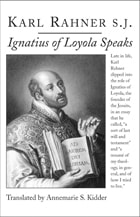
Ignatius of Loyola Speaks
Karl Rahner
St. Augustine's Press, 2013
[more]
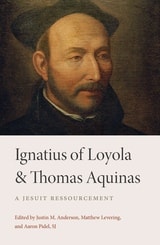
Ignatius of Loyola and Thomas Aquinas
A Jesuit RessourcementJustin M. Anderson
Catholic University of America Press, 2023
Though the relationship between Jesuits and Dominicans has historically been marked by theological controversy, Ignatius of Loyola, the founder of the Jesuits, shows remarkable affinity for the Thomistic tradition, the tradition advanced above all by the Dominican order. When writing the Jesuit Constitutions, in fact, Ignatius made Thomas Aquinas’s Summa Theologiae the primary textbook for Jesuit theological formation. The contributions to this volume—originating from Jesuits, Dominicans, and lay scholars alike—explore different aspects of the complex yet illuminating relationship between Ignatius and Thomas. The themes range from the general relationship between the early Jesuits and scholastic theology to the attempts by Francisco de Toledo, the first Jesuit cardinal, to apply Thomistic reasoning to the religious and legal status of Jewish converts to Christianity. Other contributions compare Ignatius and Thomas on topics of significant interest for dogmatic, sacramental, and spiritual theology: spiritual experience, the ordering of the passions, the use of the imagination, prudence and discernment of spirits, frequent communion, Mariology, the “hierarchical church,” and the limits of obedience.
Students of Ignatius of Loyola, Thomas Aquinas, second scholasticism, Christian-Jewish relations, and spiritual theology in general will find this volume an invaluable contribution.
[more]
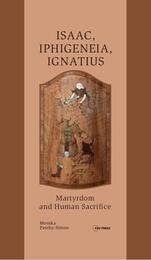
Isaac, Iphigeneia, and Ignatius
Martyrdom and Human SacrificeMonika Pesthy-Simon
Central European University Press, 2017
What is the meaning of the martyr’s sacrifice? Is it true that the martyr imitates Christ? After the “one and eternal” sacrifice of Jesus why are from time to time new (and often quite numerous) sacrifices necessary? What is the underlying concept concerning the divinity? How do these ideas survive in present times? These are the kind of questions behind the inquiries in this monograph. The author investigates martyrdom as a (voluntary) human sacrifice and wishes to demonstrate how human sacrifice has been turned into martyrdom. The two emblematic figures of this transformation are Iphigeneia and Isaac. Pesthy argues that all the peoples in the environment in which Christianity came into being are characterized by a very ambiguous and hypocritical attitude toward human sacrifice: while in theory they condemn it as barbarian and belonging to bygone times, in concrete cases they accept, admire and practice it. The same attitude survives in Christianity in which martyrs replace the human sacrifice of olden days: they are real sacrifices, not symbolical ones. Our feelings about martyrs can be very different: we may admire their unbending courage and heroism or be irritated by their stubbornness, or even feel disgusted at the fanaticism with which they strove for death. But whatever our feelings may be, we must admit that a very strong motivation is needed to accept voluntarily or even seek death (and, in the majority of cases, a very painful death at that).
[more]