Results by title
752 books match the query 'Illinois' and 63 start with a
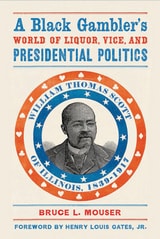
A Black Gambler’s World of Liquor, Vice, and Presidential Politics
William Thomas Scott of Illinois, 1839–1917Bruce L. Mouser
University of Wisconsin Press, 2014
Scott helped build the National Negro Liberty Party to forward economic, political, and legal rights for his race. But the hustling that had brought him business success proved his undoing as a national political figure. He was the NNLP's initial presidential nominee, only to be replaced by a better-educated and more socially acceptable candidate, George Edwin Taylor.
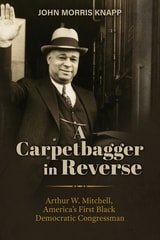
A Carpetbagger in Reverse
Arthur W. Mitchell, America's First Black Democratic CongressmanJohn Morris Knapp
University of Alabama Press, 2025
From Alabama to Congress—Arthur W. Mitchell’s fight for justice rewrote the rules of Black political power.
A Carpetbagger in Reverse offers a landmark reassessment of the life, career, and accomplishments of groundbreaking Congressman Arthur W. Mitchell, the first Black Democrat elected to Congress and the only Black member of Congress during his four terms of service from 1935 to 1943.
Born to former enslaved people in Alabama in 1883, Mitchell studied with Booker T. Washington at Tuskegee Institute and later moved to Washington DC and became a lawyer. He continued his career in Chicago, where the Great Migration had helped transform the city’s South Side into a vibrant, multiracial enclave.
As a congressman, Mitchell helped to create an enduring alliance between Black Americans and the Democratic party. Seeing his primary role as representing the South’s disempowered Black population, his belief that solutions to the region’s racial problems should arise from a new cadre of locally trained leaders brought him into frequent, vituperative conflict with the NAACP, the Republican Party, and the Black press. The first Black lawyer to argue successfully before the Supreme Court, his unanimous victory in Mitchell v. United States would have long-term consequences for the Civil Rights Movement.
A Carpetbagger in Reverse is the first publication significantly based on Mitchell’s papers, an essential and often overlooked source of insights about the development of Black political and culture life in the 1930s and 1940s.

A Catalogue of the Pre-1500 Western Manuscript Books at the Newberry Library
Paul Saenger
University of Chicago Press, 1989
Some of the books, such as those from the libraries of Philip the Good and Anne of Brittany, are beautifully illuminated. But the collection also includes an unusual array of "typical" medieval books, chosen not for their beauty but for their paleographical, codicological, and textual interest. Such codices include an eleventh-century Carthusian monk, and numerous books of hours adapted for feminine use. Paul Saenger has painstakingly identified the text, illumination, physical structure, and provenance for each of the more than 200 books in the collection to provide an exemplary guide to literate culture in the late Middle Ages.
This catalogue, carefully researched and handsomely illustrated, will be an invaluable resource for historians, art historians, paleographers, bibliographers, and collectors.
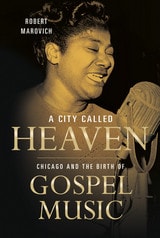
A City Called Heaven
Chicago and the Birth of Gospel MusicRobert Marovich
University of Illinois Press, 2015
A City Called Heaven celebrates a sound too mighty and too joyous for even church walls to hold.
A Contest without Winners
How Students Experience Competitive School ChoiceKate Phillippo
University of Minnesota Press, 2019
Seeing the consequences of competitive school choice policy through students’ eyes
While policymakers often justify school choice as a means to alleviate opportunity and achievement gaps, an unanticipated effect is increased competition over access to coveted, high-performing schools. In A Contest without Winners, Kate Phillippo follows a diverse group of Chicago students through the processes of researching, applying to, and enrolling in public high school. Throughout this journey, students prove themselves powerful policy actors who carry out and redefine competitive choice.
Phillippo’s work amplifies the voices of students—rather than the parents, educators, public intellectuals, and policymakers who so often inform school choice research—and investigates how students interact with and emerge from competitive choice academically, developmentally, and civically. Through students’ experiences, she shows how competitive choice legitimates and exacerbates existing social inequalities; collides with students’ developmental vulnerability to messages about their ability, merit, and potential; and encourages young people’s individualistic actions as they come to feel that they must earn their educational rights. From urban infrastructure to income inequality to racial segregation, Phillippo examines the factors that shape students’ policy enactment and interpretation, as policymakers and educators ask students to compete for access to public resources.
With competitive choice, even the winners—the lucky few admitted to their dream schools—don’t outright win. A Contest without Winners challenges meritocratic and market-driven notions of opportunity creation for young people and raises critical questions about the goals we have for public schooling.
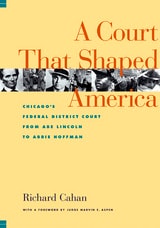
A Court That Shaped America
Chicago's Federal District Court from Abe Lincoln to Abbie HoffmanRichard Cahan
Northwestern University Press, 2002
A Court That Shaped America traces the flesh-and-blood courtroom scenes from the district's first cases in the early nineteenth century through the turn of the millennium. Historical figures—including Mormon leader Joseph Smith, inventor Thomas Edison, and author Mark Twain—as well as contemporary superstars like Michael Jackson and Oprah Winfrey have all had their day in the Northern Illinois court. Some were victorious; some came out scathed. This book examines these great trials and the people behind them to offer a unique look at Chicago and U.S. history.
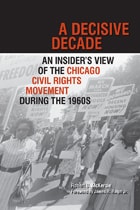
A Decisive Decade
An Insider's View of the Chicago Civil Rights Movement during the 1960sRobert B. McKersie, Foreword by James R. Ralph Jr.
Southern Illinois University Press, 2013
The deeply personal story of a historic time in Chicago, Robert B. McKersie’s A Decisive Decade follows the unfolding action of the Civil Rights Movement as it played out in the Windy City. McKersie’s participation as a white activist for black rights offers a unique, firsthand viewpoint on the debates, boycotts, marches, and negotiations that would forever change the face of race relations in Chicago and the United States at large.
Described within are McKersie’s intimate observations on events as they developed during his participation in such historic occasions as the impassioned marches for open housing in Chicago; the campaign to end school segregation under Chicago Schools Superintendent Benjamin Willis; Operation Breadbasket’s push to develop economic opportunities for black citizens; and dialogs with corporations to provide more jobs for blacks in Chicago. In addition, McKersie provides up close and personal descriptions of the iconic Civil Rights leaders who spearheaded some of the most formative battles of Chicago’s Civil Rights movement, including Dr. Martin Luther King, Jr., Reverend Jesse Jackson, Timuel Black Jr. and W. Alvin Pitcher. The author illumines the tensions experienced by two major institutions in responding to the demands of the civil rights movement: the university and the church. Packed with historical detail and personal anecdotes of these history-making years, A Decisive Decade offers a never-before-seen perspective on one of our nation’s most tumultuous eras.
A Fatal Drifting Apart
Democratic Social Knowledge and Chicago ReformLaura M. Westhoff
The Ohio State University Press, 2007
A Fatal Drifting Apart: Democratic Social Knowledge and Chicago Reform explores the efforts of diverse groups within Chicago during the Progressive Era. This backdrop of industrialization, emerging classes, and ethnic and racial pluralism frequently riven with class conflict set the stage on which Chicago reformers took up the seemingly impossible challenge of enacting democracy. Laura M. Westhoff examines historic events and well-known individuals of the period and brings them together in an unusual framework that offers a new perspective on the reorientation of knowledge, civic identity, and democratic culture at the dawn of the twentieth century, which she terms democratic social knowledge. The book raises important questions that continue to resonate: In a democracy, who has the power to define social problems and offer solutions, and whose experience and knowledge are seen as legitimate?
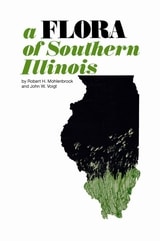
A Flora of Southern Illinois
Robert H. Mohlenbrock
Southern Illinois University Press, 1974
This book will be of particular interest to those interested in applied fields of biology, such as conservation, forestry, and wild life. The southern twelve counties of Illinois, a total of 4,355square miles, comprise the area covered in this book. It is an area in which both northern and southern flora specimens abound. A wide variety of plant species grow in this area, and nearly 200 new plants not formerly identified with this area have been included in the listings.
Especially valuable to amateur botanists, the book is an important manual in identifying the plants that make up the native scenery of this region. Seventy-seven illustrations aid in identifying and understanding the plant communities.
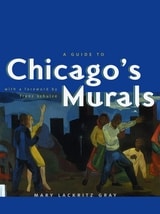
A Guide to Chicago's Murals
Mary Lackritz Gray
University of Chicago Press, 2001
With full-color illustrations of nearly two hundred Chicago murals and accompanying entries that describe their history—who commissioned them and why, how artists collaborated with architects, the subjects of the murals and their contexts—A Guide to Chicago's Murals serves both a general and a specific audience. Divided into easy-to-read geographical sections with useful maps for walking tours, it is the perfect companion for tourists or Chicagoans interested in coming to know better this aspect of the city's history. Gray also provides crucial information on lesser-known artists and on murals that have been destroyed over the years, filling a gap in the visual record of the city's development.
Gray also includes biographies of more than 150 artists and a glossary of key terms, making A Guide to Chicago's Murals essential reading for mural viewing. From post offices to libraries, fieldhouses to banks, and private clubs to street corners, Mary Gray chronicles the amazing works of artists who have sought to make public declarations in this most social of art forms.
"A major lacuna in the history of art in Chicago has been filled, with the thoroughness of the research proportionate to the richness of the material revealed."—From the Foreword by Franz Schulze
"Gray's book . . . can function as a guidebook, as the murals are conveniently arranged according to the quadrants of the city. But the book is also beautiful to look at and indespensable as art history and Chicago history as well. . . . This book is a wonderful guide to Chicago's rich and unique mural tradition."—Elizabeth Alexander, Chicago Tribune Books
"If you love art and history, this is a book you'll truly enjoy."—Al Paulson, Utne Reader
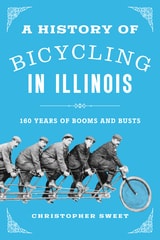
A History of Bicycling in Illinois
160 Years of Booms and BustsChristopher Sweet
University of Illinois Press, 2026
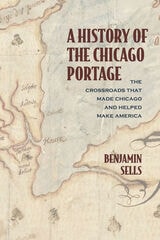
A History of the Chicago Portage
The Crossroads That Made Chicago and Helped Make AmericaBenjamin Sells
Northwestern University Press, 2021
This fascinating account explores the significance of the Chicago Portage, one of the most important—and neglected—sites in early US history. A seven-mile-long strip of marsh connecting the Chicago and Des Plaines Rivers, the portage was inhabited by the earliest indigenous people in the Midwest and served as a major trade route for Native American tribes. A link between the Mississippi River and the Atlantic Ocean, the Chicago Portage was a geopolitically significant resource that the French, British, and US governments jockeyed to control. Later, it became a template for some of the most significant waterways created in the nineteenth and twentieth centuries. The portage gave Chicago its name and spurred the city’s success—and is the reason why the metropolis is located in Illinois, not Wisconsin.
A History of the Chicago Portage: The Crossroads That Made Chicago and Helped Make America is the definitive story of a national landmark.
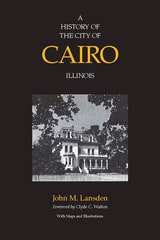
A History of the City of Cairo, Illinois
John M. Lansden. Foreword by Clyde C. Walton
Southern Illinois University Press, 1976
Long out of print and much sought after bycollectors, Lansden’s classic 1910 history of Cairo remains valuable for the early history of the city. Its reprinting here, with a new Foreword by Clyde C. Walton, former Illinois State Historian, thus makes available again one of the finest examples of local history ever written, stressing as itdoes Cairo’s important relations with its area and with the country—in Lansden’s words, “this part of the Valley of the Mississippi—this Illinois Country.”
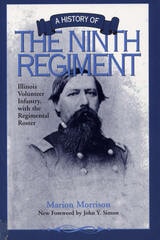
A History of the Ninth Regiment
Illinois Volunteer Infantry, with the Regimental RosterMarion Morrison. Foreword by John Y. Simon
Southern Illinois University Press, 1997
When the Civil War erupted in April 1861, many German immigrants in Illinois rushed to enlist in the Union Army. Volunteers from Illinois towns in St. Clair County—Belleville, Millstadt, Mascoutah, Lebanon, and others—marched to Springfield under the command of August Mersy, a veteran of the failed 1848 revolt in Baden, Germany.
Marion Morrison notes that when the German immigrants reached Springfield, August Mersy was rejected as commander because of his limited facility with English. Replaced by Colonel Eleazer A. Paine, an Ohioan and West Point graduate, Lieutenant Colonel Mersy fell to second in command of the Ninth Illinois Infantry Volunteers. Within a few months, however, Paine received a promotion to general that left Mersy in charge of the "Bloody Ninth."
Once Grant began his Tennessee River campaign, the Ninth found itself in the thick of battle, bearing the brunt of the Confederate attempt at Fort Donelson to break Grant’s siege lines. Less than two months later, the Ninth shored up sagging Union lines after the surprise Confederate attack at Shiloh Church, retreating only when their ammunition was gone.
Morrison’s account of the "Bloody Ninth" is one of the few histories written during the war.
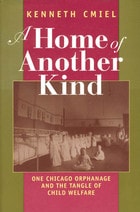
A Home of Another Kind
One Chicago Orphanage and the Tangle of Child WelfareKenneth Cmiel
University of Chicago Press, 1995
The book begins with the fascinating history of the Chicago Nursery and Half-Orphan Asylum from 1860 through 1984, when it became a full-time research institute. Founded by a group of wealthy volunteers, the asylum was a Protestant institution for Protestant children—one of dozens around the country designed as places where single parents could leave their children if they were temporarily unable to care for them.
But the asylum, which later became known as Chapin Hall, changed dramatically over the years as it tried to respond to changing policies, priorities, regulations, and theories concerning child welfare. Cmiel offers a vivid portrait of how these changes affected the day-to-day realities of group living. How did the kind of care given to the children change? What did the staff and management hope to accomplish? How did they define "family"? Who were the children who lived in the asylum? What brought them there? What were their needs? How did outside forces change what went on inside Chapin Hall?
This is much more than a richly detailed account of one institution. Cmiel shatters a number of popular myths about orphanages. Few realize that almost all children living in nineteenth-century orphanages had at least one living parent. And the austere living conditions so characteristic of the orphanage were prompted as much by health concerns as by strict Victorian morals.
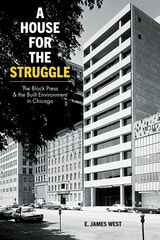
A House for the Struggle
The Black Press and the Built Environment in ChicagoE. James West
University of Illinois Press, 2022
- Winner of the 2023 Michael Nelson Prize of International Association for Media and History (IAMHIST)
- Recipient of the 2022 Jane Jacobs Urban Communication Book Award
- Winner of the 2023 American Journalism Historians Association Book of the Year
- Winner of the 2023 ULCC’s (Union League Club of Chicago) Outstanding Book on the History of Chicago Award
- Recipient of a 2023 Best of Illinois History Superior Achievement award from the Illinois State Historical Society
- Winner of the 2023 BAAS Book Prize (British Association for American Studies)
- Winner of a 2023 The Brinck Book Award and Lecture series (University of New Mexico School of Architecture + Planning)
- Honorable Mention for the 2021-22 RSAP Book Prize (Research Society for American Periodicals)
Buildings once symbolized Chicago's place as the business capital of Black America and a thriving hub for Black media. In this groundbreaking work, E. James West examines the city's Black press through its relationship with the built environment. As a house for the struggle, the buildings of publications like Ebony and the Chicago Defender embodied narratives of racial uplift and community resistance. As political hubs, gallery spaces, and public squares, they served as key sites in the ongoing Black quest for self-respect, independence, and civic identity. At the same time, factors ranging from discriminatory business practices to editorial and corporate ideology prescribed their location, use, and appearance, positioning Black press buildings as sites of both Black possibility and racial constraint.
Engaging and innovative, A House for the Struggle reconsiders the Black press's place at the crossroads where aspiration collided with life in one of America's most segregated cities.
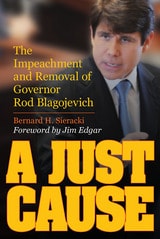
A Just Cause
The Impeachment and Removal of Governor Rod BlagojevichBernard H. Sieracki. Foreword by Jim Edgar
Southern Illinois University Press, 2016
During the predawn hours of December 9, 2008, an FBI team swarmed the home of Illinois governor Rod Blagojevich and took him away in handcuffs. The shocking arrest, based on allegations of corruption and extortion, launched a chain of political events never before seen in Illinois. In A Just Cause, Bernard H. Sieracki delivers a dynamic firsthand account of this eight-week political crisis, beginning with Blagojevich’s arrest, continuing through his impeachment and trial, and culminating in his conviction and removal from office. Drawing on his own eyewitness observations of the hearings and trial, the comments of interviewees, trial transcripts, and knowledge gained from decades of work with the Illinois legislature, Sieracki tells the compelling story of the first impeachment and removal from office of an Illinois governor, while providing a close look at the people involved.
A Just Cause depicts Blagojevich as a master of political gamesmanship, a circus ringmaster driven by personal ambition and obsessed with private gain. Sieracki examines in depth the governor’s unethical behavior while in office, detailing a litany of partisan and personal hostilities that spanned years. He thoroughly covers the events leading to Blagojevich’s downfall and the reactions of the governor’s cohorts. The author discusses the numerous allegations against Blagojevich, including attempts to “sell” appointments, jobs, and contracts in exchange for financial contributions. Sieracki then exhaustively recounts Blagojevich’s senate trial and the governor’s removal from office.
This engrossing volume is both a richly detailed case study of the American checks-and-balances system and an eyewitness account of unprecedented events. It will appeal to anyone interested in the stunning, true tale of a state upholding the maxim “The welfare of the people is the supreme law.”
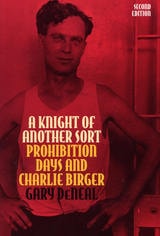
A Knight of Another Sort
Prohibition Days and Charlie Birger, Second EditionGary DeNeal. Foreword by Jim Ballowe
Southern Illinois University Press, 1998
In 1913 Charlie Birger began his career as a bootlegger, supplying southern Illinois with whiskey and beer. He was charismatic, with an easygoing manner and a cavalier generosity that made him popular. The stuff of legend, he was part monster, part Robin Hood. In the early days, he would emerge from his restaurant/saloon in tiny Ledford in Saline County with a cigar box full of coins and throw handfuls in the air for the children. Echoing the consensus on Birger, an anonymous gang member called him "enigmatic," noting that "he had a wonderful quality, a heart of gold. There in Harrisburg sometimes he'd support twelve or fifteen families, buy coal, groceries. . . . [But] he had cold eyes, a killer's eyes. He would kill you for something somebody else would punch you in the nose for."
Drawing from the colorful cast of the living, the dead, and the soon-to-be-dead—a state shared by many associated with Birger and his enemies, the Shelton gang—DeNeal re-creates Prohibition-era southern Illinois. He depicts the fatal shootout between S. Glenn Young and Ora Thomas, the battle on the Herrin Masonic Temple lawn in which six were slain and the Ku Klux Klan crushed, and the wounding of Williamson County state's attorney Arlie O. Boswell. As the gang wars escalated and the roster of corpses lengthened, the gangsters embraced technology. The Sheltons bombed Birger's roadhouse, Shady Rest, from a single-engine airplane. Both Birger and the Sheltons used armored vehicles to intimidate their enemies, and the chatter of machine gun fire grew common.
The gang wars ended with massive arrests, trials, and convictions of gangsters who once had seemed invincible. Charlie Birger was convicted of the murder of West City mayor Joe Adams and sentenced to death. On April 19, 1928, he stood on the gallows looking down on the large crowd that had come to see him die. "It's a beautiful world," Birger said softly as he prepared to leave it.
A Natural History of the Chicago Region
Joel Greenberg
University of Chicago Press, 2002
A New Conscience and an Ancient Evil
Jane Addams
University of Illinois Press, 2002
Addams offers lurid accounts–-drawn from the records of Chicago's Juvenile Protection Association–-of young women coerced into lives of prostitution by men who lurked outside hotels and sweatshops. Because they lacked funds for proper recreation, Addams argues, poor and socially marginalized women were susceptible to sexual slavery, and without radical social change they would perhaps be "almost as free" as young men. In addition to promoting higher wages and better living conditions, Addams suggests that a longer period of public education for young women would deter them from the dangers of city life.
Despite its appeal to middle–class readers eager for tales of sexual excess and the rape of innocence, the press and prominent intellectuals criticized A New Conscience and an Ancient Evil for being disproportionately hysterical to its philosophical weight. Katherine Joslin's introduction considers the controversial reactions to the book and the circumstances of its publication. Behind the sensationalism of the narratives, Joslin locates themes including the commodification of sex and the importance of marriage for young women.
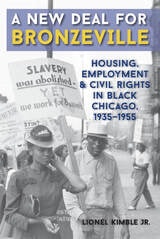
A New Deal for Bronzeville
Housing, Employment, and Civil Rights in Black Chicago, 1935-1955Lionel Kimble Jr.
Southern Illinois University Press, 2015
During the Great Migration of the 1920s and 1930s, southern African Americans flocked to the South Side Chicago community of Bronzeville, the cultural, political, social, and economic hub of African American life in the city, if not the Midwest. The area soon became the epicenter of community activism as working-class African Americans struggled for equality in housing and employment. In this study, Lionel Kimble Jr. demonstrates how these struggles led to much of the civil rights activism that occurred from 1935 to 1955 in Chicago and shows how this working-class activism and culture helped to ground the early civil rights movement. Despite the obstacles posed by the Depression, blue-collar African Americans worked with leftist organizations to counter job discrimination and made strong appeals to New Deal allies for access to public housing. Kimble details how growing federal intervention in local issues during World War II helped African Americans make significant inroads into Chicago’s war economy and how returning African American World War II veterans helped to continue the fight against discrimination in housing and employment after the war. The activism that appeared in Bronzeville was not simply motivated by the “class consciousness” rhetoric of the organized labor movement but instead grew out of everyday struggles for racial justice, citizenship rights, and improved economic and material conditions. With its focus on the role of working-class African Americans—as opposed to the middle-class leaders who have received the most attention from civil rights historians in the past—A New Deal for Bronzeville makes a significant contribution to the study of civil rights work in the Windy City and enriches our understanding of African American life in mid-twentieth-century Chicago.
This publication is partially funded by a grant from Furthermore: a program of the J.M. Kaplan fund.
A Place on the Corner
Elijah Anderson
University of Chicago Press, 1978
A Place on the Corner, Second Edition
Elijah Anderson
University of Chicago Press, 2004
A Portrait in Four Movements
The Chicago Symphony under Barenboim, Boulez, Haitink, and MutiAndrew Patner
University of Chicago Press, 2019
The Chicago Symphony Orchestra has been led by a storied group of conductors. And from 1994 to 2015, through the best work of Daniel Barenboim, Pierre Boulez, Bernard Haitink, and Riccardo Muti, Andrew Patner was right there. As a classical music critic for the Chicago Sun-Times and WFMT radio, Patner was able to trace the arc of the CSO’s changing repertories, all while cultivating a deep rapport with its four principal conductors.
This book assembles Patner’s reviews of the concerts given by the CSO during this time, as well as transcripts of his remarkable radio interviews with these colossal figures. These pages hold tidbits for the curious, such as Patner’s “driving survey” that playfully ranks the Maestri he knew on a scale of “total comfort” to “fright level five,” and the observation that Muti appears to be a southpaw on the baseball field. Moving easily between registers, they also open revealing windows onto the sometimes difficult pasts that brought these conductors to music in the first place, including Boulez’s and Haitink’s heartbreaking experiences of Nazi occupation in their native countries as children. Throughout, these reviews and interviews are threaded together with insights about the power of music and the techniques behind it—from the conductors’ varied approaches to research, preparing scores, and interacting with other musicians, to how the sound and personality of the orchestra evolved over time, to the ways that we can all learn to listen better and hear more in the music we love. Featuring a foreword by fellow critic Alex Ross on the ethos and humor that informed Patner’s writing, as well as an introduction and extensive historical commentary by musicologist Douglas W. Shadle, this book offers a rich portrait of the musical life of Chicago through the eyes and ears of one of its most beloved critics.
A Power Stronger Than Itself
The AACM and American Experimental MusicGeorge E. Lewis
University of Chicago Press, 2008
Founded in 1965 and still active today, the Association for the Advancement of Creative Musicians (AACM) is an American institution with an international reputation. George E. Lewis, who joined the collective as a teenager in 1971, establishes the full importance and vitality of the AACM with this communal history, written with a symphonic sweep that draws on a cross-generational chorus of voices and a rich collection of rare images.
Moving from Chicago to New York to Paris, and from founding member Steve McCall’s kitchen table to Carnegie Hall, A Power Stronger Than Itself uncovers a vibrant, multicultural universe and brings to light a major piece of the history of avant-garde music and art.
A Southern Illinois Album
Farm Security Administration Photographs, 1936-1943Herbert K. Russell. Foreword by F. Jack Hurley
Southern Illinois University Press, 1990
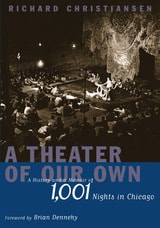
A Theater of Our Own
A History and a Memoir of 1,001 Nights in ChicagoRichard Christiansen, with a foreword by Brian Dennehy
Northwestern University Press, 2004
A Theater of Our Own is a fascinating, fast-paced, and fact-filled chronicle of Chicago's legendary theater scene by the long-time chief critic for the Chicago Tribune. Who produced the first stage adaptation of "The Wizard of Oz" in 1902-nearly forty years before the movie classic? What entertainment juggernaut began in a converted Chinese laundry on Wells Street in 1959? Where did Louis (Studs) Terkel make his stage debut? When did the original production of "Grease" open at Kingston Mines Theater? Richard Christiansen, former chief critic for the Chicago Tribune, answers these and many more questions about the rich role of the theater in Chicago, from its earliest days in 1837 to its present state as a diverse community of artists with international stature.
In A Theater of Our Own, he draws upon his exclusive interviews, insights, and memories gathered over a period of more than forty years of reviewing the arts. This history and memoir traces the evolution of the Chicago theater scene from small theaters to major institutions such as the Steppenwolf Theatre Company, the Goodman Theater, and The Second City. Along the way, Richard Christiansen relates his behind-the-scenes conversations with some of Chicago's most acclaimed writers, directors, and actors--David Mamet, Frank Galati, Mary Zimmerman, John Malkovich, Laurie Metcalf, Harold Ramis, Gary Sinise, and Joe Mantegna--all a part of Chicago's theater renaissance from the 1970s onward. To this day, Chicago remains a city known for its imaginative, innovative, and influential theaters and artists. A Theater of Our Own, a valuable contribution to the history of theater, is a book written for anyone who enjoys the theater and its people as well as the story of Chicago.
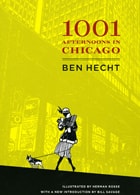
A Thousand and One Afternoons in Chicago
Ben Hecht
University of Chicago Press, 1992
“The hardboiled audacity and wit that became Hecht’s signature as Hollywood’s most celebrated screen-writer are conspicuous in these vignettes. Most of them are comic and sardonic, some strike muted tragic or somber atmospheric notes. . . . The best are timeless character sketches that have taken on an added interest as shards of social history.”—L. S. Klepp, Voice Literary Supplement
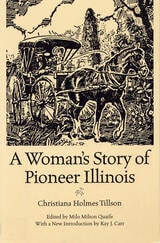
A Woman's Story of Pioneer Illinois
Christiana Holmes Tillson
Southern Illinois University Press, 1995
Christiana and John Tillson moved from Massachusetts to central Illinois in 1822. Upon arriving in Montgomery County near what would soon be Hillsboro, they set up a general store and real estate business and began to raise a family.
A half century later, Christiana Tillson wrote about her early days in Illinois in a memoir published by R. R. Donnelley in 1919. In it she describes her husband’s rise to wealth through the speculative land boom during the 1820s and 1830s and his loss of fortune when the land business went bust after the Specie Circular was issued in 1836.
The Tillsons lived quite ordinary lives in extraordinary times, notes Kay J. Carr, introducing this edition. Their views and sensibilities, Carr says, might seem strange to us, but they were entirely normal to people in the early nineteenth century. Thus Tillson’s memoir provides vignettes of ordinary nineteenth-century American life.
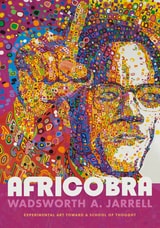
AFRICOBRA
Experimental Art toward a School of ThoughtWadsworth A. Jarrell
Duke University Press, 2020
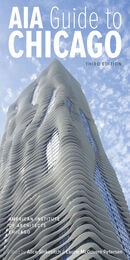
AIA Guide to Chicago
American Institute of Architects Chicago; Edited by Alice Sinkevitch and Laurie McGovern Petersen; Preface by Geoffrey Baer; Introduction by Perry Duis
University of Illinois Press, 2014
Four hundred photos and thirty-four specially commissioned maps make it easy to find each of the one thousand-plus featured buildings, while a comprehensive index organizes buildings by name and architect. This edition also features an introduction providing an indispensable overview of Chicago's architectural history.
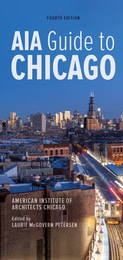
AIA Guide to Chicago
American Institute of Architects Chicago; Edited by Laurie McGovern Petersen
University of Illinois Press, 2022
Sumptuously detailed and user friendly, the AIA Guide to Chicago encourages travelers and residents alike to explore the many diverse neighborhoods of one of the world’s great architectural destinations.
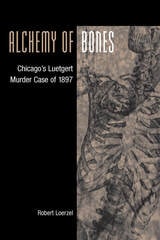
Alchemy of Bones
Chicago's Luetgert Murder Case of 1897Robert Loerzel
University of Illinois Press, 2002
On May 1, 1897, Louise Luetgert disappeared. Although no body was found, Chicago police arrested her husband, Adolph, the owner of a large sausage factory, and charged him with murder. The eyes of the world were still on Chicago following the success of the World's Columbian Exposition, and the Luetgert case, with its missing victim, once-prosperous suspect, and all manner of gruesome theories regarding the disposal of the corpse, turned into one of the first media-fueled celebrity trials in American history.
Newspapers fought one another for scoops, people across the country claimed to have seen the missing woman alive, and each new clue led to fresh rounds of speculation about the crime. Meanwhile, sausage sales plummeted nationwide as rumors circulated that Luetgert had destroyed his wife's body in one of his factory's meat grinders.
Weaving in strange-but-true subplots involving hypnotists, palmreaders, English con artists, bullied witnesses, and insane-asylum bodysnatchers, Alchemy of Bones is more than just a true crime narrative; it is a grand, sprawling portrait of 1890s Chicago--and a nation--getting an early taste of the dark, chaotic twentieth century.
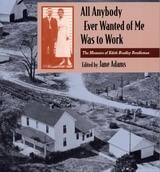
All Anybody Ever Wanted of Me Was to Work
The Memoirs of Edith Bradley RendlemanEdith Bradley Rendleman. Edited by Jane Adams
Southern Illinois University Press, 1996
From All Anybody Ever Wanted of Me Was to Work...
"Starting around 1950, people stopped raising chickens, milking cows, and raising hogs. They just buy it at the store, ready to eat. A lot buy a steer and have it processed in Dongola and put it in their freezer. What a difference! Girls have got it so easy now. They don't even know what it was like to start out. And I guess my mother's life, when she started out, was as hard again as mine, because they had to make everything by hand. I don't know if it could get any easier for these girls. But they don't know what it was like, and they never will. Everything is packaged. All you do is go to the store and buy you a package and cook it. Automatic washers and dryers. I'm glad they don't have to work like I did. Very glad."
Edith Bradley Rendleman's story of her life in southern Illinois is remarkable in many ways. Recalling the first half of the twentieth century in great detail, she vividly cites vignettes from her childhood as her family moved from farm to farm until settling in 1909 in the Mississippi bottoms of Wolf Lake. She recounts the lives and times of her family and neighbors during an era gone forever.
Remarkable for the vivid details that evoke the past, Rendleman's account is rare in another respect: memoirs of the time—usually written by people from elite or urban families—often reek of nostalgia. But Rendleman's memoir differs from the norm. Born poor in rural southern Illinois, she tells an unvarnished tale of what it was really like growing up on a tenant farm early this century.
All of Us Together
The Story of Inclusion at Kinzie SchoolJeri Banks
Gallaudet University Press, 1994
Alliance, Illinois
Dave Etter
Northwestern University Press, 2005
Along the Streets of Bronzeville
Black Chicago's Literary LandscapeElizabeth Schroeder Schlabach
University of Illinois Press, 2017
In this significant recovery project, Elizabeth Schroeder Schlabach investigates the institutions and streetscapes of Black Chicago that fueled an entire literary and artistic movement. She argues that African American authors and artists--such as Gwendolyn Brooks, Richard Wright, Langston Hughes, painter Archibald Motley, and many others--viewed and presented black reality from a specific geographic vantage point: the view along the streets of Bronzeville. Schlabach explores how the particular rhythms and scenes of daily life in Bronzeville locations, such as the State Street "Stroll" district or the bustling intersection of 47th Street and South Parkway, figured into the creative works and experiences of the artists and writers of the Black Chicago Renaissance. She also covers in detail the South Side Community Art Center and the South Side Writers' Group, two institutions of art and literature that engendered a unique aesthetic consciousness and political ideology for which the Black Chicago Renaissance would garner much fame.
Life in Bronzeville also involved economic hardship and social injustice, themes that resonated throughout the flourishing arts scene. Schlabach explores Bronzeville's harsh living conditions, exemplified in the cramped one-bedroom kitchenette apartments that housed many of the migrants drawn to the city's promises of opportunity and freedom. Many struggled with the precariousness of urban life, and Schlabach shows how the once vibrant neighborhood eventually succumbed to the pressures of segregation and economic disparity. Providing a virtual tour South Side African American urban life at street level, Along the Streets of Bronzeville charts the complex interplay and intersection of race, geography, and cultural criticism during the Black Chicago Renaissance's rise and fall.
America's Deadliest Twister
The Tri-State Tornado of 1925Geoff Partlow
Southern Illinois University Press, 2014
Winner, ISHS Certificate of Excellence, 2015
Disaster relief as we know it did not exist when the deadliest tornado in U.S. history gouged a path from southeast Missouri through southern Illinois and into southwestern Indiana. The tri-state tornado of 1925 hugged the ground for 219 miles, generated wind speeds in excess of 300 miles per hour, and killed 695 people. Drawing on survivor interviews, public records, and newspaper archives, America’s Deadliest Twister offers a detailed account of the storm, but more important, it describes life in the region at that time as well as the tornado’s lasting cultural impact, especially on southern Illinois.
Author Geoff Partlow follows the storm from town to town, introducing us to the people most affected by the tornado, including the African American population of southern Illinois. Their narratives, along with the stories of the heroes who led recovery efforts in the years following, add a hometown perspective to the account of the storm itself.
In the discussion of the aftermath of the tornado, Partlow examines the lasting social and economic scars in the area, but he also looks at some of the technological firsts associated with this devastating tragedy. Partlow shows how relief efforts in the region began to change the way people throughout the nation thought about disaster relief, which led to the unified responses we are familiar with today.

America's First Black Town
Brooklyn, Illinois, 1830-1915Sundiata Keita Cha-Jua
University of Illinois Press, 2000
Sundiata Keita Cha-Jua traces Brooklyn's transformation from a freedom village into a residential commuter satellite that supplied cheap labor to the city and the region. He examines why Brooklyn remained unindustrialized while factories and industrial complexes were built in nearly all the neighboring white-majority towns. As Brooklyn's population tilted more heavily toward single young men employed in the factories and as the city's cheaper retail businesses drew the town's consumer dollars, local businesses--except those catering to nightlife and vice--withered away.
Drawing on town records, regional and African American newspapers, census data, and other sources, Cha-Jua provides a detailed social and political history of America's first Black town. He places Brooklyn in the context of Black-town development and African American nationalism and documents the dedicated efforts of its Black citizens to achieve political control and build a thriving, autonomous, Black-majority community.
America's First Black Town challenges scholarly assumptions that Black political control necessarily leads to internal unity and economic growth. Outlining dynamics that presaged the post-1960s plight of Gary, Detroit, and other Black-dominated cities, Cha-Jua confirms that, despite Brooklyn's heroic struggle for autonomy, Black control was not enough to stem the corrosive tide of internal colonialism.
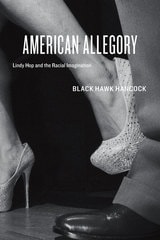
American Allegory
Lindy Hop and the Racial ImaginationBlack Hawk Hancock
University of Chicago Press, 2013
In American Allegory, Black Hawk Hancock offers an embedded and embodied ethnography that situates dance within a larger Chicago landscape of segregated social practices. Delving into two Chicago dance worlds, the Lindy and Steppin’, Hancock uses a combination of participant-observation and interviews to bring to the surface the racial tension that surrounds white use of black cultural forms. Focusing on new forms of appropriation in an era of multiculturalism, Hancock underscores the institutionalization of racial disparities and offers wonderful insights into the intersection of race and culture in America.
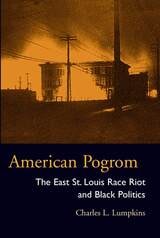
American Pogrom
The East St. Louis Race Riot and Black PoliticsCharles L. Lumpkins
Ohio University Press, 2008
Charles Lumpkins shows that black residents of East St. Louis had engaged in formal politics since the 1870s, exerting influence through the ballot and through patronage in a city dominated by powerful real estate interests even as many African Americans elsewhere experienced setbacks in exercising their political and economic rights.
While Lumpkins asserts that the race riots were a pogrom—an organized massacre of a particular ethnic group—orchestrated by certain businessmen intent on preventing black residents from attaining political power and on turning the city into a “sundown” town permanently cleared of African Americans, he also demonstrates how the African American community survived. He situates the activities of the black citizens of East St. Louis in the context of the larger story of the African American quest for freedom, citizenship, and equality.
American School Reform
What Works, What Fails, and WhyJoseph P. McDonald and the Cities and Schools Research Group
University of Chicago Press, 2014
McDonald and his colleagues lay out several interrelated ideas in what they call a theory of action space. Frequently education policy gets so ambitious that implementing it becomes a near impossibility. Action space, however, is what takes shape when talented educators, leaders, and reformers guide the social capital of civic leaders and the financial capital of governments, foundations, corporations, and other backers toward true results. Exploring these extraordinary collaborations through their lifespans and their influences on future efforts, the authors provide political hope—that reform efforts can work, and that our schools can be made better.
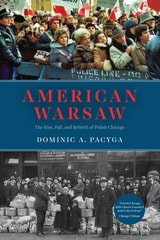
American Warsaw
The Rise, Fall, and Rebirth of Polish ChicagoDominic A. Pacyga
University of Chicago Press, 2019
Every May, a sea of 250,000 people decked out in red and white head to Chicago’s Loop to celebrate the Polish Constitution Day Parade. In the city, you can tune in to not one but four different Polish-language radio stations or jam out to the Polkaholics. You can have lunch at pierogi food trucks or pick up pączkis at the grocery store. And if you’re lucky, you get to take off work for Casimir Pulaski Day. For more than a century, Chicago has been home to one of the largest Polish populations outside of Poland, and the group has had an enormous influence on the city’s culture and politics. Yet, until now, there has not been a comprehensive history of the Chicago Polonia.
With American Warsaw, award-winning historian and Polish American Dominic A. Pacyga chronicles more than a century of immigration, and later emigration back to Poland, showing how the community has continually redefined what it means to be Polish in Chicago. He takes us from the Civil War era until today, focusing on how three major waves of immigrants, refugees, and fortune seekers shaped and then redefined the Polonia. Pacyga also traces the movement of Polish immigrants from the peasantry to the middle class and from urban working-class districts dominated by major industries to suburbia. He documents Polish Chicago’s alignments and divisions: with other Chicago ethnic groups; with the Catholic Church; with unions, politicians, and city hall; and even among its own members. And he explores the ever-shifting sense of Polskość, or “Polishness.”
Today Chicago is slowly being eclipsed by other Polish immigrant centers, but it remains a vibrant—and sometimes contentious—heart of the Polish American experience. American Warsaw is a sweeping story that expertly depicts a people who are deeply connected to their historical home and, at the same time, fiercely proud of their adopted city. As Pacyga writes, “While we were Americans, we also considered ourselves to be Poles. In that strange Chicago ethnic way, there was no real difference between the two.”
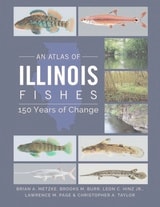
An Atlas of Illinois Fishes
150 Years of ChangeBrian A. Metzke, Brooks M. Burr, Leon C. Hinz Jr., Lawrence M. Page, and Christopher A. Taylor
University of Illinois Press, 2022
Scientifically up-to-date and illustrated with over 240 color photos, An Atlas of Illinois Fishes is a benchmark in the study of Illinois’s ever-changing fish communities and the habitats that support them.
An Early Encounter with Tomorrow
Europeans, Chicago's Loop, and the World's Columbian ExpositionArnold Lewis
University of Illinois Press, 1997
Extravagantly illustrated with over seventy photographs, drawings, paintings, and contemporary cartoons, An Early Encounter with Tomorrow documents the mixture of amazement and alarm with which European visitors greeted 1890s Chicago: as a futuristic city animated by a crass, frenetic mercantile class. This volume also contains an extensive bibliography, arranged by country, and profiles of the foreign observers who sought the implications for European culture in what Asa Briggs called the "shock city" of the western world.
An Illini Place
Building the University of Illinois CampusIncoronata Inserra
University of Illinois Press, 2017
An Irish-American Odyssey
The Remarkable Rise of the O'Shaughnessy BrothersColum Kenny
University of Missouri Press, 2014
An Open Secret
The Family Story of Robert and John Gregg AllertonNicholas L. Syrett
University of Chicago Press, 2021
An Open Secret tells the striking story of these two iconoclasts, locating them among their queer contemporaries and exploring why becoming father and son made a surprising kind of sense for a twentieth-century couple who had every monetary advantage but one glaring problem: they wanted to be together publicly in a society that did not tolerate their love. Deftly exploring the nature of their design, domestic, and philanthropic projects, Nicholas L. Syrett illuminates how viewing the Allertons as both a same-sex couple and an adopted family is crucial to understanding their relationship’s profound queerness. By digging deep into the lives of two men who operated largely as ciphers in their own time, he opens up provocative new lanes to consider the diversity of kinship ties in modern US history.
An Uncertain Tradition
David Kenney and Robert E. Hartley
Southern Illinois University Press, 2003
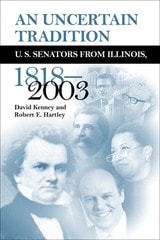
This sweeping survey constitutes the first comprehensive treatment of the forty-seven individuals—forty-six white males and one African American female—who have been chosen to represent Illinois in the United States Senate from 1818 to 2003. David Kenney and Robert E. Hartley underscore nearly two centuries of Illinois history with these biographical and political portraits, compiling an incomparably rich resource for students, scholars, teachers, journalists, historians, politicians, and any Illinoisan interested in the state’s heritage.
An Uncertain Tradition:U. S. Senators from Illinois, 1818–2003 is a fresh and careful study of the shifting set of political issues occurring over time and illuminated by the lives of participants in the politics of choice and service in the Senate. Kenney and Hartley plot the course of the state’s varied senatorial leadership, from the state’s founding and the appearance of political parties, through the Civil War and its aftermath, and into the diverse political climate of the twenty-first century. From the notorious to the heroic, the popular to the pioneering, the senatorial roster includes such luminaries as “The Little Giant” Stephen A. Douglas; Lyman Trumbull, who served three terms in the Civil War era; “Uncle Dick” and “Black Jack,” also known as Richard Oglesby and John A. Logan; the “Wizard of Ooze” Everett Dirksen; and modern leaders such as Adlai Stevenson III, Paul Simon, and Carol Moseley-Braun.
Kenney and Hartley offer incisive commentary on the quality of senate service in each case, as well as timeline graphs relating to the succession of individuals in each of the two sequences of service, the geographical distribution of senators within the state, and the variations in party voting for senate candidates. Rigorously documented and supremely readable, this convenient reference volume is enhanced by portraits of many of the senators.
An Unseen Unheard Minority
Asian American Students at the University of IllinoisSharon S. Lee
Rutgers University Press, 2022