Results by title
23 books match the query 'Illness'
Articulations
The Body and Illness in PoetryJon Mukand
University of Iowa Press, 1994
In 1987 poet and physician Jon Mukand published Sutured Words, a volume of contemporary poems to help patients, their families and friends, and all health care professionals embrace the complexity of healing, illness, and death. Robert Coles called the collection “a wonderful source of inspiration and instruction for any of us who are trying to figure out what our work means”; Norman Cousins was impressed by the “discernment and high quality of the selections.” Now, in Articulations, Mukand adds more than a hundred new poems to the strongest poems from Sutured Words to give us a lyrical, enlightened understanding of the human dimensions of suffering and illness
Biomedicalization
Technoscience, Health, and Illness in the U.S.Adele E. Clarke, Laura Mamo, Jennifer Ruth Fosket, Jennifer R. Fishman, and Janet K. Shim, eds.
Duke University Press, 2010
Contributors. Natalie Boero, Adele E. Clarke, Jennifer R. Fishman, Jennifer Ruth Fosket, Kelly Joyce, Jonathan Kahn, Laura Mamo, Jackie Orr, Elianne Riska, Janet K. Shim, Sara Shostak
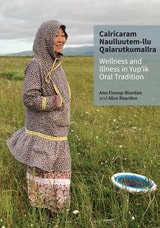
Calricaram Naulluutem-llu Qanrutkumallra / Wellness and Illness in Yup'ik Oral Tradition
Ann Fienup-Riordan
University of Alaska Press, 2027
Calricaram Naulluutem-llu Qanrutkumallra / Wellness and Illness in Yup’ik Oral Tradition brings together stories and information shared by more than a hundred Yup’ik tradition bearers over more than thirty years. Recorded during elder gatherings hosted by the Calista Elders Council beginning in 1997 and, since 2014, by Calista Education and Culture, the book passes on the words of wisdom that will remain enduring parts of these elders’ legacy.
Combining recent recordings with material from earlier gatherings, the narratives address various aspects of personal and community health: how people talk about sickness and health, traditional foods, qanruyutet (oral instructions) for living a healthy life, medicinal plants, medicinal uses of bodily fluids, ailments and treatments, traditional healing techniques, caring for those who are sick, mental health and mental illness, and epidemics.
Calricaram Naulluutem-llu Qanrutkumallra / Wellness and Illness in Yup’ik Oral Tradition invites readers to listen to these elders to better understand past practices and how they can contribute to a healthier future for all.
Chronic Conditions, Fluid States
Chronicity and the Anthropology of IllnessManderson, Lenore
Rutgers University Press, 2010
Having Epilepsy
The Experience and Control of IllnessJoseph W. Schneider and Peter Conrad
Temple University Press, 1985
Illness or Deviance?
Drug Courts, Drug Treatment, and the Ambiguity of AddictionJennifer Murphy
Temple University Press, 2015
Illness or Deviance? highlights the confusion and contradictions about labeling addiction. Murphy’s fieldwork in a drug court and an outpatient drug treatment facility yields fascinating insights, such as how courts and treatment centers both enforce the “disease” label of addiction, yet their management tactics overlap treatment with “therapeutic punishment.” The “addict" label is a result not just of using drugs, but also of being a part of the drug lifestyle, by selling drugs. In addition, Murphy observes that drug courts and treatment facilities benefit economically from their cooperation, creating a very powerful institutional arrangement.
Murphy contextualizes her findings within theories of medical sociology as well as criminology to identify the policy implications of a medicalized view of addiction.
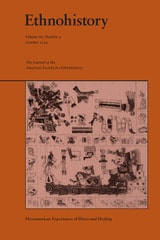
Mesoamerican Experiences of Illness and Healing
Rebecca Dufendach, special issue editor
Duke University Press, 0
Contributors. Sabina Cruz de la Cruz, Rebecca Dufendach, Servando Hinojosa, Timothy W. Knowlton, Gabrielle Vail, Edber Dzidz Yam
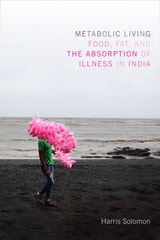
Metabolic Living
Food, Fat, and the Absorption of Illness in IndiaHarris Solomon
Duke University Press, 2016

Osiris, Volume 19
Landscapes of Exposure: Knowledge and Illness in Modern EnvironmentsEdited by Gregg Mitman, Michelle Murphy, and Christopher Sellers
University of Chicago Press, 2004

Pedagogies of Woundedness
Illness, Memoir, and the Ends of the Model MinorityJames Kyung-Jin Lee
Temple University Press, 2022
The pressures Asian Americans feel to be socially and economically exceptional include an unspoken mandate to always be healthy. Nowhere is this more evident than in the expectation for Asian Americans to enter the field of medicine, principally as providers of care rather than those who require care. Pedagogies of Woundedness explores what happens when those considered model minorities critically engage with illness and medicine whether as patients or physicians.
James Kyung-Jin Lee considers how popular culture often positions Asian Americans as medical authorities and what that racial characterization means. Addressing the recent trend of writing about sickness, disability, and death, Lee shows how this investment in Asian American health via the model minority is itself a response to older racial forms that characterize Asian American bodies as diseased. Moreover, he pays attention to what happens when academics get sick and how illness becomes both methodology and an archive for scholars.
Pedagogies of Woundedness also explores the limits of biomedical “care,” the rise of physician chaplaincy, and the impact of COVID. Throughout his book and these case studies, Lee shows the social, ethical, and political consequences of these common (mis)conceptions that often define Asian Americans in regard to health and illness.
Recovering Bodies
Illness, Disability, and Life WritingG. Thomas Couser
University of Wisconsin Press, 1997
Responding to the recent growth of illness and disability narratives in the United States—such works as Juliet Wittman’s Breast Cancer Journal, John Hockenberry’s Moving Violations, Paul Monette’s Borrowed Time: An AIDS Memoir, and Lou Ann Walker’s A Loss for Words: The Story of Deafness in a Family—Couser addresses questions of both poetics and politics. He examines why and under what circumstances individuals choose to write about illness or disability; what role plot plays in such narratives; how and whether closure is achieved; who assumes the prerogative of narration; which conditions are most often represented; and which literary conventions lend themselves to representing particular conditions. By tracing the development of new subgenres of personal narrative in our time, this book explores how explicit consideration of illness and disability has enriched the repertoire of life writing. In addition, Couser’s discussion of medical discourse joins the current debate about whether the biomedical model is entirely conducive to humane care for ill and disabled people.
With its sympathetic critique of the testimony of those most affected by these conditions, Recovering Bodies contributes to an understanding of the relations among bodily dysfunction, cultural conventions, and identity in contemporary America.
Sex, Sickness, and Slavery
Illness in the Antebellum SouthMarli F. Weiner with Mazie Hough
University of Illinois Press, 2014

Shadows in the Valley
A Cultural History of Illness, Death, and Loss in New England, 1840-1916Alan Swedlund
University of Massachusetts Press, 2010
How does the experience of sickness, death, and loss change over time? We know that the incidence and virulence of particular diseases have varied from one period to another, as has their medical treatment. But what was it like for the individuals who suffered and died from those illnesses, for the health practitioners and institutions that attended to them, and for the families who buried and mourned them?
In Shadows in the Valley, Alan Swedlund addresses these questions by closely examining the history of mortality in several small communities in western Massachusetts from the mid-nineteenth to the early twentieth century—from just before the acceptance of the germ theory of disease through the early days of public health reform in the United States. This was a time when most Americans lived in rural areas or small towns rather than large cities. It was also a time when a wide range of healing practices was available to the American public, and when the modern form of Western medicine was striving for dominance and authority. As Swedlund shows, this juncture of competing practices and ideologies provides a rich opportunity for exploring the rise of modern medicine and its impact on the everyday lives of ordinary Americans.
To indicate how individuals in different stages of their lives were exposed to varying assaults on their health, the book is structured in a way that superimposes what the author calls “life-course time” onto chronological time. Thus the early chapters look at issues of infancy and childhood in the 1840s and 1850s and the last chapters at the problems of old age after 1900. The reader becomes familiar with specific individuals and families as they cope with the recurrent loss of children, struggle to understand the causes of new contagions, and seek to find meaning in untimely death. By using a broad time frame and a narrow geographical lens, Swedlund is able to engage with both the particularities and generalities of evolving medical knowledge and changing practice, and to highlight the differences in personal as well as collective responses to illness and loss.
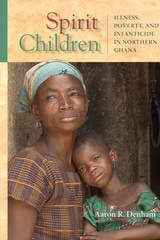
Spirit Children
Illness, Poverty, and Infanticide in Northern GhanaAaron R. Denham
University of Wisconsin Press, 2019
Refusing to generalize or oversimplify, Aaron R. Denham offers an ethnographic study of the spirit child phenomenon in Northern Ghana that considers medical, economic, religious, and political realities. He examines both the motivations of the families and the structural factors that lead to infanticide, framing these within the context of global public health. At the same time, he turns the lens on Western societies and the misunderstandings that prevail in discourse about this controversial practice. Engaging the complexity of the context, local meanings, and moral worlds of those confronting a spirit child, Denham offers visceral accounts of families' life and death decisions.
The Already Dead
The New Time of Politics, Culture, and IllnessEric Cazdyn
Duke University Press, 2012
To resist the exploitative crisis state, which Cazdyn terms "the global abyss," he posits the concept of "the already dead," a condition in which the subject (medical, political, psychological) has been killed but has yet to die. Embracing this condition, he argues, allows for a revolutionary consciousness open to a utopian future. Woven into Cazdyn's analysis are personal anecdotes about his battle with leukemia and his struggle to obtain Canadian citizenship during his illness. These narratives help to illustrate his systemic critique, one that reconfigures the relationship between politics, capitalism, revolution, and the body.

The Grey Zone of Health and Illness
Alan Blum
Intellect Books, 2011
Most discussions of health care center on medical advances, cost, and the roles of insurers and government agencies. With The Grey Zone of Health and Illness, Alan Blum offers a new perspective, outlining a highly nuanced theoretical approach to health and health care alike. Drawing on a range of thinkers, Blum explains how our current understanding of health care tends to posit it as a sort of state of permanent emergency, like the nuclear standoff of the Cold War. To move beyond that, he argues, will require a complete rethinking of health and sickness, self-governance and negligence. A heady, cutting-edge intervention in a critical area of society, The Grey Zone of Health and Illness will have wide ramifications in the academy and beyond.
The Healing Body
Creative Responses to Illness, Aging, and AfflictionDrew Leder
Northwestern University Press, 2024
As we grapple with the impacts of an aging population, the millions who struggle with chronic pain and illness, and the unknown number of COVID survivors dealing with long-term impairment, our individual and collective trust in our bodies is shaken. How to adapt? And how to live well, even when medical cure is unavailable? In The Healing Body: Creative Responses to Illness, Aging, and Affliction, philosopher and medical doctor Drew Leder shows how the phenomenology of lived embodiment makes available a variety of existential healing responses to bodily breakdown. Leder also turns to socially marginalized groups—people who have been incarcerated and those deemed “elderly”—to explore how individuals creatively cope with societal as well as physical challenges.
This book forwards current phenomenological research on the body, pain and suffering, disability, and aging. It deeply engages with the legacies of continental philosophy while also drawing insights from the traditions of Hinduism, Buddhism, and Taoism. The Healing Body is a uniquely creative and refreshingly innovative contribution to contemporary philosophy, demonstrating the importance of the philosophical method to the wider culture.
The Province of Affliction
Illness and the Making of Early New EnglandBen Mutschler
University of Chicago Press, 2020
The Renewal of Generosity
Illness, Medicine, and How to LiveArthur W. Frank
University of Chicago Press, 2004
The Renewal of Generosity evokes medicine as the face-to-face encounter that comes before and after diagnostics, pharmaceuticals, and surgeries. Frank calls upon the Roman emperor Marcus Aurelius, philosopher Emmanuel Levinas, and literary critic Mikhail Bakhtin to reflect on stories of ill people, doctors, and nurses who transform demoralized medicine into caring relationships. He presents their stories as a source of consolation for both ill and professional alike and as an impetus to changing medical systems. Frank shows how generosity is being renewed through dialogue that is more than the exchange of information. Dialogue is an ethic and an ideal for people on both sides of the medical encounter who want to offer more to those they meet and who want their own lives enriched in the process.
The Renewal of Generosity views illness and medical work with grace and compassion, making an invaluable contribution to expanding our vision of suffering and healing.

The Social Medicine Reader, Second Edition
Volume One: Patients, Doctors, and IllnessNancy M. P. King, Ronald P. Strauss, Larry R. Churchill, Sue E. Estroff, Gail E. Henderson, and Jonathan Oberlander, eds.
Duke University Press, 2005
Praise for the 3-volume second edition of The Social Medicine Reader:
“A superb collection of essays that illuminate the role of medicine in modern society. Students and general readers are not likely to find anything better.”—Arnold S. Relman, Professor Emeritus of Medicine and Social Medicine, Harvard Medical School
Praise for the first edition:
“This reviewer strongly recommends The Social Medicine Reader to the attention of medical educators.”—Samuel W. Bloom, JAMA: The Journal of the American Medical Association
Volume 1:
A woman with what is quite probably a terminal illness must choose between courses of treatment based on contradictory diagnoses. A medical student causes acute pain in his patients as he learns to insert a central line. One doctor wonders how to react when a patient asks him to pray with her; another struggles to come to terms with his mistakes. A physician writes in a prominent medical journal about facilitating a dying woman’s wish to end her life on her own terms; letters to the editor reflect passionate responses both in support of and in opposition to his actions. These experiences and many more are vividly rendered in Patients, Doctors, and Illness, which brings together nineteen pieces that appeared in the first edition of The Social Medicine Reader and eighteen pieces new to this edition. This volume examines the roles and training of health care professionals and their relationship with patients, ethics in health care, and end-of-life experiences and decisions. It includes fiction and nonfiction narratives and poetry; definitions and case-based discussions of moral precepts in health care, such as truth telling, informed consent, privacy, and autonomy; and readings that provide legal, ethical, and practical perspectives on many familiar but persistent ethical and social questions raised by illness and care.
Contributors: Yehuda Amichai, Marcia Angell, George J. Annas, Marc D. Basson, Doris Betts, Amy Bloom, Abenaa Brewster, Raymond Carver, Eric J. Cassell, Larry R. Churchill, James Dickey, Gerald Dworkin, James Dwyer, Miles J. Edwards, Charles R. Feldstein, Chris Feudtner, Leonard Fleck, Arthur Frank, Benjamin Freedman, Atul Gawande, Jerome Groopman, Lawrence D. Grouse, David Hilfiker, Nancy M. P. King, Perri Klass, Melvin Konner, Bobbie Ann Mason, Steven H. Miles, Sharon Olds, Katha Pollitt, Timothy E. Quill, David Schenck, Daniel Shapiro, Susan W. Tolle, Alice Stewart Trillin, William Carlos Williams

The Wounded Storyteller
Body, Illness, and EthicsArthur W. Frank
University of Chicago Press, 1995
Ill people are more than victims of disease or patients of medicine; they are wounded storytellers. People tell stories to make sense of their suffering; when they turn their diseases into stories, they find healing.
Drawing on the work of authors such as Oliver Sacks, Anatole Broyard, Norman Cousins, and Audre Lorde, as well as from people he met during the years he spent among different illness groups, Frank recounts a stirring collection of illness stories, ranging from the well-known—Gilda Radner's battle with ovarian cancer—to the private testimonials of people with cancer, chronic fatigue syndrome, and disabilties. Their stories are more than accounts of personal suffering: they abound with moral choices and point to a social ethic.
Frank identifies three basic narratives of illness in restitution, chaos, and quest. Restitution narratives anticipate getting well again and give prominence to the technology of cure. In chaos narratives, illness seems to stretch on forever, with no respite or redeeming insights. Quest narratives are about finding that insight as illness is transformed into a means for the ill person to become someone new.
The Wounded Storyteller
Body, Illness, and Ethics, Second EditionArthur W. Frank
University of Chicago Press, 1997
Drawing on the work of authors such as Oliver Sacks, Anatole Broyard, Norman Cousins, and Audre Lorde, as well as from people he met during the years he spent among different illness groups, Frank recounts a stirring collection of illness stories, ranging from the well-known—Gilda Radner's battle with ovarian cancer—to the private testimonials of people with cancer, chronic fatigue syndrome, and disabilities. Their stories are more than accounts of personal suffering: they abound with moral choices and point to a social ethic.
In this new edition Frank adds a preface describing the personal and cultural times when the first edition was written. His new afterword extends the book’s argument significantly, writing about storytelling and experience, other modes of illness narration, and a version of hope that is both realistic and aspirational. Reflecting on both his own life during the creation of the first edition and the conclusions of the book itself, Frank reminds us of the power of storytelling as way to understanding our own suffering.
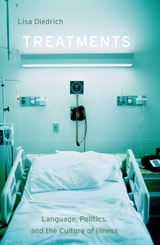
Treatments
Language, Politics, and the Culture of IllnessLisa Diedrich
University of Minnesota Press, 2007
Creative expression inspired by disease has been criticized as a celebration of victimhood, unmediated personal experience, or just simply bad art. Despite debate, however, memoirs written about illness—particularly AIDS or cancer—have proliferated since the late twentieth century and occupy a highly influential place on the cultural landscape today.
In Treatments, Lisa Diedrich considers illness narratives, demonstrating that these texts not only recount and interpret symptoms but also describe illness as an event that reflects wider cultural contexts, including race, gender, class, and sexuality. Diedrich begins this theoretically rigorous analysis by offering examples of midcentury memoirs of tuberculosis. She then looks at Susan Sontag’s Illness As Metaphor, Audre Lorde’s The Cancer Journals, and Eve Kosofsky Sedgwick’s “White Glasses,” showing how these breast cancer survivors draw on feminist health practices of the 1970s and also anticipate the figure that would appear in the wake of the AIDS crisis in the 1980s—the “politicized patient.” She further reveals how narratives written by doctors Abraham Verghese and Rafael Campo about treating people with AIDS can disrupt the doctor–patient hierarchy, and she explores practices of witnessing that emerge in writing by Paul Monette and John Bayley.
Through these records of intensely personal yet universal experience, Diedrich demonstrates how language both captures and fails to capture these “scenes of loss” and how illness narratives affect the literary, medical, and cultural contexts from which they arise. Finally, by examining the ways in which the sick speak and are spoken for, she argues for an ethics of failure—the revaluation of loss as creating new possibilities for how we live and die.
Lisa Diedrich is assistant professor of women’s studies at Stony Brook University.