Results by title
15 books match the query 'Illustrated Guide'

Alabama's Civil Rights Trail
An Illustrated Guide to the Cradle of FreedomFrye Gaillard
University of Alabama Press, 2009
Alabama’s great civil rights events in a compact and accessible narrative, paired with a practical guide to Alabama’s preserved civil rights sites and monuments
No other state has embraced and preserved its civil rights history more thoroughly than Alabama. Nor is there a place where that history is richer. Alabama’s Civil Rights Trail tells of Alabama’s great civil rights events, as well as its lesser-known moments, in a compact and accessible narrative, paired with a practical guide to Alabama’s preserved civil rights sites and monuments.
In this history of Alabama’s civil rights movement, Cradle of Freedom (University of Alabama Press, 2004), Frye Gaillard contends that Alabama played the lead role in a historic movement that made all citizens of the nation, black and white, more free. This book, geared toward the casual traveler and the serious student alike, showcases in a vividly illustrated and compelling manner, valuable and rich details. It provides a user-friendly, graphic tool for the growing number of travelers, students, and civil rights pilgrims who visit the state annually.
The story of the civil rights movement in Alabama is told city by city, region by region, and town by town, with entries on Montgomery, Birmingham, Selma, Tuscaloosa, Tuskegee, and Mobile, as well as chapters on the Black Belt and the Alabama hill country. Smaller but important locales such as Greensboro, Monroeville, and Scottsboro are included, as are more obscure sites like Hale County’s Safe House Black History Museum and the birthplace of the Black Panther Party in Lowndes County.

An Illustrated Guide to Arizona Weeds
Kittie F. Parker
University of Arizona Press, 1972

An Illustrated Guide to Arizona Weeds
Kittie F. Parker
University of Arizona Press, 0

An Illustrated Guide to Iowa Prairie Plants
Paul Christiansen
University of Iowa Press, 1999
Iowa is the only state completely within the tallgrass prairie formation. Thanks to rich soil, adequate rainfall, and warm summer temperatures, hundreds of species combine to produce a diverse and colorful and ever-changing landscape. Using text and maps by Paul Christiansen and newly created drawings by Mark Müller, this first comprehensive guide to the prairie plants native to Iowa provides all the information necessary for identifying and distinguishing even the most similar species.
Species are described from the ground up: stem, leaf, bud, flower, fruit, and habitat. The time of flowering and fruiting is given for the central part of Iowa. Where several species are closely related, a common member of the group is fully described, and the other species are compared with the first. Each species is paired with a distribution map. The superbly detailed illustrations, all of which were drawn specifically for this handbook, capture the general shape of each plant as well as its characteristic features. A guide to family identification, information about extant and restored prairies in Iowa, and a glossary are also included.
Farmers who settled Iowa in the 1800s viewed the great green sea of grasses and wildflowers as a challenge to be replaced with cropfields and pastures. Today we realize that the prairie is an addictive, restorative, aesthetically satisfying place for study and recreation. An Illustrated Guide to Iowa Prairie Plants is designed to enable those who want to go beyond the most common plants to identify all native species and to learn more about their distribution, structure, and natural history.
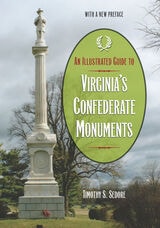
An Illustrated Guide to Virginia's Confederate Monuments
Timothy S. Sedore
Southern Illinois University Press, 2011
From well-known battlefields, such as Manassas, Fredericksburg, and Appomattox, to lesser-known sites, such as Sinking Spring Cemetery and Rude’s Hill, Sedore leads readers on a vivid journey through Virginia’s Confederate history. Tablets, monoliths, courthouses, cemeteries, town squares, battlefields, and more are cataloged in detail and accompanied by photographs and meticulous commentary. Each entry contains descriptions, fascinating historical information, and location, providing a complete portrait of each site.
Much more than a visual tapestry or a tourist’s handbook, An Illustrated Guide to Virginia’s Confederate Monuments draws on scholarly and field research to reveal these sites as public efforts to reconcile mourning with Southern postwar ideologies. Sedore analyzes in depth the nature of these attempts to publicly explain Virginia’s sense of grief after the war, delving deep into the psychology of a traumatized area. From commemorations of famous generals to memories of unknown soldiers, the dead speak from the pages of this sweeping companion to history.
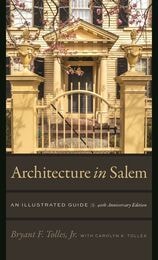
Architecture in Salem
An Illustrated GuideBryant F. Tolles, Jr.
Brandeis University Press, 2023
Salem, Massachusetts is home to one of the largest extant collections of historical architecture in the entire nation. In this long-awaited new edition, noted architectural historian Bryant F. Tolles, Jr., presents an illustrated guide and walking tour covering more than three centuries of building styles and types. The book discusses over 350 buildings and complexes, with individual entries and photographs of nearly 230 structures. The material has been arranged according to eight tour districts, each accompanied by an introduction and a map.
A joy for the avid walker and arm-chair enthusiast alike, this book is an essential guide to the architecture of Salem from the early seventeenth century through the Georgian, Federal, Victorian, modern, and contemporary periods. Updated with new maps; color illustrations; a preface by Lynda Roscoe Hartigen, executive director and CEO of the Peabody Essex Museum; and a foreword by Steven Mallory, manager of historic structures and landscapes at the Peabody Essex Museum.
Early Alabama
An Illustrated Guide to the Formative Years, 1798–1826Mike Bunn
University of Alabama Press, 2019
An illustrated guidebook documenting the history and sites of the state’s origins
Alabama’s territorial and early statehood years represent a crucial formative period in its past, a time in which the state both literally and figuratively took shape. The story of the remarkable changes that occurred within Alabama as it transitioned from frontier territory to a vital part of the American union in less than a quarter century is one of the most compelling in the state’s past. This history is rich with stories of charismatic leaders, rugged frontiersmen, a dramatic and pivotal war that shaped the state’s trajectory, raging political intrigue, and pervasive sectional rivalry.
Many of Alabama’s modern cities, counties, and religious, educational, and governmental institutions first took shape within this time period. It also gave way to the creation of sophisticated trade and communication networks, the first large-scale cultivation of cotton, and the advent of the steamboat. Contained within this story of growth and innovation is a parallel story, the dispossession of Native groups of their lands and the forced labor of slaves, which fueled much of Alabama’s early development.
Early Alabama: An Illustrated Guide to the Formative Years, 1798–1826 serves as a traveler’s guidebook with a fast-paced narrative that traces Alabama’s developmental years. Despite the great significance of this era in the state’s overall growth, these years are perhaps the least understood in all of the state’s history and have received relatively scant attention from historians. Mike Bunn has created a detailed guide—appealing to historians and the general public—for touring historic sites and structures including selected homes, churches, businesses, government buildings, battlefields, cemeteries, and museums..

Fishes of the Open Ocean
A Natural History and Illustrated GuideJulian Pepperell
University of Chicago Press, 2010
Between the surface of the sea and depths of two hundred meters lies a remarkable range of fish, generally known as pelagics, or open-ocean dwellers. These creatures are among the largest, fastest, highest-leaping, and most migratory fish on the entire planet. Beautifully adapted to their world, they range from tiny drift fish and plankton-straining whale sharks to more streamlined predators such as tuna, marlin, sailfish, and wahoo.
Fishes of the Open Ocean, from leading marine biologist and world authority on the subject Julian Pepperell, is the first book to comprehensively describe these fishes and explore the complex and often fragile world in which they live. In what will be the definitive book on the subject for years to come—and, with over three hundred color images, the most lavishly produced as well—Pepperell details the environment and biology of every major species of fish that inhabits the open ocean, an expanse that covers 330 million cubic miles and is the largest aquatic habitat on the Earth. The first section of the book introduces the various evolutionary forms these fish have taken, as well as the ways in which specific species interact and coevolve with others in the food web. A chapter on commercial and sport fisheries explores the human element in this realm and considers such issues as sustainability, catch-and-release initiatives, and the risks of extinction.
The second section of the book provides species accounts of open ocean dwellers organized by group, with overviews and general descriptions that are inclusive of range and distribution, unique physiological and morphological attributes, and the role of each species within its ecosystem. Global distribution maps, original illustrations from renowned artist and scientist Guy Harvey, and truly stunning images from some of the world’s leading underwater photographers round out this copiously illustrated volume.
Illustrated Guide to the Mountain Stream Insects of Colorado, Second Edition
J. V. Ward
University Press of Colorado, 2002
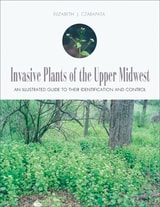
Invasive Plants of the Upper Midwest
An Illustrated Guide to Their Identification and ControlElizabeth J. Czarapata
University of Wisconsin Press, 2005
Invasive plants are a growing threat to ecosystems everywhere. Often originating in distant climes, they spread to woodlands, wetlands, prairies, roadsides, and backyards that lack the biological controls which kept these plant populations in check in their homelands.
Invasive Plants of the Upper Midwest includes more than 250 color photos that will help anyone identify problem trees, shrubs, vines, grasses, sedges, and herbaceous plants (including aquatic invaders). The text offers further details of plant identification; manual, mechanical, biological, and chemical control techniques; information and advice about herbicides; and suggestions for related ecological restoration and community education efforts. Also included are literature references, a glossary, a matrix of existing and potential invasive species in the Upper Midwest, an index with both scientific and common plant names, advice on state agencies to contact with invasive plant questions, and other helpful resources.
The information in this book has been carefully reviewed by staffs of the Wisconsin Department of Natural Resources Bureau of Endangered Resources and the University of Wisconsin-Madison Arboretum and other invasive plant experts.
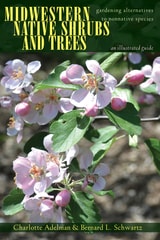
Midwestern Native Shrubs and Trees
Gardening Alternatives to Nonnative Species: An Illustrated GuideCharlotte Adelman, Bernard L. Schwartz
Ohio University Press, 2016
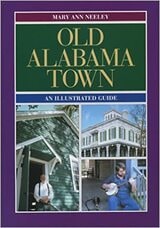
Old Alabama Town
An Illustrated GuideMary Ann Neeley
University of Alabama Press, 2002
Old Alabama Town is a visual and historical chronicle of one of the South's important architectural landmarks—four blocks of 19th-century buildings restored to their original condition, collectively forming an educational village that preserves and displays life as it was lived in Alabama from the 1830s through the 1890s. A creation of the Landmarks Foundation of Montgomery, a nonprofit organization developed in 1967, Old Alabama Town displays the lifestyles and environment of the time period through architecture, decorative arts, and living history. The "town" has been made available for students, secondary school educators for field trips, and to tourists for entertainment and family excursions.
More than 50 historic structures, all formerly in danger of demolition, have been transported from around central Alabama and restored on site. The Living Block of the village allows visitors to explore a log cabin, dogtrot house, carriage house, "shotgun" house, pole barn, schoolhouse, tavern, grange hall, and grocery. The Working Block allows patrons to visit a blacksmith's shop, drugstore, grist mill, cotton gin, woodcarver's shop, print shop, and cookhouse. Additional regions of the village present some of the most significant historic homes to be preserved in the state: the Cram-Lakin House, Thompson Mansion, and the Ordeman-Mitchell-Shaw House, among others.
Designed in full color, this paperback guide is introduced by the author's historical, sociological, and cultural overview of Montgomery. The 45 individual entries detail the history and features of each structure and are supplemented by a map, archival photographs of the buildings, and 60 contempo-rary color photographs. This book will be useful to tourists, preservationists, students and scholars of Alabama history and architecture, and all those interested in an interpretive museum of southern life.
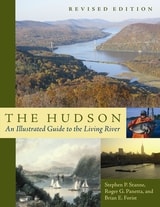
The Hudson
An Illustrated Guide to the Living RiverStanne, Stephen P
Rutgers University Press, 2007
The Hudson River is one of the great rivers of the world. Not long ago, it was deeply threatened by pollution. Now it is coming back to life, a river where fish and birds can thrive again, a river valued once more by communities along its shores.
The unique environmental education program on board the sloop, Clearwater, founded by folksinger Pete Seeger, has taught thousands of children and adults to love the river. With this guidebook, Clearwater teachers bring their wealth of knowledge about the river to a wider audience.
This book covers, for the first time, the full sweep of the river's natural history and human heritage. It introduces you to the Hudson's diversity of plants and wildlife, to the geological forces that created the river, to the people who explored and settled its banks, to the river's enduring place in American history and art, and to the battles waged over its environmental preservation. Its engaging illustrations, maps, and text––distilled from the best research on the Hudson's habitat and history––invite you to explore the river yourself.
Royalties from the sale of this book will support the continued restoration of the river's ecological well-being through the programs of the Hudson River Sloop Clearwater, Inc., a nonprofit education and advocacy organization based in Poughkeepsie, New York.
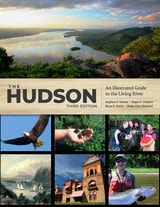
The Hudson
An Illustrated Guide to the Living RiverStephen P. Stanne
Rutgers University Press, 2021
This volume gives a detailed account of the Hudson River’s history, including the geological forces that created it, the various peoples who have lived on its banks, and the great works of art it has inspired. It also showcases the many species making a home on this waterway, including the Atlantic sturgeon, the bald eagle, the invasive zebra mussel, and the herons of New York Harbor. Combining both scientific and historical perspectives, this book demonstrates why the Hudson and its valley have been so central to the environmental movement.
As it charts the progress made towards restoring the river ecosystem and the effects of emerging threats like climate change, The Hudson identifies concrete ways that readers can help. To that end, royalties from the sale of this book will go to the non-profit environmental advocacy group Hudson River Sloop Clearwater, Inc.
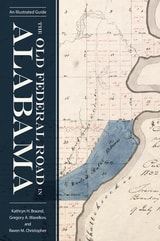
The Old Federal Road in Alabama
An Illustrated GuideKathryn H. Braund, Gregory A. Waselkov, and Raven M. Christopher
University of Alabama Press, 2019
A concise illustrated guidebook for those wishing to explore and know more about the storied gateway that made possible Alabama's development.
Forged through the territory of the Creek Nation by the United States federal government, the Federal Road was developed as a communication artery linking the east coast of the United States with Louisiana. Its creation amplified already tense relationships between the government, settlers, and the Creek Nation, culminating in the devastating Creek War of 1813–1814, and thereafter it became the primary avenue of immigration for thousands of Alabama settlers.
Central to understanding Alabama’s territorial and early statehood years, the Federal Road was both a physical and symbolic thoroughfare that cut a swath of shattering change through the land and cultures it traversed. The road revolutionized Alabama’s expansion, altering the course of its development by playing a significant role in sparking a cataclysmic war, facilitating unprecedented American immigration, and enabling an associated radical transformation of the land itself.
The first half of The Old Federal Road in Alabama: An Illustrated Guide offers a narrative history that includes brief accounts of the construction of the road, the experiences of historic travelers, and descriptions of major changes to the road over time. The authors vividly reconstruct the course of the road in detail and make use of a wealth of well-chosen illustrations. Along the way they give attention to the very terrain it traversed, bringing to life what traveling the road must have been like and illuminating its story in a way few others have ever attempted.
The second half of the volume is divided into three parts—Eastern, Central, and Southern—and serves as a modern traveler’s guide to the Federal Road. This section includes driving tours and maps, highlighting historical sites and surviving portions of the old road and how to visit them.