Results by title
10 books match the query 'Image processing'

Access Control and Security Monitoring of Multimedia Information Processing and Transmission
Zhihan Lyu
The Institution of Engineering and Technology, 2024

Architectures of Illusion
From Motion Picutres to Navigable Interactuve EnvironmentsEdited by François Penz and Maureen Thomas
Intellect Books, 2003
This profile of the work of the Cambridge University Moving Image Studio (CUMIS), presents a strong argument that new developments in digital media are absolutely dependent on an understanding of traditional excellence. The book stands alone in placing equal emphasis on theoretical and practical aspects of its subject matter and avoids jargon so as to be easily understood by the general reader as well as the specialist.
Chapters discuss:
• animation • navigable architectural environments • moving image narrativity
• questions of truth and representation • virtuality/reality • synthetic imaging
• interactivity
This broad analysis of current research, teaching and media production contains essential information for all those working or studying in the areas of multimedia, architecture, film and television.
The book is designed as a core text for the Cambridge University 1 year MPhil Degree in Architecture and the Moving Image.

Biologically-Inspired Radar and Sonar
Lessons from natureAlessio Balleri
The Institution of Engineering and Technology, 2017
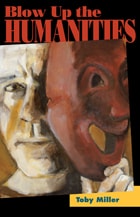
Blow Up the Humanities
Toby Miller
Temple University Press, 2012
A short, sharp, and provocative book, Blow Up the Humanities has esteemed scholar Toby Miller declaring that there are two humanities in the United States. One is the venerable, powerful humanities of private universities; the other is the humanities of state schools, which focus mainly on job prospects. There is a class division between the two—both in terms of faculty research and student background—and it must end.
Miller critically lays waste to the system. He examines scholarly publishing as well as media and cultural studies to show how to restructure the humanities by studying popular cultural phenomena, like video games. Miller ultimately insists that these two humanities must merge in order to survive and succeed in producing an aware and concerned citizenry.
Deep Learning in Medical Image Processing and Analysis
Khaled Rabie
The Institution of Engineering and Technology, 2023

Introduction to Radar Target Recognition
P. Tait
The Institution of Engineering and Technology, 2006
Inverse Synthetic Aperture Radar Imaging
Principles, algorithms and applicationsVictor C. Chen
The Institution of Engineering and Technology, 2014
Machine Learning in Medical Imaging and Computer Vision
Amita Nandal
The Institution of Engineering and Technology, 2024
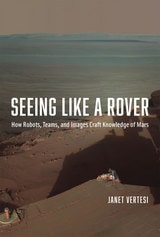
Seeing Like a Rover
How Robots, Teams, and Images Craft Knowledge of MarsJanet Vertesi
University of Chicago Press, 2015
With Seeing Like a Rover, Janet Vertesi takes us behind the scenes to reveal the work that goes into creating our knowledge of Mars. Every photograph that the Rovers take, she shows, must be processed, manipulated, and interpreted—and all that comes after team members negotiate with each other about what they should even be taking photographs of in the first place. Vertesi’s account of the inspiringly successful Rover project reveals science in action, a world where digital processing uncovers scientific truths, where images are used to craft consensus, and where team members develop an uncanny intimacy with the sensory apparatus of a robot that is millions of miles away. Ultimately, Vertesi shows, every image taken by the Mars Rovers is not merely a picture of Mars—it’s a portrait of the whole Rover team, as well.
SpecLab
Digital Aesthetics and Projects in Speculative ComputingJohanna Drucker
University of Chicago Press, 2009
Nearly a decade ago, Johanna Drucker cofounded the University of Virginia’s SpecLab, a digital humanities laboratory dedicated to risky projects with serious aims. In SpecLab she explores the implications of these radical efforts to use critical practices and aesthetic principles against the authority of technology based on analytic models of knowledge.
Inspired by the imaginative frontiers of graphic arts and experimental literature and the technical possibilities of computation and information management, the projects Drucker engages range from Subjective Meteorology to Artists’ Books Online to the as yet unrealized ’Patacritical Demon, an interactive tool for exposing the structures that underlie our interpretations of text. Illuminating the kind of future such experiments could enable, SpecLab functions as more than a set of case studies at the intersection of computers and humanistic inquiry. It also exemplifies Drucker’s contention that humanists must play a role in designing models of knowledge for the digital age—models that will determine how our culture will function in years to come.