Results by title
6 books match the query 'Imagination in literature'
Imagination and the Arts in C.S. Lewis
Journeying to Narnia and Other WorldsPeter J. Schakel
University of Missouri Press, 2002
Imagination has long been regarded as central to C. S. Lewis's life and to his creative and critical works, but this is the first study to provide a thorough analysis of his theory of imagination, including the different ways he used the word and how those uses relate to each other. Peter Schakel begins by concentrating on the way reading or engaging with the other arts is an imaginative activity. He focuses on three books in which imagination is the central theme—Surprised by Joy, An Experiment in Criticism, and The Discarded Image—and shows the important role of imagination in Lewis's theory of education.
He then examines imagination and reading in Lewis's fiction, concentrating specifically on the Chronicles of Narnia, the most imaginative of his works. He looks at how the imaginative experience of reading the Chronicles is affected by the physical texture of the books, the illustrations, revisions of the texts, the order in which the books are read, and their narrative "voice," the "storyteller" who becomes almost a character in the stories.
Imagination and the Arts in C. S. Lewis also explores Lewis's ideas about imagination in the nonliterary arts. Although Lewis regarded engagement with the arts as essential to a well- rounded and satisfying life, critics of his work and even biographers have given little attention to this aspect of his life. Schakel reviews the place of music, dance, art, and architecture in Lewis's life, the ways in which he uses them as content in his poems and stories, and how he develops some of the deepest, most significant themes of his stories through them.
Schakel concludes by analyzing the uses and abuses of imagination. He looks first at "moral imagination." Although Lewis did not use this term, Schakel shows how Lewis developed the concept in That Hideous Strength and The Abolition of Man long before it became popularized in the 1980s and 1990s. While readers often concentrate on the Christian dimension of Lewis's works, equally or more important to him was their moral dimension.
Imagination and the Arts in C. S. Lewis will appeal to students and teachers of both children's literature and twentieth-century British writers. It will also be of value to readers who wish to compare Lewis's creations with more recent imaginative works such as the Harry Potter series.
Imagination, Meditation, and Cognition in the Middle Ages
Michelle Karnes
University of Chicago Press, 2011
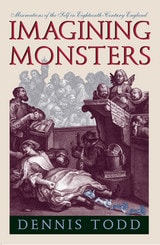
Imagining Monsters
Miscreations of the Self in Eighteenth-Century EnglandDennis Todd
University of Chicago Press, 1995
Mary Toft's outrageous claim was accepted because of a common belief that the imagination of a pregnant woman could deform her fetus, creating a monster within her. Drawing on largely unexamined material from medicine, embryology, philosophy, and popular "monster" exhibitions, Todd shows that such ideas about monstrous births expressed a fear central to scientific, literary, and philosophical thinking: that the imagination could transgress the barrier between mind and body.
In his analysis of the Toft case, Todd exposes deep anxieties about the threat this transgressive imagination posed to the idea of the self as stable, coherent, and autonomous. Major works of Pope and Swift reveal that they, too, were concerned with these issues, and Imagining Monsters provides detailed discussions of Gulliver's Travels and The Dunciad illustrating how these writers used images of monstrosity to explore the problematic nature of human identity. It also includes a provocative analysis of Pope's later work that takes into account his physical deformity and his need to defend himself in a society that linked a deformed body with a deformed character.
The Written World
Space, Literature, and the Chorological Imagination in Early Modern FranceJeffrey N. Peters
Northwestern University Press, 2018
In analyses of well-known authors such as Corneille, Molière, Racine, and Madame de Lafayette, Peters demonstrates that the apparent absence of physical space in seventeenth-century literary depiction indicates a subtle engagement with, rather than a rejection of, evolving principles of cosmological understanding. Space is not absent in these works so much as transformed in keeping with contemporaneous developments in early modern natural philosophy. The Written World will appeal to philosophers of literature and literary theorists as well as scholars of early modern Europe and historians of science and geography
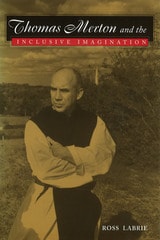
Thomas Merton and the Inclusive Imagination
Ross Labrie
University of Missouri Press, 2001
Thomas Merton (1915-1968) was a Roman Catholic priest, a Trappist monk, a social activist, and a poet. Author of the celebrated autobiography The Seven Storey Mountain, Merton has been described as the most important American religious writer of the past hundred years. One of the notable characteristics of Merton's writing, both in poetry and in prose, was his seamless intermingling of religious and Romantic elements, an intermingling that, because of his gifts as a writer and because of his enormous influence, has had the effect of making widespread a distinctive form of religious thought and expression. In Thomas Merton and the Inclusive Imagination, Ross Labrie reveals the breadth of Merton's intellectual reach by taking an original and systematic look at Merton's thought, which is generally regarded as eclectic and unsystematic.
What captured Merton's attention about Romanticism and mysticism and what held his attention virtually all his life was his consciousness of the ontological significance of unity and wholeness. Even though he was far from being a systematic thinker, Merton's writings form a coherent whole when considered from the point of view of his emphasis on unity and wholeness. Labrie skillfully examines Merton's letters, journals, and individual works to show the full expanse of his contribution. By using insights from the Romantic literary tradition and from the mystical tradition, the author is able to make sense of Merton's writings from all periods of his life. Although Labrie covers such sweeping topics as consciousness, self, being, nature, time, myth, culture, and individuation, remaining focused on Merton's specific, unique contributions in each area.
This thought-provoking work, which takes into account material from the recent full publication of Merton's journals and from his Columbia University notebooks on Romanticism, not only shows Merton's intellectual growth but provides a look at his expansive interests as well. Thomas Merton and the Inclusive Imagination will make a significant contribution to Merton studies.
Time and Imagination
Chronotopes in Western Narrative CultureBart Keunen
Northwestern University Press, 2011
After constructing an archeology of the chronotope, Keunen proposes a remarkably original description of the various types of chronotopes. Chronotypes that emphasize conflict are using Greek mythological names to explain equilibrium, or reconciliation, and conflict chronotopes. He then develops a plot typology that covers the whole history of Western narrative culture. With examples and resonances both ancient and modern, Keunen’s Time and Imagination will equip theorists in a wide range of fields with powerful tools for years to come.