Results by title
32 books match the query 'Imagining'

A Reverence for Rivers
Imagining an Ethic for Running WatersKurt D. Fausch
Oregon State University Press, 2025
In A Reverence for Rivers, Kurt Fausch draws on his experience as a stream ecologist, his interest in Indigenous cultures, and a thoughtful consideration of environmental ethics to explore human values surrounding freshwater ecosystems. Focusing on seven rivers across the globe—from the Salmon River in Oregon to the Sarufutsu River in Japan—he examines the growing ethical dilemmas threatening our rivers, including increasing demands for water, habitat fragmentation, overfishing, and deepening climate change.
How do we decide which rivers deserve legal protection? What is our right to water as humans? And how do we foster resilient rivers? Through a combination of scientific expertise and thoughtful observations of the natural world, Fausch translates the science of rivers into accessible language for readers and begins to address these questions. He weaves deep Indigenous histories throughout the book and includes personal visits to tribal lands to explore the traditional values held by several Indigenous groups. Fausch reminds us that our connection to rivers is personal and grounded in specific places, flowing from the stories we carry about our relationships with and responsibilities to these rivers.
In a final essay Fausch ponders Aldo Leopold’s statement that “nothing so important as an ethic is ever written,” but instead evolves in the minds of a thinking community. A Reverence for Rivers speaks to both the mind and the heart, offering perspectives so that we might begin to imagine and create an ethic for living with and caring for the running waters on which we rely for so much.
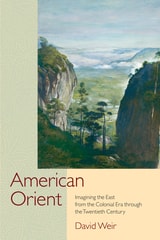
American Orient
Imagining the East from the Colonial Era through the Twentieth CenturyDavid Weir
University of Massachusetts Press, 2011
Surveying the American fascination with the Far East since the mid-eighteenth century, this book explains why the Orient had a fundamentally different meaning in the United States than in Europe or Great Britain. David Weir argues that unlike their European counterparts, Americans did not treat the East simply as a site of imperialist adventure; on the contrary, colonial subjugation was an experience that early Americans shared with the peoples of China and India.
In eighteenth-century America, the East was, paradoxically, a means of reinforcing the enlightenment values of the West: Franklin, Jefferson, and other American writers found in Confucius a complement to their own political and philosophical beliefs. In the nineteenth century, with the shift from an agrarian to an industrial economy, the Hindu Orient emerged as a mystical alternative to American reality. During this period, Emerson, Thoreau, and other Transcendentalists viewed the “Oriental” not as an exotic other but as an image of what Americans could be, if stripped of all the commercialism and materialism that set them apart from their ideal. A similar sense of Oriental otherness informed the aesthetic discoveries of the early twentieth century, as Pound, Eliot, and other poets found in Chinese and Japanese literature an artistic purity and intensity absent from Western tradition. For all of these figures the Orient became a complex fantasy that allowed them to overcome something objectionable, either in themselves or in the culture of which they were a part, in order to attain some freer, more genuine form of philosophical, religious, or artistic expression.
Before the Nation
Kokugaku and the Imagining of Community in Early Modern JapanSusan L. Burns
Duke University Press, 2003
Central to Burns's analysis is Motoori Norinaga’s Kojikiden, arguably the most important intellectual work of Japan's early modern period. Burns situates the Kojikiden as one in a series of attempts to analyze and interpret the mythohistories dating from the early eighth century, the Kojiki and Nihon shoki. Norinaga saw these texts as keys to an original, authentic, and idyllic Japan that existed before being tainted by "flawed" foreign influences, notably Confucianism and Buddhism. Hailed in the nineteenth century as the begetter of a new national consciousness, Norinaga's Kojikiden was later condemned by some as a source of Japan's twentieth-century descent into militarism, war, and defeat. Burns looks in depth at three kokugaku writers—Ueda Akinari, Fujitani Mitsue, and Tachibana Moribe—who contested Norinaga's interpretations and produced competing readings of the mythohistories that offered new theories of community as the basis for Japanese social and cultural identity. Though relegated to the footnotes by a later generation of scholars, these writers were quite influential in their day, and by recovering their arguments, Burns reveals kokugaku as a complex debate—involving history, language, and subjectivity—with repercussions extending well into the modern era.
Big Digital Humanities
Imagining a Meeting Place for the Humanities and the DigitalPatrik Svensson
University of Michigan Press, 2016
Svensson’s own unique perspective and special stake in the Digital Humanities conversation comes from his role as director of the HUMlab at Umeå University. HUMlab is a unique collaborative space and Digital Humanities center, which officially opened its doors in 2000. According to its own official description, the HUMlab is an open, creative studio environment where “students, researchers, artists, entrepreneurs and international guests come together to engage in dialogue, experiment with technology, take on challenges and move scholarship forward.” It is this last element “moving scholarship forward” that Svensson argues is the real opportunity in what he terms the “big digital humanities,” or digital humanities as practiced in collaborative spaces like the HUMlab, and he is uniquely positioned to take an account of this evolving dimension of Digital Humanities practice.
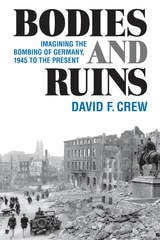
Bodies and Ruins
Imagining the Bombing of Germany, 1945 to the PresentDavid F. Crew
University of Michigan Press, 2017
Bodies and Ruins examines a range of local publications that carried photographic images of German cities destroyed in the air war, images that soon entered the visual memory of World War II. Despite its obvious importance, historians have paid very little attention to the visual representation of the bombing war. This book follows the search for what were considered to be the “right” stories and the “right” pictures of the bombing war in local publications and picture books from 1945 to the present, and is intended for historians as well as general readers interested in World War II, the Allied bombing of German cities, the Holocaust, the history of memory and photographic/visual history.

Capitalism’s Tomorrows
Imagining the Future of BusinessGavin Benke
University of Chicago Press, 0
The institutional evolution of “corporate futurism” and its influence on our view of the role of private enterprise in society.
While the bright capitalist future that the power elite of postwar America dreamed of hasn’t come to pass, its influence and repercussions continue to resonate. Gavin Benke shows that the cultural, intellectual, and political rise of neoliberalism was not inevitable. Instead, beginning in the early 1960s, a group that he dubs “corporate futurists” imagined a differently shaped and community-minded version of capitalism. Most interestingly, Benke goes beyond the once-big names in the field (such as Alvin Toffler and Daniel Bell) to show how deep-seated and granular the engagement with futurism was.
Using an incredible array of futurists’ reports, conference proceedings, and internal deliberations at places like the infamous RAND Corporation, Capitalism’s Tomorrows uncovers a moment of genuine introspection about capitalism’s development and shows how it is subject to our imaginative capacity and ability to shape how these systems work.
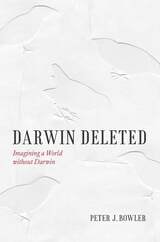
Darwin Deleted
Imagining a World without DarwinPeter J. Bowler
University of Chicago Press, 2013
In Darwin Deleted, Bowler argues that no one else, not even Wallace, was in a position to duplicate Darwin’s complete theory of evolution by natural selection. Evolutionary biology would almost certainly have emerged, but through alternative theories, which were frequently promoted by scientists, religious thinkers, and moralists who feared the implications of natural selection. Because non-Darwinian elements of evolutionism flourished for a time in the real world, it is possible to plausibly imagine how they might have developed, particularly if the theory of natural selection had not emerged until decades after the acceptance of the basic idea of evolution. Bowler’s unique approach enables him to clearly explain the non-Darwinian tradition—and in doing so, he reveals how the reception of Darwinism was historically contingent. By taking Darwin out of the equation, Bowler is able to fully elucidate the ideas of other scientists, such as Richard Owen and Thomas Huxley, whose work has often been misunderstood because of their distinctive responses to Darwin.
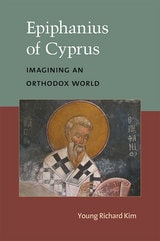
Epiphanius of Cyprus
Imagining an Orthodox WorldYoung Richard Kim
University of Michigan Press, 2015
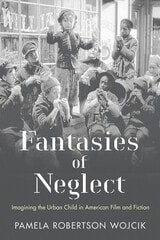
Fantasies of Neglect
Imagining the Urban Child in American Film and FictionPamela Robertson Wojcik
Rutgers University Press, 2016
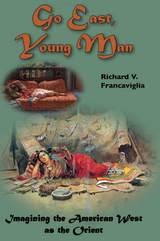
Go East, Young Man
Imagining the American West as the OrientRichard Francaviglia
Utah State University Press, 2011
Transference of orientalist images and identities to the American landscape and its inhabitants, especially in the West—in other words, portrayal of the West as the “Orient”—has been a common aspect of American cultural history. Place names, such as the Jordan River or Pyramid Lake, offer notable examples, but the imagery and its varied meanings are more widespread and significant. Understanding that range and significance, especially to the western part of the continent, means coming to terms with the complicated, nuanced ideas of the Orient and of the North American continent that European Americans brought to the West. Such complexity is what historical geographer Richard Francaviglia unravels in this book.
Since the publication of Edward Said’s book, Orientalism, the term has come to signify something one-dimensionally negative. In essence, the orientalist vision was an ethnocentric characterization of the peoples of Asia (and Africa and the “Near East”) as exotic, primitive “others” subject to conquest by the nations of Europe. That now well-established point, which expresses a postcolonial perspective, is critical, but Francaviglia suggest that it overlooks much variation and complexity in the views of historical actors and writers, many of whom thought of western places in terms of an idealized and romanticized Orient. It likewise neglects positive images and interpretations to focus on those of a decadent and ostensibly inferior East.
We cannot understand well or fully what the pervasive orientalism found in western cultural history meant, says Francaviglia, if we focus only on its role as an intellectual engine for European imperialism. It did play that role as well in the American West. One only need think about characterizations of American Indians as Bedouins of the Plains destined for displacement by a settled frontier. Other roles for orientalism, though, from romantic to commercial ones, were also widely in play. In Go East, Young Man, Francaviglia explores a broad range of orientalist images deployed in the context of European settlement of the American West, and he unfolds their multiple significances.
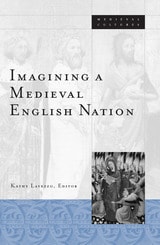
Imagining A Medieval English Nation
Kathy Lavezzo
University of Minnesota Press, 2003
The first comprehensive analysis of English national identity in the late Middle Ages
During the late Middle Ages, the increasing expansion of administrative, legal, and military systems by a central government, together with the greater involvement of the commons in national life, brought England closer than ever to political nationhood. Examining a diverse array of texts—ranging from Latin and vernacular historiography to Lollard tracts, Ricardian poetry, and chivalric treatises—this volume reveals the variety of forms “England” assumed when it was imagined in the medieval West.
These essays disrupt conventional thinking about the relationship between premodernity and modernity, challenge traditional preconceptions regarding the origins of the nation, and complicate theories about the workings of nationalism. Imagining a Medieval English Nation is not only a collection of new readings of major canonical works by leading medievalists, it is among the first book-length analyses on the subject and of critical interest. Contributors: Kathleen Davis, Bucknell U; L. O. Aranye Fradenburg, U of California, Santa Barbara; Andrew Galloway, Cornell U; Jill C. Havens, Baylor U; Peggy A. Knapp, Carnegie Mellon U; Larry Scanlon, Rutgers U; D. Vance Smith, Princeton U; Claire Sponsler, U of Iowa; Lynn Staley, Colgate U; Thorlac Turville-Petre, U of Nottingham.
Imagining The Modern City
James Donald
University of Minnesota Press, 1999
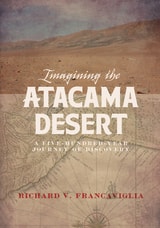
Imagining the Atacama Desert
A Five-Hundred-Year Journey of DiscoveryRichard V. Francaviglia
University of Utah Press, 2018
Beginning with the indigenous Atacameño peoples at the southern edge of the Incan empire, the volume moves through five hundred years of history, sharing accounts written by Spanish, French, German, Dutch, British, American, and other travelers—pirates, scientists, explorers, and entrepreneurs among them. The Atacama’s austere landscape hides many secrets, including vast mineral wealth, the world's oldest mummies, and the more recent remains of dissidents murdered by the regime of former Chilean dictator Augusto Pinochet in the early 1970s. Today numerous observatories operate under the Atacama’s clear night skies, astronauts train on the rugged desert floor, and tourists flock there for inspiration.
In addition to a rich set of narratives, the book features 115 images—historical maps, photographs, and natural history illustrations, most in full color—to tell a more complete and compelling story. Imagining the Atacama Desert shows how what was once a wilderness at the edges of empire became one of South America's most iconic regions, one that continues to lure those seeking adventure and the unknown.
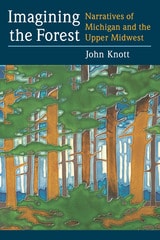
Imagining the Forest
Narratives of Michigan and the Upper MidwestJohn Knott
University of Michigan Press, 2011
Forests have always been more than just their trees. The forests in Michigan (and similar forests in other Great Lakes states such as Wisconsin and Minnesota) played a role in the American cultural imagination from the beginnings of European settlement in the early nineteenth century to the present. Our relationships with those forests have been shaped by the cultural attitudes of the times, and people have invested in them both moral and spiritual meanings.
Author John Knott draws upon such works as Simon Schama's Landscape and Memory and Robert Pogue Harrison's Forests: The Shadow of Civilization in exploring ways in which our
relationships with forests have been shaped, using Michigan---its history of settlement, popular literature, and forest management controversies---as an exemplary case. Knott looks at such well-known figures as William Bradford, James Fenimore Cooper, John Muir, John Burroughs, and Teddy Roosevelt; Ojibwa conceptions of the forest and natural world (including how Longfellow mythologized them); early explorer accounts; and contemporary literature set in the Upper Peninsula, including Jim Harrison's True North and Philip Caputo's Indian Country.
Two competing metaphors evolved over time, Knott shows: the forest as howling wilderness, impeding the progress of civilization and in need of subjugation, and the forest as temple or cathedral, worthy of reverence and protection. Imagining the Forestshows the origin and development of both.
Imagining the Global
Transnational Media and Popular Culture Beyond East and WestFabienne Darling-Wolf
University of Michigan Press, 2014
Imagining the Method
Reception, Identity, and American Screen PerformanceJustin Owen Rawlins
University of Texas Press, 2024
A revisionist history of Method acting that connects the popular reception of “methodness” to entrenched understandings of screen performance still dominating American film discourse today.
Only one performance style has dominated the lexicon of the casual moviegoer: “Method acting.” The first reception-based analysis of film acting, Imagining the Method investigates how popular understandings of the so-called Method—what its author Justin Rawlins calls "methodness"—created an exclusive brand for white, male actors while associating such actors with rebellion and marginalization. Drawing on extensive archival research, the book maps the forces giving shape to methodness and policing its boundaries.
Imagining the Method traces the primordial conditions under which the Method was conceived. It explores John Garfield's tenuous relationship with methodness due to his identity. It considers the links between John Wayne's reliance on "anti-Method" stardom and Marlon Brando and James Dean's ascribed embodiment of Method features. It dissects contemporary emphases on transformation and considers the implications of methodness in the encoding of AI performers. Altogether, Justin Rawlins offers a revisionist history of the Method that shines a light on the cultural politics of methodness and the still-dominant assumptions about race, gender, and screen actors and acting that inform how we talk about performance and performers.
Imagining the Mulatta
Blackness in U.S. and Brazilian MediaJasmine Mitchell
University of Illinois Press, 2020
Jasmine Mitchell investigates the development and exploitation of the mulatta figure in Brazilian and U.S. popular culture. Drawing on a wide range of case studies, she analyzes policy debates and reveals the use of mixed-Black female celebrities as subjects of racial and gendered discussions. Mitchell also unveils the ways the media moralizes about the mulatta figure and uses her as an example of an ”acceptable” version of blackness that at once dreams of erasing undesirable blackness while maintaining the qualities that serve as outlets for interracial desire.
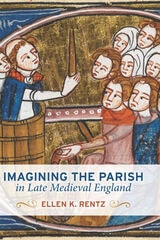
Imagining the Parish in Late Medieval England
Ellen K. Rentz
The Ohio State University Press, 2015
Imagining the Parish in Late Medieval England explores the ways in which Middle English literature engages the idea of lay spiritual community and the ideal of parochial worship. Ellen K. Rentz pairs nuanced readings of works such as Piers Plowman,Handlyng Synne, and the Prick of Conscience with careful analysis of contemporary sermons, spiritual handbooks, and liturgical texts as well as a wide range of visual sources, including wall paintings and stained glass. This new study examines how these texts and images locate the process of achieving salvation in the parish and in the work that parishioners undertook there together.
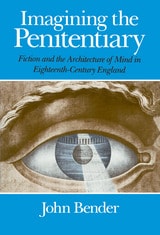
Imagining the Penitentiary
Fiction and the Architecture of Mind in Eighteenth-Century EnglandJohn Bender
University of Chicago Press, 1987
Imagining the Primitive in Naturalist and Modernist Literature
Gina M. Rossetti
University of Missouri Press, 2006
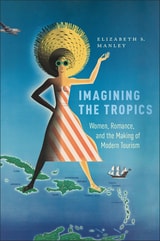
Imagining the Tropics
Women, Romance, and the Making of Modern TourismElizabeth S. Manley
Rutgers University Press, 2025
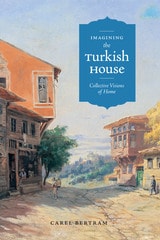
Imagining the Turkish House
Collective Visions of HomeBy Carel Bertram
University of Texas Press, 2008
"Houses can become poetic expressions of longing for a lost past, voices of a lived present, and dreams of an ideal future." Carel Bertram discovered this truth when she went to Turkey in the 1990s and began asking people about their memories of "the Turkish house." The fondness and nostalgia with which people recalled the distinctive wooden houses that were once ubiquitous throughout the Ottoman Empire made her realize that "the Turkish house" carries rich symbolic meaning. In this delightfully readable book, Bertram considers representations of the Turkish house in literature, art, and architecture to understand why the idea of the house has become such a potent signifier of Turkish identity.
Bertram's exploration of the Turkish house shows how this feature of Ottoman culture took on symbolic meaning in the Turkish imagination as Turkey became more Westernized and secular in the early decades of the twentieth century. She shows how artists, writers, and architects all drew on the memory of the Turkish house as a space where changing notions of spirituality, modernity, and identity—as well as the social roles of women and the family—could be approached, contested, revised, or embraced during this period of tumultuous change.
Liminal Lives
Imagining the Human at the Frontiers of BiomedicineSusan Merrill Squier
Duke University Press, 2004
Drawing on archival materials of twentieth-century biology; little-known works of fiction and science fiction; and twentieth- and twenty-first century U.S. and U.K. government reports by the National Institutes of Health, the Parliamentary Advisory Group on the Ethics of Xenotransplantation, and the President’s Council on Bioethics, she examines a number of biomedical changes as each was portrayed by scientists, social scientists, and authors of fiction and poetry. Among the scientific developments she considers are the cultured cell, the hybrid embryo, the engineered intrauterine fetus, the child treated with human growth hormone, the process of organ transplantation, and the elderly person rejuvenated by hormone replacement therapy or other artificial means. Squier shows that in the midst of new phenomena such as these, literature helps us imagine new ways of living. It allows us to reflect on the possibilities and perils of our liminal lives.
Money Jungle
Imagining the New Times SquareChesluk, Benjamin
Rutgers University Press, 2008
For more than a century, Times Square has mesmerized the world with the spectacle of its dazzling supersigns, its theaters, and its often-seedy nightlife. New York City’s iconic crossroads has drawn crowds of revelers, thrill-seekers, and other urban denizens, not to mention lavish outpourings of advertising and development money.
Many have hotly debated the recent transformation of this legendary intersection, with voices typically falling into two opposing camps. Some applaud a blighted red-light district becoming a big-budget, mainstream destination. Others lament an urban zone of lawless possibility being replaced by a Disneyfied, theme-park version of New York. In Money Jungle, Benjamin Chesluk shows that what is really at stake in Times Square are fundamental questions about city life—questions of power, pleasure, and what it means to be a citizen in contemporary urban space.
Chesluk weaves together surprising stories of everyday life in and around the Times Square redevelopment, tracing the connections between people from every level of this grand project in social and spatial engineering: the developers, architects, and designers responsible for reshaping the urban public spaces of Times Square and Forty-second Street; the experimental Midtown Community Court and its Times Square Ink. job-training program for misdemeanor criminals; encounters between NYPD officers and residents of Hell’s Kitchen; and angry confrontations between city planners and neighborhood activists over the future of the area.
With an eye for offbeat, telling details and a perspective that is at once sympathetic and critical, Chesluk documents how the redevelopment has tried, sometimes successfully and sometimes not, to reshape the people and places of Times Square. The result is a colorful and engaging portrait, illustrated by stunning photographs by long-time local photographer Maggie Hopp, of the street life, politics, economics, and cultural forces that mold America’s urban centers.
Rescue and Remembrance
Imagining the German Collective after NazismKobi Kabalek
University of Wisconsin Press, 2025
Kabalek argues that such simplistic depictions of the majority versus minority obscure the complex motivations and situations that led people in Nazi Germany to help persecuted Jews. Against the view that the rescuers were “forgotten” after the war, he shows that portrayals and interpretations of helping Jews appeared in various media and social discourses in East, West, and unified Germany and were used to actively debate questions of collective morality. Rescue and Remembrance analyzes the varied and changing depictions of rescue in the distinct German politics from the Nazi period, examining how the very notions of “majority” and “collective” were articulated and reformulated.
Resurrecting Tenochtitlan
Imagining the Aztec Capital in Modern Mexico CityDelia Cosentino and Adriana Zavala
University of Texas Press, 2023
Honorable Mention, ALAA-Arvey Foundation Book Award, Association of Latin American Art
Finalist, 2024 Charles Rufus Morey Book Award, College Art Association
How Mexican artists and intellectuals created a new identity for modern Mexico City through its ties to Aztec Tenochtitlan.
After archaeologists rediscovered a corner of the Templo Mayor in 1914, artists, intellectuals, and government officials attempted to revive Tenochtitlan as an instrument for reassessing Mexican national identity in the wake of the Revolution of 1910. What followed was a conceptual excavation of the original Mexica capital in relation to the transforming urban landscape of modern Mexico City.
Revolutionary-era scholars took a renewed interest in sixteenth century maps as they recognized an intersection between Tenochtitlan and the foundation of a Spanish colonial settlement directly over it. Meanwhile, Mexico City developed with modern roads and expanded civic areas as agents of nationalism promoted concepts like indigenismo, the embrace of Indigenous cultural expressions. The promotion of artworks and new architectural projects such as Diego Rivera’s Anahuacalli Museum helped to make real the notion of a modern Tenochtitlan. Employing archival materials, newspaper reports, and art criticism from 1914 to 1964, Resurrecting Tenochtitlan connects art history with urban studies to reveal the construction of a complex physical and cultural layout for Mexico’s modern capital.
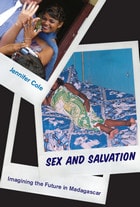
Sex and Salvation
Imagining the Future in MadagascarJennifer Cole
University of Chicago Press, 2010
Sex and Salvation chronicles the coming of age of a generation of women in Tamatave in the years that followed Madagascar’s economic liberalization. Eager to forge a viable future amid poverty and rising consumerism, many young women have entered the sexual economy in hope of finding a European husband. Just as many Westerners believe that young people break with the past as they enter adulthood, Malagasy citizens fear that these women have severed the connection to their history and culture.
Jennifer Cole’s elegant analysis shows how this notion of generational change is both wrong and consequential. It obscures the ways young people draw on long-standing ideas of gender and sexuality, it ignores how urbanites relate to their rural counterparts, and it neglects the relationship between these husband-seeking women and their elders who join Pentecostal churches. And yet, as talk about the women circulates through the city’s neighborhoods, bars, Internet cafes, and churches, it teaches others new ways of being.
Cole’s sophisticated depiction of how a generation’s coming of age contributes to social change eschews a narrow focus on crisis. Instead, she reveals how fantasies of rupture and conceptions of the changing life course shape the everyday ways that people create the future.
Storytelling in Queer Appalachia
Imagining and Writing the Unspeakable OtherHillery Glasby
West Virginia University Press, 2020
Focusing especially on disciplinary approaches from rhetoric and composition, the volume explores sexual identities in rural places, community and individual meaning-making among the Appalachian diaspora, the storytelling infrastructure of queer Appalachia, and the role of the metronormative in discourses of difference. Storytelling in Queer Appalachia affirms queer people, fights for queer visibility over queer erasure, seeks intersectional understanding, and imagines radically embodied queer selves through social media.

Suburban Dreams
Imagining and Building the Good LifeGreg Dickinson
University of Alabama Press, 2014
2016 CHOICE OUTSTANDING ACADEMIC TITLE AND JANE JACOBS URBAN COMMUNICATION BOOK AWARD FINALIST
Explores how the suburban imaginary, composed of the built environment and imaginative texts, functions as a resource for living out the “good life”
Starting with the premise that suburban films, residential neighborhoods, chain restaurants, malls, and megachurches are compelling forms (topos) that shape and materialize the everyday lives of residents and visitors, Greg Dickinson’s Suburban Dreams offers a rhetorically attuned critical analysis of contemporary American suburbs and the “good life” their residents pursue.
Dickinson’s analysis suggests that the good life is rooted in memory and locality, both of which are foundations for creating a sense of safety central to the success of suburbs. His argument is situated first in a discussion of the intersections among buildings, cities, and the good life and the challenges to these relationships wrought by the twentieth and twenty-first centuries. The argument then turns to rich, fully-embodied analyses of suburban films and a series of archetypal suburban landscapes to explore how memory, locality, and safety interact in constructing the suburban imaginary. Moving from the pastoralism of residential neighborhoods and chain restaurants like Olive Garden and Macaroni Grill, through the megachurch’s veneration of suburban malls to the mixed-use lifestyle center’s nostalgic invocation of urban downtowns, Dickinson complicates traditional understandings of the ways suburbs situate residents and visitors in time and place.
The analysis suggests that the suburban good life is devoted to family. Framed by the discourses of consumer culture, the suburbs often privilege walls and roots to an expansive vision of worldliness. At the same time, developments such as farmers markets suggest a continued striving by suburbanites to form relationships in a richer, more organic fashion.
Dickinson’s work eschews casually dismissive attitudes toward the suburbs and the pursuit of the good life. Rather, he succeeds in showing how by identifying the positive rhetorical resources the suburbs supply, it is in fact possible to engage with the suburbs intentionally, thoughtfully, and rigorously. Beyond an analysis of the suburban imaginary, Suburban Dreams demonstrates how a critical engagement with everyday places can enrich daily life. The book provides much of interest to students and scholars of rhetoric, communication studies, public memory, American studies, architecture, and urban planning.
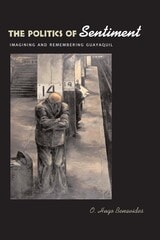
The Politics of Sentiment
Imagining and Remembering GuayaquilBy O. Hugo Benavides
University of Texas Press, 2006
Between 1890 and 1930, the port city of Guayaquil, Ecuador, experienced a liberal revolution and a worker's movement—key elements in shaping the Ecuadorian national identity. In this book, O. Hugo Benavides examines these and other pivotal features in shaping Guayaquilean identity and immigrant identity formation in general in transnational communities such as those found in New York City.
Turn-of-the-century Ecuador witnessed an intriguing combination of transformations: the formation of a national citizenship; extension of the popular vote to members of a traditional underclass of Indians and those of African descent; provisions for union organizing while entering into world market capitalist relations; and a separation of church and state that led to the legalization of secular divorces. Assessing how these phenomena created a unique cultural history for Guayaquileans, Benavides reveals not only a specific cultural history but also a process of developing ethnic attachment in general. He also incorporates a study of works by Medardo Angel Silva, the Afro-Ecuadorian poet whose singular literature embodies the effects of Modernism's arrival in a locale steeped in contradictions of race, class, and sexuality.
Also comprising one of the first case studies of Raymond Williams's hypothesis on the relationship between structures of feeling and hegemony, this is an illuminating illustration of the powerful relationships between historically informed memories and contemporary national life.
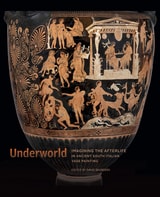
Underworld
Imagining the Afterlife in Ancient South Italian Vase PaintingDavid Saunders
J. Paul Getty Trust, The, 2022
What happens to us when we die? What might the afterlife look like? For the ancient Greeks, the dead lived on, overseen by Hades in the Underworld. We read of famous sinners, such as Sisyphus, forever rolling his rock, and the fierce guard dog Kerberos, who was captured by Herakles. For mere mortals, ritual and religion offered possibilities for ensuring a happy existence in the beyond, and some of the richest evidence for beliefs about death comes from southern Italy, where the local Italic peoples engaged with Greek beliefs. Monumental funerary vases that accompanied the deceased were decorated with consolatory scenes from myth, and around forty preserve elaborate depictions of Hades’s domain.
For the first time in over four decades, these compelling vase paintings are brought together in one volume, with detailed commentaries and ample illustrations. The catalogue is accompanied by a series of essays by leading experts in the field, which provides a framework for understanding these intriguing scenes and their contexts. Topics include attitudes toward the afterlife in Greek ritual and myth, inscriptions on leaves of gold that provided guidance for the deceased, funerary practices and religious beliefs in Apulia, and the importance accorded to Orpheus and Dionysos. Drawing from a variety of textual and archaeological sources, this volume is an essential source for anyone interested in religion and belief in the ancient Mediterranean.
Where's the Rhetoric?
Imagining a Unified FieldS. Scott Graham
The Ohio State University Press, 2020
Building on this foundation, Graham then argues for a more unified approach to contemporary rhetorical inquiry—one that eschews disciplinary demarcations between rhetoric’s various subareas. Specifically, Graham uses his unified field theory to explore 1) the rise of the “tweetorial” as a parascientific genre, 2) inventional practices in new media design, 3) statistical approaches to understanding biomedical discourse, and 4) American electioneering rhetorics. The book overall demonstrates how seemingly disparate intellectual approaches within rhetoric can be made to speak productively to one another in the pursuit of shared scholarly goals around questions of genre, media, and political discourse—thereby providing a foundation for imagining a more unified field.