Results by title
4 books match the query 'Imitation in literature'
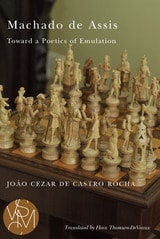
Machado de Assis
Toward a Poetics of EmulationJoão Cezar de Castro Rocha
Michigan State University Press, 2015
At the center of this alternative explanation, Castro Rocha situates the fallout from the success enjoyed by Eça de Queirós with the publication of Cousin Basílio and Machado’s two long texts condemning the author and his work. Literary and aesthetic rivalries come to the fore, allowing for a new theoretical framework based on a literary appropriation of “thick description,” the method proposed by anthropologist Clifford Geertz. From this method, Castro Rocha derives his key hypothesis: an unforeseen consequence of Machado’s reaction to Eça’s novel was a return to the classical notion of aemulatio, which led Machado to develop a “poetics of emulation.”
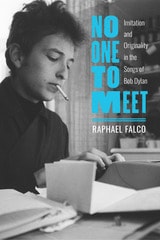
No One to Meet
Imitation and Originality in the Songs of Bob DylanRaphael Falco
University of Alabama Press, 2022
WINNER OF THE ELIZABETH AGEE PRIZE IN AMERICAN LITERATURE
A groundbreaking appreciation of Dylan as a literary practitioner.
The literary establishment tends to regard Bob Dylan as an intriguing, if baffling, outsider. That changed overnight when Dylan was awarded the 2016 Nobel Prize in Literature, challenging us to think of him as an integral part of our national and international literary heritage. No One to Meet: Imitation and Originality in the Songs of Bob Dylan places Dylan the artist within a long tradition of literary production and offers an innovative way to understand his unique and often controversial methods of composition.
Dylan expert Raphael Falco traces the similarities between the way Dylan borrows, digests, and transforms traditional songs and what Renaissance writers called imitatio. Although Dylan’s lyrical postures may suggest an avant-garde consciousness, No One to Meet shows that Dylan’s creative process creatively expands methods used by classical and Renaissance authors.
Drawing on numerous examples, including Dylan’s previously unseen manuscript excerpts and archival materials, Raphael Falco illuminates how the ancient process of poetic imitation, handed down from Greco-Roman antiquity, allows us to make sense of Dylan’s musical and lyrical technique. By placing Dylan firmly in the context of an age-old poetic practice, No One to Meet deepens our appreciation of Dylan’s songs and allows us to celebrate him as what he truly is: a great writer.
Originality, Imitation, and Plagiarism
Teaching Writing in the Digital AgeCaroline Eisner and Martha Vicinus, Editors
University of Michigan Press, 2008
"At long last, a discussion of plagiarism that doesn't stop at 'Don't do it or else,' but does full justice to the intellectual interest of the topic!"
---Gerald Graff, author of Clueless in Academe and 2008 President, Modern Language Association
This collection is a timely intervention in national debates about what constitutes original or plagiarized writing in the digital age. Somewhat ironically, the Internet makes it both easier to copy and easier to detect copying. The essays in this volume explore the complex issues of originality, imitation, and plagiarism, particularly as they concern students, scholars, professional writers, and readers, while also addressing a range of related issues, including copyright conventions and the ownership of original work, the appropriate dissemination of innovative ideas, and the authority and role of the writer/author. Throughout these essays, the contributors grapple with their desire to encourage and maintain free access to copyrighted material for noncommercial purposes while also respecting the reasonable desires of authors to maintain control over their own work.
Both novice and experienced teachers of writing will learn from the contributors' practical suggestions about how to fashion unique assignments, teach about proper attribution, and increase students' involvement in their own writing. This is an anthology for anyone interested in how scholars and students can navigate the sea of intellectual information that characterizes the digital/information age.
"Eisner and Vicinus have put together an impressive cast of contributors who cut through the war on plagiarism to examine key specificities that often get blurred by the rhetoric of slogans. It will be required reading not only for those concerned with plagiarism, but for the many more who think about what it means to be an author, a student, a scientist, or anyone who negotiates and renegotiates the meaning of originality and imitation in collaborative and information-intensive settings."
---Mario Biagioli, Professor of the History of Science, Harvard University, and coeditor of Scientific Authorship: Credit and Intellectual Property in Science
"This is an important collection that addresses issues of great significance to teachers, to students, and to scholars across several disciplines. . . . These essays tackle their topics head-on in ways that are both accessible and provocative."
---Andrea Lunsford, Louise Hewlett Nixon Professor of English, Claude and Louise Rosenberg Jr. Fellow, and Director of the Program in Writing and Rhetoric at Stanford University and coauthor of Singular Texts/Plural Authors: Perspectives on Collaborative Writing
digitalculturebooks is an imprint of the University of Michigan Press and the Scholarly Publishing Office of the University of Michigan Library dedicated to publishing innovative and accessible work exploring new media and their impact on society, culture, and scholarly communication. Visit the website at www.digitalculture.org.
Shakespearean Cultures
Latin America and the Challenges of Mimesis in Non-Hegemonic CircumstancesJoão Cezar de Castro Rocha
Michigan State University Press, 2019