Results by title
2 books match the query 'Imperial Expansion'
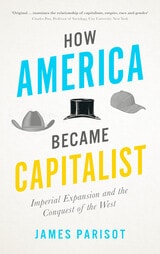
How America Became Capitalist
Imperial Expansion and the Conquest of the WestJames Parisot
Pluto Press, 2019
Not so fast, says James Parisot. In How America Became Capitalist, he tells the little-known story of how our economic system came to be, and of the alternatives that were sidelined along the way. Capitalist elements were apparent from the first colonies of white settlers, but they were far from dominant, and they weren’t the driving factor in the advancement of colonies deeper into the continent. Even slavery, which was at the heart of both American capitalism and imperialism throughout much of the nation’s growth, was less a monolithic force than a series of complicated encounters that took different forms. Individual difference slowed the homogenization of capitalism as well, as transgender people, gays and lesbians, and people in interracial relationships all brought complexity to the market’s idea of the typical household.
At a moment when the long-term viability of capitalism is coming increasingly into question, How America Became Capitalist reminds us that the path to its dominance was never so smooth, nor so complete, as its champions would have us believe.
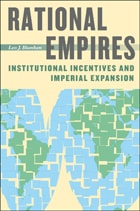
Rational Empires
Institutional Incentives and Imperial ExpansionLeo J. Blanken
University of Chicago Press, 2012
The nineteenth century marked the high point of imperialism, when tsarist Russia expanded to the Pacific and the sun was said never to set on the British Empire. Imperialism remains a perennial issue in international relations today, and nowhere is this more evident than in the intensifying competition for global resources.
Leo J. Blanken explains imperialism through an analysis of the institutions of both the expanding state and its targets of conquest. While democratic states favoring free trade generally resort to imperialism only to preempt aggressive rivals—or when they have reason to believe another state’s political institutions will not hold up when making bargains—authoritarian states tend toward imperialism because they don’t stand to benefit from free trade. The result is three distinct strategies toward imperialism: actors fighting over territory, actors peaceably dividing territory among themselves, and actors refraining from seizing territory altogether. Blanken examines these dynamics through three case studies: the scramble for Africa, the unequal treaties imposed on Qing Dynasty China, and the evolution of Britain’s imperial policy in India. By separating out the different types of imperialism, Blanken provides insight into its sources, as well as the potential implications of increased competition in the current international arena.