Results by title

4 books match the query 'Imperialism in popular culture'
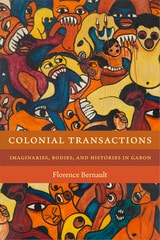
cover of Colonial Transactions: Imaginaries, Bodies, and Histories in Gabon

Colonial Transactions

Imaginaries, Bodies, and Histories in Gabon

Florence Bernault

Duke University Press, 2019
In Colonial Transactions Florence Bernault moves beyond the racial divide that dominates colonial studies of Africa. Instead, she illuminates the strange and frightening imaginaries that colonizers and colonized shared on the ground. Bernault looks at Gabon from the late nineteenth century to the present, historicizing the most vivid imaginations and modes of power in Africa today: French obsessions with cannibals, the emergence of vampires and witches in the Gabonese imaginary, and the use of human organs for fetishes. Struggling over objects, bodies, agency, and values, colonizers and colonized entered relations that are better conceptualized as "transactions." Together they also shared an awareness of how the colonial situation broke down moral orders and forced people to use the evil side of power. This foreshadowed the ways in which people exercise agency in contemporary Africa, as well as the proliferation of magical fears and witchcraft anxieties in present-day Gabon. Overturning theories of colonial and postcolonial nativism, this book is essential reading for historians and anthropologists of witchcraft, power, value, and the body.
[more]
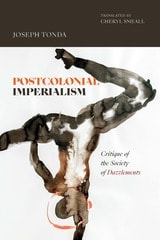
cover of Postcolonial Imperialism: Critique of the Society of Dazzlements

Postcolonial Imperialism

Critique of the Society of Dazzlements

Joseph Tonda. Translated by Cheryl Smeall

Duke University Press, 2026
Postcolonial Imperialism considers the inability to distinguish between reality and fiction as a key condition of contemporary life. If postcolonial theory has highlighted how white colonizers created images of racialized Others which project their own self-hatred or disavowal, Joseph Tonda here shows how these images have in turn colonized Western imaginaries. He argues that the Global North’s obsession with its own phantoms takes a newly powerful form in the dazzling images of postcolonial screens. With examples ranging from Nicki Minaj to Osama Bin Laden and child soldier Johnny Mad Dog, Tonda reflects on power by analyzing the dazzlements of both Central Africa and the West, showing how African life prefigures Western experiences. Translated from its original French, Postcolonial Imperialism is a prescient critique of authoritarian attempts to enforce alternate realities, and of the many ways screens can distort our vision.
[more]
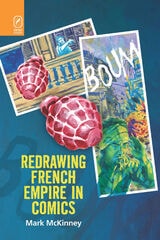
cover of Redrawing French Empire in Comics

Redrawing French Empire in Comics

Mark McKinney

The Ohio State University Press, 2020
Redrawing French Empire in Comics by Mark McKinney investigates how comics have represented the colonization and liberation of Algeria and Indochina. It focuses on the conquest and colonization of Algeria (from 1830), the French war in Indochina (1946–1954), and the Algerian War (1954–1962). Imperialism and colonialism already featured prominently in nineteenth-century French-language comics and cartoons by Töpffer, Cham, and Petit. As society has evolved, so has the popular representation of those historical forces. French torture of Algerians during the Algerian War, once taboo, now features prominently in comics, especially since 2000, when debate on the subject was reignited in the media and the courts. The increasingly explicit and spectacular treatment in comics of the more violent and lurid aspects of colonial history and ideology is partly due to the post-1968 growth of an adult comics production and market. For example, the appearance of erotic and exotic, feminized images of Indochina in French comics in the 1980s indicated that colonial nostalgia for French Indochina had become fashionable in popular culture. Redrawing French Empire in Comics shows how contemporary cartoonists such as Alagbé, Baloup, Boudjellal, Ferrandez, and Sfar have staked out different, sometimes conflicting, positions on French colonial history.
[more]
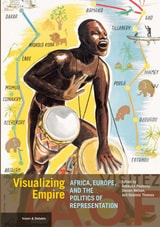
cover of Visualizing Empire: Africa, Europe, and the Politics of Representation

Visualizing Empire

Africa, Europe, and the Politics of Representation

Rebecca Peabody

J. Paul Getty Trust, The, 2021

An exploration of how an official French visual culture normalized France’s colonial project and exposed citizens and subjects to racialized ideas of life in the empire.

By the end of World War I, having fortified its colonial holdings in the Caribbean, Latin America, Africa, the Indian Ocean, and Asia, France had expanded its dominion to the four corners of the earth. This volume examines how an official French visual culture normalized the country’s colonial project and exposed citizens and subjects alike to racialized ideas of life in the empire. Essays analyze aspects of colonialism through investigations into the art, popular literature, material culture, film, and exhibitions that represented, celebrated, or were created for France’s colonies across the seas.
 
These studies draw from the rich documents and media—photographs, albums, postcards, maps, posters, advertisements, and children’s games—related to the nineteenth- and twentieth-century French empire that are held in the Getty Research Institute’s Association Connaissance de l’histoire de l’Afrique contemporaine (ACHAC) collections. ACHAC is a consortium of scholars and researchers devoted to exploring and promoting discussions of race, iconography, and the colonial and postcolonial periods of Africa and Europe.

[more]