Results by title
8 books match the query 'Impressionism (Art)'
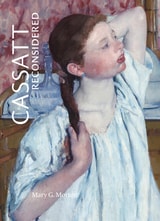
Cassatt Reconsidered
Mary G. Morton
J. Paul Getty Trust, The, 0
A sweeping reconsideration of the artist we thought we knew—and the forces that obscured her legacy.
Fiercely ambitious and independent, Mary Cassatt defied expectations to become one of the most radical artists of the Impressionist movement, though she was—and remains—the least understood. Cassatt commanded and manipulated strains of old master and contemporary painting to express her female subjectivity through a brilliantly modern oeuvre on par with those of the most revered Impressionists. However, mishandled by the Parisian art establishment during her lifetime, and later by art historians and curators, she became known almost exclusively as a sentimentalizing painter of mothers and children.
How did this happen to the most aspiring, revolutionary female artist of the late nineteenth and early twentieth centuries? In Cassatt Reconsidered, author Mary G. Morton probes this central question and more, demonstrating how Cassatt disturbed conventional ideals of femininity, childhood, and maternity, an uncompromising feat for which she paid dearly during her lifetime and in the annals of art historiography.
Vibrantly illustrated with more than 100 images, Cassatt Reconsidered rewards readers with a fuller understanding of an artist who stands apart for daring to express, on her own terms, the unique, intimate experiences of modern women.
Cezanne and the End of Impressionism
A Study of the Theory, Technique, and Critical Evaluation of Modern ArtRichard Shiff
University of Chicago Press, 1984

Gustave Caillebotte and the Fashioning of Identity in Impressionist Paris
Edited by Norma Broude
Rutgers University Press, 2002
The essays that comprise this volume exemplify the best aspects of recent Caillebotte scholarship. They employ a variety of perspectives to examine the ways in which his art sheds light on the formation of individual and class identities in Paris during the early years of the Third Republic—an era of transition marked by the burgeoning of capitalism and the instabilities of newly shifting gender roles in the modern world.
Addressing a wide range of major paintings by Caillebotte, the contributors reveal the compound ways in which the artist encoded his images and the multiple interpretations to which these images are susceptible. Juxtaposed so as to complement and challenge one another, these essays build a provocative whole as they probe issues of spectatorship and authorial intention. The contributors—all internationally known scholars and art professionals—create an important theoretical framework for the discussion of Caillebotte’s work.
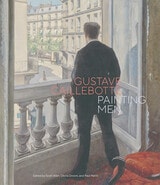
Gustave Caillebotte
Painting MenScott Allan
J. Paul Getty Trust, The, 2024
More than any other French Impressionist, painter Gustave Caillebotte (1848–1894) observed and depicted the many men in his life, including his brothers and friends, employees, and the workers and bourgeois in his Parisian neighborhood. Male subjects feature prominently in some of his best-known works, such as The Floor Scrapers, Man at His Bath, Young Man at His Window, Boating Party, and Paris Street, Rainy Day. The originality of his paintings of men is fully explored for the first time in this catalogue, published to accompany a major international exhibition co-organized by the J. Paul Getty Museum, Musée d’Orsay, and the Art Institute of Chicago.
Alongside paintings, drawings, and photographs, as well as an appendix featuring maps and new biographical research that sheds light on Caillebotte’s social network, this volume includes historically grounded thematic essays by curators and leading scholars. By exploring the complex and varied facets of Caillebotte’s identity—as son, brother, soldier, bachelor, amateur, sportsman, and so on—these essays pose questions of identity, leaving space for ambiguous and fluid expressions of gender and masculinity—for both Caillebotte and the larger late nineteenth-century French world.
This volume is published to accompany an exhibition on view at the Musée d’Orsay from October 8, 2024, to January 19, 2025, J. Paul Getty Museum at the Getty Center from March 25 to May 25, 2025, and The Art Institute of Chicago from June 29 to October 5, 2025.
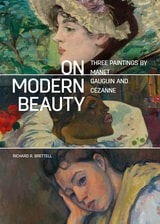
On Modern Beauty
Three Paintings by Manet, Gauguin, and CézanneRichard R. Brettell
J. Paul Getty Trust, The, 2019
Brettell shapes his manifesto around three masterworks from the collection of the J. Paul Getty Museum: Édouard Manet’s Jeanne (Spring), Paul Gauguin’s Arii Matamoe (The Royal End), and Paul Cézanne’s Young Italian Woman at a Table. The provocative discussion reveals how each of these exceptional paintings, though depicting very different subjects—a fashionable actress, a preserved head, and a weary working woman—enacts a revolutionary, yet enduring, icon of beauty.
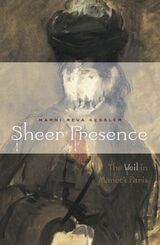
Sheer Presence
The Veil in Manet’s ParisMarni Reva Kessler
University of Minnesota Press, 2006
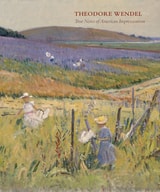
Theodore Wendel
True Notes of American ImpressionismTheodore Wendel
The Artist Book Foundation, 2019
One of the original "Duveneck boys" who studied in Munich at the Royal Academy, Theodore Wendel followed his mentor to Florence and Venice; he later went on to Paris and ultimately joined a colony of young artists at Giverny. The scenes and subject matter in the works he completed there are among the earliest by an American artist to adopt and evolve Impressionist strategies. Upon his return to America, he spent the next decades rendering scenes of the farmland and coast north of Boston that contemporary critics acclaimed as some of the best they had seen. Yet despite his talent and the significant accolades earned during his career, in the near-century following his death the recognition of his achievements has faded. The Artist Book Foundation is delighted to have the opportunity to remedy this siutation with its forthcoming monograph on the artist, Theodore Wendel: True Notes of American Impressionism.
Laurene Buckley's years of exhaustive research inform an engaging and detailed narrative of Wendel's time in Europe and his many years capturing the essence of the farms and fishing villages along the rural coast of Massachusetts. Thanks to her efforts, the book will feature many of his best works, a number of which are in private collections. An informative introduction by William H. Gerdts provides significant artistic context for Wendel and explains the artist's deft ability to draw the viewer into a scene. Concluding the monograph, an extensive chronology, exhibition history, and bibliography complete the scholarship on this long overdue tribute to a master of American Impressionism.
Zhang Hongtu
Expanding Visions of a Shrinking WorldLuchia Meihua Lee and Jerome Silbergeld, editors
Duke University Press, 2015
From his early work in China during the Cultural Revolution to his decades as an artist in New York, Zhang reflects the complex attitudes of a scholar-artist toward modernity, as well as toward Asian and Western societies and himself. Placing Zhang in the context of his cultural milieu both in China and in the Chinese immigrant artist community in America, this volume's contributors examine his adaptations of classic art to reflect a contemporary sensibility, his relation to Cubism and Social Realism, his collaboration with the celebrated fashion designer Vivienne Tam, and his visual critique of China's current environmental crisis. Zhang's work will be on display at the Queens Museum in New York City from October 17, 2015 to March 6, 2016.
Contributors: Julia F. Andrews, Alexandra Chang, Tom Finkelpearl, Michael Fitzgerald, Wu Hung, Luchia Meihua Lee, Morgan Perkins, Kui Yi Shen, Jerome Silbergeld, Eugenie Tsai, Thuy Linh Nguyen Tu, Lilly Wei
Co-published by the Queens Museum and Duke University Press.