Results by title
8 books match the query 'Improvisation (Acting)'
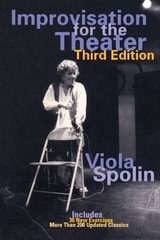
Improvisation for the Theater
A Handbook of Teaching and Directing TechniquesViola Spolin
Northwestern University Press, 1999
The thoroughly revised third edition of the bible of improvisational theater.
Viola Spolin's improvisational techniques changed the very nature and practice of modern theater. The first two editions of Improvisation for the Theater sold more than 100,000 copies and inspired actors, directors, teachers, and writers in theater, television, film. These techniques have also influenced the fields of education, mental health, social work, and psychology.
The revised edition features:
- 30 new exercises, including introductions (Slow/Fast/Normal; Extended Sound; Mirror Speech; Unrelated Conversation)
- More than 200 updated classic exercises
- new section of traditional theater games for warm-up use
- “Paul Sills' Sayings of Viola Spolin”
- New glossary of side-coaching phrases, with definitions of their meaning and value
- Alphabetical list of all games and exercises
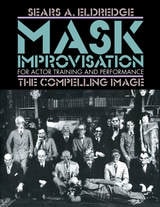
Mask Improvisation for Actor Training and Performance
The Compelling ImageSears Eldredge
Northwestern University Press, 1996
Featuring dozens of improvisational exercises in the innovative spirit of Viola Spolin, and supplemented with practical appendices on mask design and construction, forms and checklists, and other classroom materials, this book is an invaluable tool for teacher and student alike, as well as compelling reading for anyone interested in acquiring a deeper understanding of masks as agents of transformation, creativity, and performance.
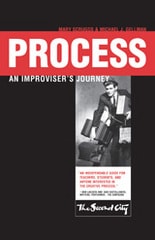
Process
An Improviser's JourneyMary Scruggs and Michael J. Gellman, with an foreword by Anne Libera
Northwestern University Press, 2007
Process: An Improviser's Journey is an invaluable resource for mastering improv. Author, teacher, and improviser Michael Gellman was given a mission by famed improv coach Del Close: “[T]o create improvised one-act plays of literary quality from scratch.” Already steeped in the world of improvisation, he took it upon himself to do this, in the form of a class for other improvisers in which they would build the skills necessary to execute such a seemingly tall order. Scruggs and Gellman’s book, modeled after Stanislavski’s timeless An Actor Prepares, follows a fictional young actor taking Gellman’s real-life class.
Scruggs and Gellman introduce readers to Geoff, who has just moved to Chicago to pursue acting. He undergoes the standard trials of audition and rejection before he takes the advice of a fellow actor and turns to improv classes at Second City. At first, Geoff thinks improvisation is about laughs and loosening up, but he soon learns that it is a powerful tool as well as an end in itself. Through Geoff’s eyes, the book introduces readers to key tenets of improvisation: concentration, visualization, focus, object work, being in the moment, and the crucial “yes, and.” His experiences with the basics of improvisation do serve to get him a few roles, but his real breakthrough comes when he signs up for an improvised one-act class with Michael Gellman. He and his classmates arrive unprepared for the challenge, but with Gellman’s prompts and advice, they slowly move through process to performance over the course of three seasons in Chicago. The class culminates with their final project: a completely improvised one-act play performed in front of a live audience.
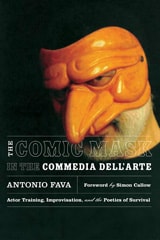
The Comic Mask in the Commedia dell'Arte
Actor Training, Improvisation, and the Poetics of SurvivalAntonio Fava
Northwestern University Press, 2007
Nobody says Shakespeare is dead, Antonio Fava tells us, but Commedia, they say, is dead. Why? Because clearly, he goes on, we have Shakespeare's texts, but nobody knows what to do with the improvisation that is the basis of the Commedia dell'Arte, despite massive documentation. This book by Fava, one of the few living master teachers of Commedia dell'Arte, is the first aesthetic and methodological study of the traditional Italian theater form--the first to describe, in a precise and practical way, what Commedia is and what it should be.
The mask--as object, symbol, character, theatrical practice, even spectacle itself--is the central metaphor around which Fava builds his discussion of structure, themes, characters, and methods. Drawing on twenty years of research conducted through his work as performer, director, mask maker, and scholar, he offers extensive practical, philosophical, and technical guidelines to performing the stock characters of Commedia, observing its structure, extracting its poetics, exploring its themes, and using the mask. A densely layered text combining historical fact, personal experience, philosophical speculation, and passionate opinion, and including copious illustrations--period drawings, prints, and color photographs of leather Commedia masks made by Fava himself--The Comic Mask in the Commedia dell'Arte is a rich work of singular insight into one of the world's most venerable forms of theater.
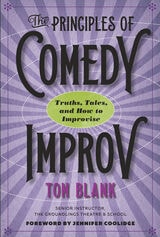
The Principles of Comedy Improv
Truths, Tales, and How to ImproviseTom Blank
University of Iowa Press, 2023
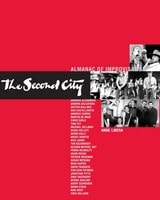
The Second City Almanac of Improvisation
Anne Libera and Second City, Inc.
Northwestern University Press, 2004
The Second City Almanac of Improvisation - like the theatre itself - is a collection of diverse ideas, viewpoints, and memories, written by a vast array of teachers, actors, and directors who all got their start at the legendary comedy theatre. Fred Willard recalls his introduction to The Second City style in the mid-Sixties; Tim Kazurinsky gives a hilarious visual demonstration on the art of object work; "Saturday Night Live" star Tina Fey talks about re-improvising material as a mode of writing revue comedy; noted director Mick Napier takes on the thorny debate between long-form improvisation and short-form improvisation. Anne Libera guides the reader through each essay by providing a road map for understanding how The Second City method of improv-based comedy has become the industry standard.
Mike Nichols, Elaine May, Alan Arkin, Joan Rivers, Robert Klein, Peter Boyle, Harold Ramis, John Belushi, Dan Aykroyd, Bill Murray, John Candy, Martin Short, Gilda Radner, George Wendt, Jim Belushi, Bonnie Hunt, Mike Myers, Ryan Stiles, Rachel Dratch, Nia Vardalos - no other theatre can boast an alumni list of this magnitude. The Second City Almanac of Improvisation provides practical instruction, personal details, and inspiration to both improvisers and their fans.
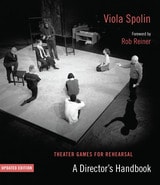
Theater Games for Rehearsal
A Director's Handbook, Updated EditionViola Spolin with a foreword by Rob Reiner
Northwestern University Press, 2010
An updated edition of a key reference text by “the high priestess of improvisational theater”
A major force in the development of American theater, Viola Spolin devised pedagogical techniques that have influenced and inspired legions of actors, improvisers, and directors. Theater Games for Rehearsal: A Director's Handbook, first published in 1985, is a practical application of Spolin's famous method that guides directors and their companies step-by-step through all phases of the rehearsal period.
In Theater Games for Rehearsal, Spolin shows in easy-to-follow detail how her techniques can be used for a variety of theater needs, from selecting performance material, casting, and building a harmonious company to warming up actors, creating stage space, and overcoming opening-night jitters. This new edition, edited by Carol Bleackley Sills, incorporates Spolin's wished-for updates: four important exercises have been added, and instructions presenting her improvisational approach have been clarified throughout. Sidecoaching instructions and game evaluations are boxed and highlighted for on-the-spot reading by the director during rehearsal.
With these additions and improvements, Theater Games for Rehearsal: A Director's Handbook brings Spolin's ideas to a new generation with greater accessibility and excitement. Featuring a new foreword by renowned film director Rob Reiner, the updated edition is mandatory for any theater bookshelf.
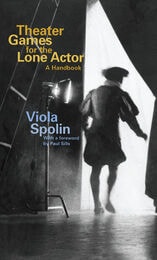
Theater Games for the Lone Actor
A HandbookViola Spolin
Northwestern University Press, 2001
Spolin's improvisational techniques changed the nature and practice of modern theater. Her work has inspired actors, directors, teachers, and writers in theater, television, and film. Her techniques have also influenced the fields of education, mental health, social work, and psychology.