Results by title
9 books match the query 'Incest'
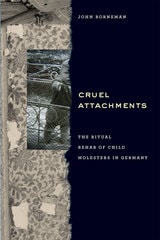
Cruel Attachments
The Ritual Rehab of Child Molesters in GermanyJohn Borneman
University of Chicago Press, 2015
Carefully exploring different cases of the attempt to rehabilitate child sex offenders, Borneman details a secular ritual process aimed not only at preventing future acts of molestation but also at fundamentally transforming the offender, who is ultimately charged with creating an almost entirely new self. Acknowledging the powerful repulsion felt by a public that is often extremely skeptical about the success of rehabilitation, he challenges readers to confront the contemporary contexts and conundrums that lie at the heart of regulating intimacy between children and adults.

Family Bible
Melissa J. Delbridge
University of Iowa Press, 2008
"Swimming and sex seemed a lot alike to me when I was growing up. You took off most of your clothes to do them and you only did them with people who were the same color as you. As your daddy got richer, you got to do them in fancier places." Starting with her father, who never met a whitetail buck he couldn't shoot, a whiskey bottle he couldn't empty, or a woman he couldn't charm, and her mother, who "invented road rage before 1960," Melissa Delbridge introduces us to the people in her own family bible. Readers will find elements of Southern Gothic and familiar vernacular characters, but Delbridge endows each with her startling and original interpretation. In this disarmingly unguarded and unapologetic memoir, she shows us what really happened in the "stew of religion and sex" that was 1960s Tuscaloosa.
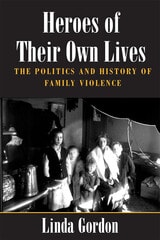
Heroes of Their Own Lives
The Politics and History of Family Violence--Boston, 1880-1960Linda Gordon
University of Illinois Press, 2002
Powerful and moving, Heroes of Their Own Lives offers an honest understanding of a persistent problem and a realistic view of the difficulties in stopping it.
House Of Incest
Anaïs Nin
Ohio University Press, 1958
With an introduction by Allison Pease, this new edition of House of Incest is a lyrical journey into the subconscious mind of one of the most celebrated feminist writers of the twentieth-century.
Originally published in 1936, House of Incest is Anaïs Nin’s first work of fiction. Based on Nin’s dreams, the novel is a surrealistic look within the narrator’s subconscious as she attempts to distance herself from a series of all-consuming and often taboo desires she cannot bear to let go. The incest Nin depicts is a metaphor—a selfish love wherein a woman can appreciate only qualities in a lover that are similar to her own. Through a descriptive exploration of romances and attractions between women, between a sister and her beloved brother, and with a Christ-like man, Nin’s narrator discovers what she thinks is truth: that a woman’s most perfect love is of herself. At first, this self-love seems ideal because it is attainable without fear and risk of heartbreak. But in time, the narrator’s chosen isolation and self-possessed anguish give way to a visceral nightmare from which she is unable to wake.
House of Incest
Anaïs Nin
Ohio University Press, 1958
With an introduction by Allison Pease, this new edition of House of Incest is a lyrical journey into the subconscious mind of one of the most celebrated feminist writers of the twentieth-century.
Originally published in 1936, House of Incest is Anaïs Nin’s first work of fiction. Based on Nin’s dreams, the novel is a surrealistic look within the narrator’s subconscious as she attempts to distance herself from a series of all-consuming and often taboo desires she cannot bear to let go. The incest Nin depicts is a metaphor—a selfish love wherein a woman can appreciate only qualities in a lover that are similar to her own. Through a descriptive exploration of romances and attractions between women, between a sister and her beloved brother, and with a Christ-like man, Nin’s narrator discovers what she thinks is truth: that a woman’s most perfect love is of herself. At first, this self-love seems ideal because it is attainable without fear and risk of heartbreak. But in time, the narrator’s chosen isolation and self-possessed anguish give way to a visceral nightmare from which she is unable to wake.
In My Father’s Arms
A Son’s Story of Sexual AbuseWalter A. de Milly III
University of Wisconsin Press, 2012
Tragically, Walter's deeply troubled father would launch his family on a perilous journey into darkness. To the outside world, this man is a prominent businessman, a dignified Presbyterian, and a faithful husband; to Walter, he is an overwhelming, handsome monster. Whenever the two are together, young Walter becomes a sexual plaything for his father; father and son outings are turned into soul-obliterating nightmares.
Walter eventually becomes a successful businessman only to be stricken by another catastrophe: his father, at the age of seventy, is caught molesting a young boy. Walter is asked to confront his father. Walter convenes his family, and in a private conference with a psychiatrist, the father agrees to be surgically castrated.
De Milly's portraits of his relationships with his father and mother, and the confrontation that leads to his father's bizarre and irreversible voluntary "cure," are certain to be remembered long after the reader has set aside this powerful contribution to the literature of incest survival.
Telling Incest
Narratives of Dangerous Remembering from Stein to SapphireJanice Doane and Devon Hodges
University of Michigan Press, 2001
Examining the work of writers from Gertrude Stein to Toni Morrison and Dorothy Allison, Telling Incest argues that an incest story's plausibility depends upon a shifting set of narrative conventions and cultural expectations. As contexts for telling incest stories have changed, so too have the tasks of those who tell and those who listen. The authors analyze both fictional and nonfiction narratives about father-daughter incest, beginning by scrutinizing the shadowy accounts found in nineteenth-century case records, letters, and narratives.
Telling Incest next explores African American stories that shift the blame for incest from the black family to the predations of a paternalistic white culture. Janice Doane and Devon Hodges demonstrate that writers drew upon this reworked incest narrative in the 1970s and early 1980s in order to relate a feminist story about incest, a story that criticizes patriarchal power. This feminist form of the story, increasingly emphasizing trauma and recovery, can be found in such popular books as Alice Walker's The Color Purple and Jane Smiley's A Thousand Acres. Doane and Hodges then examine recent memoirs and novels such as Dorothy Allison's Bastard Out of Carolina and Sapphire's Push, narratives that again rework the incest story in an effort to "tell" about women's complex experiences of subjugation and hope.
Telling Incest will be of particular interest to readers who have enjoyed the popular and culturally significant work of writers such as Alice Walker, Toni Morrison, Jane Smiley, and Dorothy Allison and to students of women's studies, feminist theory, and cultural studies.
Janice Doane is Professor of English, St. Mary's College of California. Devon Hodges is Professor of English, George Mason University. They have also coauthored From Klein to Kristeva: Psychoanalytic Feminism and the Search for the "Good Enough" Mother and Nostalgia and Sexual Difference: The Resistance to Contemporary Feminism.
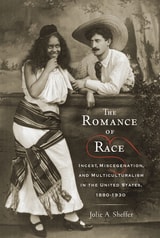
The Romance of Race
Incest, Miscegenation, and Multiculturalism in the United States, 1880-1930Sheffer, Jolie A.
Rutgers University Press, 2013
In the United States miscegenation is not merely a subject of literature and popular culture. It is in many ways the foundation of contemporary imaginary community. The Romance of Race examines the role of minority women writers and reformers in the creation of our modern American multiculturalism.
The national identity of the United States was transformed between 1880 and 1930 due to mass immigration, imperial expansion, the rise of Jim Crow, and the beginning of the suffrage movement. A generation of women writers and reformers—particularly women of color—contributed to these debates by imagining new national narratives that put minorities at the center of American identity. Jane Addams, Pauline Hopkins, Onoto Watanna (Winnifred Eaton), María Cristina Mena, and Mourning Dove (Christine Quintasket) embraced the images of the United States—and increasingly the world—as an interracial nuclear family. They also reframed public debates through narratives depicting interracial encounters as longstanding, unacknowledged liaisons between white men and racialized women that produced an incestuous, mixed-race nation.
By mobilizing the sexual taboos of incest and miscegenation, these women writers created political allegories of kinship and community. Through their criticisms of the nation’s history of exploitation and colonization, they also imagined a more inclusive future. As Jolie A. Sheffer identifies the contemporary template for American multiculturalism in the works of turn-of-the century minority writers, she uncovers a much more radical history than has previously been considered.
Unsettling
Jews, Whiteness, and Incest in American Popular CultureEli Bromberg
Rutgers University Press, 2021