Results by title
3 books match the query 'Independent filmmakers'

Films That Explode Like Grenades
Robert Kramer and the Search for a Radical CinemaWhitney Strub
University of Chicago Press, 2026
Robert Kramer (1939–99) was the emblematic filmmaker of the late-1960s New Left in the United States. Yet because most of his three dozen films have been out of circulation for decades, he has long been neglected by film historians and the Left. Kramer was the cofounder of the leftist documentary collective Newsreel and the director of underground films such as Ice (1970), Milestones (1975), and Route One/USA (1989). His films provide distinctive insights into how America’s political terrain has changed over time, capturing each era’s revolutionary ethos and its contradictions. Whitney Strub’s Films That Explode Like Grenades tracks the histories of leftist film and global revolutionary movements via Kramer’s life and travels. Moving among New York City, Chicago, North Vietnam, Paris, Portugal, Angola, and other crucial flashpoints, Kramer left a major and influential body of work in his wake that has fundamentally shaped the work of radical filmmakers across the globe.
For Strub, Kramer’s career is a key thread in an intimate history of the 1960s New Left, one that emphasizes the complexities of the movement’s internal tensions and its legacies. Drawing on visual analysis, extensive archival research across the United States and France, and myriad interviews with Kramer contemporaries, including Bernardine Dohrn, Tom Hayden, Jonas Mekas, and Kramer’s relatives, Strub transforms Kramer’s life story into a dynamic and engaging social history of 1960s radicalism and its generational legacies.
With detailed mapping of Robert Kramer’s many social and artistic contexts, Films That Explode Like Grenades restores him to a place of global importance in leftist cinema.
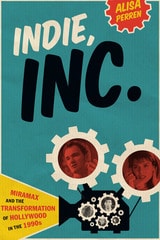
Indie, Inc.
Miramax and the Transformation of Hollywood in the 1990sBy Alisa Perren
University of Texas Press, 2012
During the 1990s, films such as sex, lies, and videotape, The Crying Game, Pulp Fiction, Good Will Hunting, and Shakespeare in Love earned substantial sums at the box office along with extensive critical acclaim. A disproportionate number of these hits came from one company: Miramax. Indie, Inc. surveys Miramax’s evolution from independent producer-distributor to studio subsidiary, chronicling how one company transformed not just the independent film world but the film and media industries more broadly. As Alisa Perren illustrates, Miramax’s activities had an impact on everything from film festival practices to marketing strategies, talent development to awards campaigning.
Case studies of key films, including The Piano, Kids, Scream, The English Patient, and Life Is Beautiful, reveal how Miramax went beyond influencing Hollywood business practices and motion picture aesthetics to shaping popular and critical discourses about cinema during the 1990s. Indie, Inc. does what other books about contemporary low-budget cinema have not—it transcends discussions of “American indies” to look at the range of Miramax-released genre films, foreign-language films, and English-language imports released over the course of the decade. The book illustrates that what both the press and scholars have typically represented as the “rise of the American independent” was in fact part of a larger reconfiguration of the media industries toward niche-oriented products.
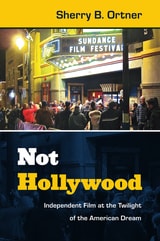
Not Hollywood
Independent Film at the Twilight of the American DreamSherry B. Ortner
Duke University Press, 2013