Results by title
4 books match the query 'Indian children'
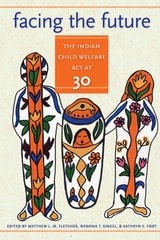
Facing the Future
The Indian Child Welfare Act at 30Matthew L.M. Fletcher
Michigan State University Press, 2009
The U.S. Congress is charged with responsibility for the protection and preservation of American Indian tribes, including Indian children. In 1978, Congress enacted the Indian Child Welfare Act (ICWA), with the intent to "protect the best interests of Indian children and to promote the stability and security of Indian tribes and families." ICWA sets federal requirements that apply to state child custody proceedings involving an Indian child who is a member of or eligible for membership in a federally recognized tribe. ICWA also sets out federal requirements regarding removal of Indian children and their placement in foster or adoptive homes, and it allows the child's tribe to intervene in the case.
The history of the Act is a tangle of legal, social, and emotional complications. Some state courts have found unusual legal arguments to avoid applying the law, while some states have gone beyond the terms of the Act to provide greater protections for Indian people. This collection brings together for the first time a multidisciplinary assessment of the law—with scholars, practitioners, lawyers, and social workers all offering perspectives on the value and importance of the Indian Child Welfare Act.
Preventing Child Maltreatment in the U.S.
American Indian and Alaska Native PerspectivesRoyleen J Ross
Rutgers University Press, 2022
This book is part of a concentrated series of books that examines child maltreatment across minoritized, cultural groups.Specifically, this volume addresses American Indian and Alaska Native populations. However, in an effort to contextualize the experiences of 574 federally recognized tribes and 50+ state recognized tribes, as well as villages, the authors focus on populations within rural and remote regions and discuss the experiences of some tribal communities throughout US history. It should be noted that established research has primarily drawn attention to the pervasive problems impacting Indigenous individuals, families, and communities. Aligned with an attempt to adhere to a decolonizing praxis, the authors share information in a strength-based framework for the Indigenous communities discussed within the text. The authors review federally funded programs (prevention, intervention, and treatment) that have been adapted for tribal communities (e.g., Safecare) and include cultural teachings that address child maltreatment. The intention of this book is to inform researchers, practitioners, policy makers, and advocates about the current state of child maltreatment from an Indigenous perspective.
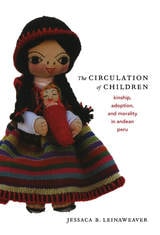
The Circulation of Children
Kinship, Adoption, and Morality in Andean PeruJessaca B. Leinaweaver
Duke University Press, 2008
Leinaweaver provides insight into the emotional and material factors that bring together and separate indigenous Andean families in the highland city of Ayacucho. She describes how child circulation is intimately linked to survival in the city, which has had to withstand colonialism, economic isolation, and the devastating civil war unleashed by the Shining Path. Leinaweaver examines the practice from the perspective of parents who send their children to live in other households, the adults who receive them, and the children themselves. She relates child circulation to international laws and norms regarding children’s rights, adoptions, and orphans, and to Peru’s history of racial conflict and violence. Given that history, Leinaweaver maintains that it is not surprising that child circulation, a practice associated with Peru’s impoverished indigenous community, is alternately ignored, tolerated, or condemned by the state.
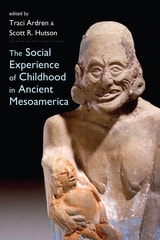
The Social Experience of Childhood in Ancient Mesoamerica
Traci Ardren
University Press of Colorado, 2015
Contributors examine material evidence, historical records, and iconography, productively criticizing the claim that children are invisible in the archaeological record and elucidating an ancient childhood comprising multiple and complex identities. They explore the methodological and theoretical difficulties created when investigating childhood - a category defined by each culture - in the archaeological record.
Sure to appeal widely to New World and Old World archaeologists and anthropologists, The Social Experience of Childhood in Ancient Mesoamerica opens up new avenues of research into the lives of this previously overlooked yet remarkably large population.
Contributors include Traci Ardren, Ximena Chávez Balderas, Billie Follensbee, Byron Hamann, Scott R. Hutson, Rosemary A. Joyce, Stacie M. King, Jeanne Lopiparo, Patricia McAnany, Geoffrey G. McCafferty, Sharisse D. McCafferty, Juan Alberto Román Berrelleza, Rebecca Storey, Rissa M. Trachman, Fred Valdez Jr.