Results by title

9 books match the query 'Indians in motion pictures'
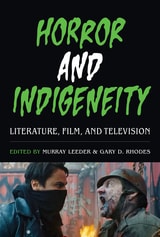
cover of Horror and Indigeneity: Literature, Film, and Television

Horror and Indigeneity

Literature, Film, and Television

Edited by Murray Leeder and Gary D. Rhodes

University of Texas Press, 2026

A collection of essays about Indigeneity and horror in cinema, literature, and beyond.

How did Indigeneity come to be horrifying? Think of the “Indian burial ground” trope, a staple of 1970s horror cinema, not to mention decades of Western films and fictions that made “savage Indians” the face of fear in popular culture. Can horror do something else in the hands of Indigenous people? Creators such as Eden Robinson and Jeff Barnaby have self-consciously turned to horror to tell new kinds of stories, stories that question who is a monster and what constitutes the monstrous.

Horror and Indigeneity explores representations of Indigenous people in settler horror texts and in the growing corpus of horror by Indigenous writers and filmmakers. Widely spanning time periods and media, the contributors to this edited volume address themes such as cannibalism, eco-horror, historical trauma, and contemporary antiracism as they relate to classical horror cinema and recent works such as The Dead Can’t Dance, Lovecraft Country, and Stephen Graham Jones’s The Only Good Indians. Also featuring interviews with Jones and director T. J. Cuthand, Horror and Indigeneity rethinks the terror of the Other in potent and provocactive terms.
[more]
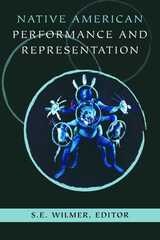
cover of Native American Performance and Representation

Native American Performance and Representation

Edited by S. E. Wilmer

University of Arizona Press, 2009

Native performance is a multifaceted and changing art form as well as a swiftly growing field of research. Native American Performance and Representation provides a wider and more comprehensive study of Native performance, not only its past but also its present and future. Contributors use multiple perspectives to look at the varying nature of Native performance strategies. They consider the combination and balance of the traditional and modern techniques of performers in a multicultural world. This collection presents diverse viewpoints from both scholars and performers in this field, both Natives and non-Natives. Important and well-respected researchers and performers such as Bruce McConachie, Jorge Huerta, and Daystar/Rosalie Jones offer much-needed insight into this quickly expanding field of study.

This volume examines Native performance using a variety of lenses, such as feminism, literary and film theory, and postcolonial discourse. Through the many unique voices of the contributors, major themes are explored, such as indigenous self-representations in performance, representations by nonindigenous people, cultural authenticity in performance and representation, and cross-fertilization between cultures. Authors introduce important, though sometimes controversial, issues as they consider the effects of miscegenation on traditional customs, racial discrimination, Native women’s position in a multicultural society, and the relationship between authenticity and hybridity in Native performance.

An important addition to the new and growing field of Native performance, Wilmer’s book cuts across disciplines and areas of study in a way no other book in the field does. It will appeal not only to those interested in Native American studies but also to those concerned with women’s and gender studies, literary and film studies, and cultural studies.
[more]
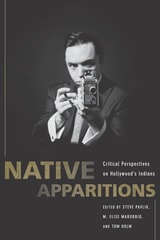
cover of Native Apparitions: Critical Perspectives on Hollywood’s Indians

Native Apparitions

Critical Perspectives on Hollywood’s Indians

Edited by Steve Pavlik, M. Elise Marubbio, and Tom Holm

University of Arizona Press, 2017

In Cherokee, the term for motion picture is a-da-yv-la-ti or a-da-yu-la-ti, meaning “something that appears.” In essence, motion pictures are machine-produced apparitions. While the Cherokee language recognizes that movies are not reality, Western audiences may on some level assume that film portrayals offer sincere depictions of imagined possibilities, creating a logic where what is projected must in part be true, stereotype or not.
 
Native Apparitions offers a critical intervention and response to Hollywood’s representations of Native peoples in film, from historical works by director John Ford to more contemporary works, such as Apocalypto and Avatar. But more than a critique of stereotypes, this book is a timely call for scholarly activism engaged in Indigenous media sovereignty. The collection clusters around three approaches: retrospective analysis, individual film analysis, and Native- and industry-centered testimonials and interviews, which highlight indigenous knowledge and cultural context, thus offering a complex and multilayered dialogic and polyphonic response to Hollywood’s representations.
 
Using an American Indian studies framework, Native Apparitions deftly illustrates the connection between Hollywood’s representations of Native peoples and broader sociopolitical and historical contexts connected to colonialism, racism, and the Western worldview. Most importantly, it shows the impact of racializing stereotypes on Native peoples, and the resilience of Native peoples in resisting, transcending, and reframing Hollywood’s Indian tropes.

CONTRIBUTORS

Chadwick Allen
Richard Allen
Joanna Hearne
Tom Holm
Jan-Christopher Horak
Jacqueline Land
Andrew Okpeaha MacLean
M. Elise Marubbio
Steve Pavlik
Rose Roberts
Myrton Running Wolf
Richard M. Wheelock
[more]
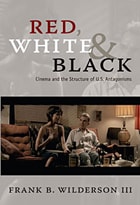
cover of Red, White & Black: Cinema and the Structure of U.S. Antagonisms

Red, White & Black

Cinema and the Structure of U.S. Antagonisms

Frank B. Wilderson III

Duke University Press, 2010

Red, White & Black is a provocative critique of socially engaged films and related critical discourse. Offering an unflinching account of race and representation, Frank B. Wilderson III asks whether such films accurately represent the structure of U.S. racial antagonisms. That structure, he argues, is based on three essential subject positions: that of the White (the “settler,” “master,” and “human”), the Red (the “savage” and “half-human”), and the Black (the “slave” and “non-human”). Wilderson contends that for Blacks, slavery is ontological, an inseparable element of their being. From the beginning of the European slave trade until now, Blacks have had symbolic value as fungible flesh, as the non-human (or anti-human) against which Whites have defined themselves as human. Just as slavery is the existential basis of the Black subject position, genocide is essential to the ontology of the Indian. Both positions are foundational to the existence of (White) humanity.

Wilderson provides detailed readings of two films by Black directors, Antwone Fisher (Denzel Washington) and Bush Mama (Haile Gerima); one by an Indian director, Skins (Chris Eyre); and one by a White director, Monster’s Ball (Marc Foster). These films present Red and Black people beleaguered by problems such as homelessness and the repercussions of incarceration. They portray social turmoil in terms of conflict, as problems that can be solved (at least theoretically, if not in the given narratives). Wilderson maintains that at the narrative level, they fail to recognize that the turmoil is based not in conflict, but in fundamentally irreconcilable racial antagonisms. Yet, as he explains, those antagonisms are unintentionally disclosed in the films’ non-narrative strategies, in decisions regarding matters such as lighting, camera angles, and sound.
[more]
cover of Reinventing the Lacandón: Subaltern Representations in the Rain Forest of Chiapas

Reinventing the Lacandón

Subaltern Representations in the Rain Forest of Chiapas

Brian Gollnick

University of Arizona Press, 2008
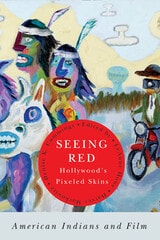
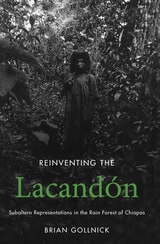
Before massive deforestation began in the 1960s, the Lacandón jungle, which lies on the border of Mexico and Guatemala, was part of the largest tropical rain forest north of the Amazon. The destruction of the Lacandón occurred with little attention from the international press—until January 1, 1994, when a group of armed Maya rebels led by a charismatic spokesperson who called himself Subcomandante Marcos emerged from jungle communities and briefly occupied several towns in the Mexican state of Chiapas. These rebels, known as the Zapatista National Liberation Army, became front-page news around the globe, and they used their notoriety to issue rhetorically powerful communiqués that denounced political corruption, the Mexican government’s treatment of indigenous peoples, and the negative impact of globalization. As Brian Gollnick reveals, the Zapatista communiqués had deeper roots in the Mayan rain forest than Westerners realized—and he points out that the very idea of the jungle is also deeply rooted, though in different ways, in the Western imagination. Gollnick draws on theoretical innovations offered by subaltern studies to discover “oral traces” left by indigenous inhabitants in dominant cultural productions. He explores both how the jungle region and its inhabitants have been represented in literary writings from the time of the Spanish conquest to the present and how the indigenous people have represented themselves in such works, including post-colonial and anti-colonial narratives, poetry, video, and photography. His goal is to show how popular and elite cultures have interacted in creating depictions of life in the rain forest and to offer new critical vocabularies for analyzing forms of cross-cultural expression.
[more]
cover of Seeing Red—Hollywood's Pixeled Skins: American Indians and Film

Seeing Red—Hollywood's Pixeled Skins

American Indians and Film

LeAnne Howe

Michigan State University Press, 2013
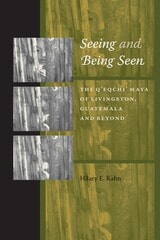
At once informative, comic, and plaintive, Seeing Red—Hollywood’s Pixeled Skins is an anthology of critical reviews that reexamines the ways in which American Indians have traditionally been portrayed in film. From George B. Seitz’s 1925 The Vanishing American to Rick Schroder’s 2004 Black Cloud, these 36 reviews by prominent scholars of American Indian Studies are accessible, personal, intimate, and oftentimes autobiographic. Seeing Red—Hollywood’s Pixeled Skins offers indispensible perspectives from American Indian cultures to foreground the dramatic, frequently ridiculous difference between the experiences of Native peoples and their depiction in film. By pointing out and poking fun at the dominant ideologies and perpetuation of stereotypes of Native Americans in Hollywood, the book gives readers the ability to recognize both good filmmaking and the dangers of misrepresenting aboriginal peoples. The anthology offers a method to historicize and contextualize cinematic representations spanning the blatantly racist, to the well-intentioned, to more recent independent productions. Seeing Red is a unique collaboration by scholars in American Indian Studies that draws on the stereotypical representations of the past to suggest ways of seeing American Indians and indigenous peoples more clearly in the twenty-first century.
[more]
cover of Seeing and Being Seen: The Q'eqchi' Maya of Livingston, Guatemala, and Beyond

Seeing and Being Seen

The Q'eqchi' Maya of Livingston, Guatemala, and Beyond

By Hilary E. Kahn

University of Texas Press, 2006

The practice of morality and the formation of identity among an indigenous Latin American culture are framed in a pioneering ethnography of sight that attempts to reverse the trend of anthropological fieldwork and theory overshadowing one another.

In this vital and richly detailed work, methodology and theory are treated as complementary partners as the author explores the dynamic Mayan customs of the Q'eqchi' people living in the cultural crossroads of Livingston, Guatemala. Here, Q'eqchi', Ladino, and Garifuna (Caribbean-coast Afro-Indians) societies interact among themselves and with others ranging from government officials to capitalists to contemporary tourists.

The fieldwork explores the politics of sight and incorporates a video camera operated by multiple people—the author and the Q'eqchi' people themselves—to watch unobtrusively the traditions, rituals, and everyday actions that exemplify the long-standing moral concepts guiding the Q'eqchi' in their relationships and tribulations. Sharing the camera lens, as well as the lens of ethnographic authority, allows the author to slip into the world of the Q'eqchi' and capture their moral, social, political, economic, and spiritual constructs shaped by history, ancestry, external forces, and time itself.

A comprehensive history of the Q'eqchi' illustrates how these former plantation laborers migrated to lands far from their Mayan ancestral homes to co-exist as one of several competing cultures, and what impact this had on maintaining continuity in their identities, moral codes of conduct, and perception of the changing outside world.

With the innovative use of visual methods and theories, the author's reflexive, sensory-oriented ethnographic approach makes this a study that itself becomes a reflection of the complex set of social structures embodied in its subject.
[more]
cover of Visualities: Perspectives on Contemporary American Indian Film and Art

Visualities

Perspectives on Contemporary American Indian Film and Art

Denise K. Cummings

Michigan State University Press, 2011
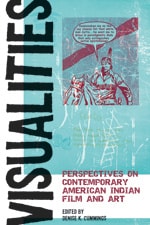
In recent years, works by American Indian artists and filmmakers such as Jaune Quick-To-See Smith, Edgar Heap of Birds, Sherman Alexie, Shelley Niro, and Chris Eyre have illustrated the importance of visual culture as a means to mediate identity in contemporary Native America. This insightful collection of essays explores how identity is created and communicated through Native film-, video-, and art-making; what role these practices play in contemporary cultural revitalization; and how indigenous creators revisit media pasts and resignify dominant discourses through their work. Taking an interdisciplinary approach, Visualities: Perspectives on Contemporary American Indian Film and Art draws on American Indian Studies, American Studies, Film Studies, Cultural Studies, Women’s Studies, and Postcolonial Studies. Among the artists examined are Hulleah J. Tsinhnahjinnie, Eric Gansworth, Melanie Printup Hope, Jolene Rickard, and George Longfish. Films analyzed include Imprint, It Starts with a Whisper, Mohawk Girls, Skins, The Business of Fancydancing, and a selection of Native Latin films.
[more]
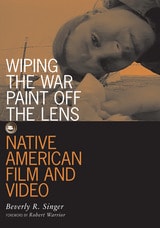
cover of Wiping the War Paint off the Lens: Native American Film and Video

Wiping the War Paint off the Lens

Native American Film and Video

Beverly R. Singer

University of Minnesota Press, 2001

Native Americans have thrown themselves into filmmaking since the mid-1970s, producing hundreds of films and videos, and their body of work has had great impact on Native cultures and filmmaking itself. With their cameras, they capture the lives of Native people, celebrating community, ancestral lifeways, and identity. Not only artistic statements, the films are archives that document rich and complex Native communities and counter mainstream media portrayals. Wiping the War Paint off the Lens traces the history of Native experiences as subjects, actors, and creators, and develops a critical framework for approaching Native work. Singer positions Native media as part of a larger struggle for "cultural sovereignty"-the right to maintain and protect cultures and traditions. Taking it out of a European-American context, she reframes the discourse of filmmaking, exploring oral histories and ancient lifeways inform Native filmmaking and how it seeks to heal the devastation of the past. Singer’s approach is both cultural and personal, provides both historical views and close textual readings, and may well set the terms of the critical debate on Native filmmaking. 
[more]