Results by title
3 books match the query 'Individual Differences'

Individual Differences and the Common Curriculum
Edited by Gary D. Fenstermacher and John I. Goodlad
University of Chicago Press, 1983
[more]
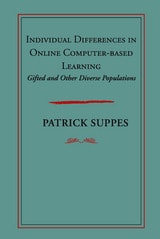
Individual Differences in Online Computer-based Learning
Gifted and Other Diverse PopulationsPatrick Suppes
CSLI, 2013
In 1894 John Dewey established his experimental laboratory school at the University of Chicago, with a focus on teaching each student according to their individual differences. This concept indicated a shift away from the emphasis on communal, classroom teaching, which marked educational practices in the nineteenth century during the advent of widely available public education.
With the introduction of computer-based online instruction in schools, curricula are able to be fully informed by individual difference, subtly and quickly tracking students’ progress. In these courses, teachers play the role of troubleshooters instead of lecturers. Individual Differences examines a large number of studies on computer-based and online instruction, with special attention paid to gifted students in the fields of mathematics, science, technology, and engineering. Other chapters also focus on a wide variety of student populations: deaf students, American Indian rural students, and underachieving, impoverished students.
[more]
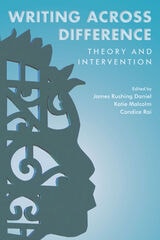
Writing Across Difference
Theory and InterventionJames Rushing Daniel
Utah State University Press, 2021
As the nation becomes increasingly divided by economic inequality, racial injustice, xenophobic violence, and authoritarian governance, scholars in writing studies have strived to develop responsive theories and practices to engage students, teachers, administrators, and citizens in the crisis of division and to begin the complicated work of radically transforming our inequitable institutions and society. Writing Across Difference is one of the first collections to gather scholars from across the field engaged in offering theoretical, methodological, and pedagogical resources for understanding, interrogating, negotiating, and writing across difference.
No text in composition has made such a sweeping attempt to place the multiple areas of translingualism, anti-racism, anticolonialism, interdisciplinarity, and disability into conversation or to represent the field as broadly unified around the concept of difference. The chapters in this book specifically explore how monolingual ideology is maintained in institutions and how translingual strategies can (re)include difference; how narrative-based interventions can promote writing across difference in classrooms and institutions by complicating dominant discourses; and how challenging dominant logics of class, race, ability, and disciplinarity can present opportunities for countering divisiveness.
Writing Across Difference offers writing scholars a sustained intellectual encounter with the crisis of difference and foregrounds the possibilities such an encounter offers for collective action toward a more inclusive and equitable society. It presents a variety of approaches for intervening in classrooms and institutions in the interest of focalizing, understanding, negotiating, and bridging difference. The book will be a valuable resource to those disturbed by the bigotry, violence, and fanaticism that mark our political culture and who are seeking inspiration, models, and methods for collective response.
Contributors: Anis Bawarshi, Jonathan Benda, Megan Callow, James Rushing Daniel, Cherice Escobar Jones, Laura Gonzales, Juan Guerra, Stephanie Kerschbaum, Katie Malcolm, Nadya Pittendrigh, Mya Poe, Candice Rai, Iris Ruiz, Ann Shivers-McNair, Neil Simpkins, Alison Y. L. Stephens, Sumyat Thu, Katherine Xue, Shui-yin Sharon Yam
[more]