Results by title
11 books match the query 'Individuality'

Always More Than One
Individuation's DanceErin Manning
Duke University Press, 2012
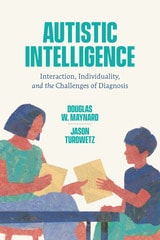
Autistic Intelligence
Interaction, Individuality, and the Challenges of DiagnosisDouglas W. Maynard and Jason Turowetz
University of Chicago Press, 2022
Winner 2024 Outstanding Recent Contribution in Social Psychology Award, Social Psychology Section, American Sociological Association
Winner 2024 Melvin Pollner Prize, Ethnomethodology and Conversation Analysis Section, American Sociological Association
As autism has grown in prevalence, so too have our attempts to make sense of it. From placing unfounded blame on vaccines to seeking a genetic cause, Americans have struggled to understand what autism is and where it comes from. Amidst these efforts, however, a key aspect of autism has been largely overlooked: the diagnostic process itself. That process is the central focus of Autistic Intelligence. The authors ask us to question the norms by which we measure autistic behavior, to probe how that behavior can be considered sensible rather than disordered, and to explore how we can better appreciate the individuality of those who receive the diagnosis.Drawing on hundreds of hours of video recordings and ethnographic observations at a clinic where professionals evaluated children for autism, the authors’ analysis of interactions among clinicians, parents, and children demystifies the categories, tools, and practices involved in the diagnostic process. Autistic Intelligence shows that autism is not a stable category; it is the outcome of complex interactional processes involving professionals, children, families, and facets of the social and clinical environments they inhabit. The authors suggest that diagnosis, in addition to carefully classifying children, also can highlight or include unique and particular contributions those with autism potentially can make to the world around us.

Claiming Individuality
The Cultural Politics of DistinctionEdited by Vered Amit and Noel Dyck
Pluto Press, 2006
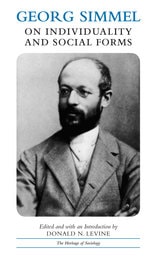
Georg Simmel on Individuality and Social Forms
Georg Simmel
University of Chicago Press, 1972
Half of the material included in this edition of Simmel's writings represents new translations. This includes Simmel's important, lengthy, and previously untranslated "Group Expansion and Development of Individuality," as well as three selections from his most neglected work, Philosophy of Money; in addition, the introduction to Probleme der Geschichtsphilosophie, chapter one of the Lebensanschauung, and three essays are translated for the first time.

Metaphysical Disputation II
On the Essential Concept or Concept of BeingFrancisco Suarez
Catholic University of America Press, 2022

No More Bullies!/¡No Más Bullies
Owl in a Straw Hat 2Rudolfo Anaya
Museum of New Mexico Press, 2019
Singularity
Politics and PoeticsSamuel Weber
University of Minnesota Press, 2021
An influential thinker on the concept of singularity and its implications on politics, theology, economics, psychoanalysis, and literature
For readers versed in critical theory, German and comparative literature, or media studies, a new book by Samuel Weber is essential reading. Singularity is no exception. Bringing together two decades of his essays, it hones in on the surprising implications of the singular and its historical relation to the individual in politics, theology, economics, psychoanalysis, and literature. Although singularity has long been a keyword in literary studies and philosophy, never has it been explored as in this book, which distinguishes singularity as an “aporetic” notion from individuality, with which it remains historically closely tied.
To speak or write of the singular is problematic, Weber argues, since once it is spoken of it is no longer strictly singular. Walter Benjamin observed that singularity and repetition imply each other. This approach informs the essays in Singularity. Weber notes that what distinguishes the singular from the individual is that it cannot be perceived directly, but rather experienced through feelings that depend on but also exceed cognition. This interdependence of cognition and affect plays itself out in politics, economics, and theology as well as in poetics. Political practice as well as its theory have been dominated by the attempt to domesticate singularity by subordinating it to the notion of individuality. Weber suggests that this political tendency draws support from what he calls “the monotheological identity paradigm” deriving from the idea of a unique and exclusive Creator-God.
Despite the “secular” tendencies usually associated with Western modernity, this paradigm continues today to inform and influence political and economic practices, often displaying self-destructive tendencies. By contrast, Weber reads the literary writings of Hölderlin, Nietzsche, and Kafka as exemplary practices that put singularity into play, not as fiction but as friction, exposing the self-evidence of established conventions to be responses to challenges and problems that they often prefer to obscure or ignore.

Skepticism, Individuality, and Freedom
The Reluctant Liberalism Of Richard FlathmanBonnie Honig
University of Minnesota Press, 2002
Major thinkers grapple with the challenge of this renowned liberal thinker.
As one of liberal theory’s most important gadflies, Richard Flathman has during the past four decades produced a significant body of work that is iconoclastic, idiosyncratic, and increasingly influential. Flathman criticizes liberal theory’s role in justifying a politics of governance that has drifted substantially from liberalism’s central commitments to individuality and freedom. It is this challenge, and its implications for the future of liberal theory, that brings together the diverse and distinguished authors of this volume. Topics include the relationships between theory and practice, skepticism and knowledge, individuality and egoism, negative and positive freedom, Hobbes and liberalism, as well as the uneasy connections among liberalism, feminism, and democratic politics.
Contributors: Ronald Beiner, U of Toronto; Jane Bennett, Goucher; William E. Connolly, Johns Hopkins; Peter Digeser, U of California, Santa Barbara; Richard Friedman, SUNY, Buffalo; Nancy J. Hirschmann, Cornell; George Kateb, Princeton; Patrick Neal, U of Vermont; Anne Norton, U of Pennsylvania; Richard Tuck, Harvard; Jeremy J. Waldron, Columbia; Linda Zerilli, Northwestern.
The Individuality of Portugal
A Study in Historical-Political GeographyBy Dan Stanislawski
University of Texas Press, 1959
Many map users have wondered why Portugal, sharing with Spain the Iberian Peninsula, ever became a separate nation. That question is answered with remarkable clarity by Dan Stanislawski. This book also presents an analysis of the factors that produce separate nations and offers a study of the evolution of national cultures generally, especially as they apply to Portugal.
The View of Life
Four Metaphysical Essays with Journal AphorismsGeorg Simmel
University of Chicago Press, 2010
Published in 1918, The View of Life is Georg Simmel’s final work. Famously deemed “the brightest man in Europe” by George Santayana, Simmel addressed diverse topics across his essayistic writings, which influenced scholars in aesthetics, epistemology, and sociology. Nevertheless, certain core issues emerged over the course of his career—the genesis, structure, and transcendence of social and cultural forms, and the nature and conditions of authentic individuality, including the role of mindfulness regarding mortality. Composed not long before his death, The View of Life was, Simmel wrote, his “testament,” a capstone work of profound metaphysical inquiry intended to formulate his conception of life in its entirety.
Now Anglophone readers can at last read in full the work that shaped the argument of Heidegger’s Being and Time and whose extraordinary impact on European intellectual life between the wars was extolled by Jürgen Habermas. Presented alongside these seminal essays are aphoristic fragments from Simmel’s last journal, providing a beguiling look into the mind of one of the twentieth century’s greatest thinkers.

Thine Own Self
Individuality in Edith Stein's Later WritingsSarah Borden Sharkey
Catholic University of America Press, 2010