Results by title
5 books match the query 'Industrial applications'
Artificial Intelligence for Biometrics and Cybersecurity
Technology and applicationsAhmed A. Abd El-Latif
The Institution of Engineering and Technology, 2023
The integration of new technologies is resulting in an increased demand for security and authentication in all types of data communications. Cybersecurity is the protection of networks and systems from theft. Biometric technologies use unique traits of particular parts of the body such facial recognition, iris, fingerprints and voice to identify individuals' physical and behavioural characteristics. Although there are many challenges associated with extracting, storing and processing such data, biometric and cybersecurity technologies along with artificial intelligence (AI) are offering new approaches to verification procedures and mitigating security risks.
[more]
Chicle
The Chewing Gum of the Americas, From the Ancient Maya to William WrigleyJennifer P. Mathews
University of Arizona Press, 2009
Although Juicy Fruit® gum was introduced to North Americans in 1893, Native Americans in Mesoamerica were chewing gum thousands of years earlier. And although in the last decade “biographies” have been devoted to salt, spices, chocolate, coffee, and other staples of modern life, until now there has never been a full history of chewing gum.
Chicle is a history in four acts, all of them focused on the sticky white substance that seeps from the sapodilla tree when its bark is cut. First, Jennifer Mathews recounts the story of chicle and its earliest-known adherents, the Maya and Aztecs. Second, with the assistance of botanist Gillian Schultz, Mathews examines the sapodilla tree itself, an extraordinarily hardy plant that is native only to Mesoamerica and the Caribbean. Third, Mathews presents the fascinating story of the chicle and chewing gum industry over the last hundred plus years, a tale (like so many twentieth-century tales) of greed, growth, and collapse. In closing, Mathews considers the plight of the chicleros, the “extractors” who often work by themselves tapping trees deep in the forests, and how they have emerged as icons of local pop culture—portrayed as fearless, hard-drinking brawlers, people to be respected as well as feared.
Before Dentyne® and Chiclets®, before bubble gum comic strips and the Doublemint® twins, there was gum, oozing from jungle trees like melting candle wax under the slash of a machete. Chicle tells us everything that happened next. It is a spellbinding story.
[more]
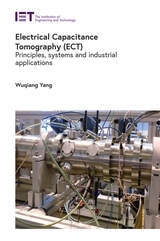
Electrical Capacitance Tomography (ECT)
Principles, systems and industrial applicationsWuqiang Yang
The Institution of Engineering and Technology, 2026
Electrical capacitance tomography (ECT) is a non-intrusive and non-invasive imaging technique that creates a cross-sectional image of the distribution of dielectric materials inside a pipe or vessel. ECT measures the capacitance between pairs of electrodes mounted on the outside of the pipe, and reconstructs a cross-sectional image using the measured capacitance data and a suitable algorithm, to reflect the inside permittivity distribution. ECT is particularly useful for visualising the multiphase flow of non-conductive substances in industrial processes.
[more]
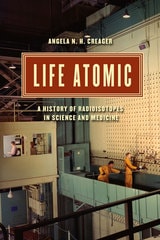
Life Atomic
A History of Radioisotopes in Science and MedicineAngela N. H. Creager
University of Chicago Press, 2013
After World War II, the US Atomic Energy Commission (AEC) began mass-producing radioisotopes, sending out nearly 64,000 shipments of radioactive materials to scientists and physicians by 1955. Even as the atomic bomb became the focus of Cold War anxiety, radioisotopes represented the government’s efforts to harness the power of the atom for peace—advancing medicine, domestic energy, and foreign relations.
In Life Atomic, Angela N. H. Creager tells the story of how these radioisotopes, which were simultaneously scientific tools and political icons, transformed biomedicine and ecology. Government-produced radioisotopes provided physicians with new tools for diagnosis and therapy, specifically cancer therapy, and enabled biologists to trace molecular transformations. Yet the government’s attempt to present radioisotopes as marvelous dividends of the atomic age was undercut in the 1950s by the fallout debates, as scientists and citizens recognized the hazards of low-level radiation. Creager reveals that growing consciousness of the danger of radioactivity did not reduce the demand for radioisotopes at hospitals and laboratories, but it did change their popular representation from a therapeutic agent to an environmental poison. She then demonstrates how, by the late twentieth century, public fear of radioactivity overshadowed any appreciation of the positive consequences of the AEC’s provision of radioisotopes for research and medicine.
[more]
Open Resonator Microwave Sensor Systems for Industrial Gauging
A practical design approachNathan Ida
The Institution of Engineering and Technology, 2018
Open resonator microwave sensors allow accurate sensing, monitoring and measurement of properties such as dimension and moisture content in materials including dielectrics, rubber, polymers, paper, fabrics and wood veneers. This book presents a coherent and entirely practical approach to the design and use of systems based on these sensors in industrial environments, showing how they can provide meaningful, accurate and industrially-viable methods of gauging.
[more]