Results by title
2 books match the query 'Infant psychology'
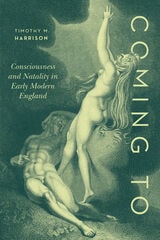
Coming To
Consciousness and Natality in Early Modern EnglandTimothy M. Harrison
University of Chicago Press, 2020
In Coming To, Timothy M. Harrison uncovers the forgotten role of poetry in the history of the idea of consciousness. Drawing our attention to a sea change in the English seventeenth century, when, over the course of a half century, “conscience” made a sudden shift to “consciousness,” he traces a line that leads from the philosophy of René Descartes to the poetry of John Milton, from the prenatal memories of theologian Thomas Traherne to the unresolved perspective on natality, consciousness, and ethics in the philosophy of John Locke. Each of these figures responded to the first-person perspective by turning to the origins of how human thought began. Taken together, as Harrison shows, this unlikely group of thinkers sheds new light on the emergence of the concept of consciousness and the significance of human natality to central questions in the fields of literature, philosophy, and the history of science.
[more]
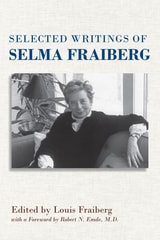
Selected Writings of Selma Fraiberg
Edited by Louis Fraiberg with a Foreword by Robert N. Emde, M.D.
The Ohio State University Press, 1987
Social worker, psychoanalyst, and child-development expert Selma Fraiberg’s iconic book, The Magic Years, has influenced generations of caregivers, therapists, and clinicians since its publication in 1959. No less rich are the essays that make up this new, accessibly priced reissue of her Selected Writings. Like The Magic Years, these essays (including her hugely influential “Ghosts in the Nursery”) glean their insights from years of clinical study and contain Fraiberg’s synthesis of and groundbreaking contributions to attachment theory, child psychology, social work, and, through her work with blind children, the experience of disability in infancy and childhood. Clinical rigor paired with attunement to the emotional lives of her subjects was Fraiberg’s hallmark: as her husband Louis writes in his preface to this volume, “Once, when asked how she knew what babies were thinking, she replied, ‘They tell me.’” Lucid and elegantly written, her Selected Writings will remain a valuable resource for new generations of social workers, mental-health professionals, educators, and others who work with young children.
[more]