Results by title
16 books match the query 'Infants'

'She said she was in the family way'
Pregnancy and Infancy in Modern IrelandEdited by Elaine Farrell
University of London Press, 2012
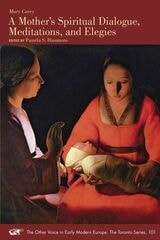
A Mother’s Spiritual Dialogue, Meditations, and Elegies
Mary Carey
Iter Press, 2023
Lady Mary Carey (c. 1609–c. 1680) was a noblewoman who examined her life and expressed her views in a handwritten manuscript that she intended for self-reflection and for sharing with restricted audiences of family and friends, rather than for print publication. Her poetry and prose, composed and revised between 1650 and 1658, were important enough to her inner circle, however, that her autograph manuscript was carefully copied by another hand in 1681. In addition to providing us with key insights into women’s multidimensional roles as wives, widows, and mothers during the seventeenth century in England, Carey’s work teaches us a great deal about a woman’s deepest emotional and spiritual states while confronting the hardships of life—from the fears of childbearing to the sorrows over child loss to the terrors of war.
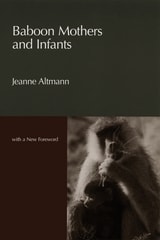
Baboon Mothers and Infants
Jeanne Altmann
University of Chicago Press, 2001
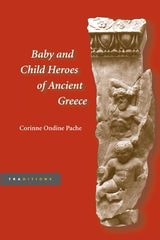
Baby and Child Heroes in Ancient Greece
Corinne Ondine Pache
University of Illinois Press, 2004
Examining literary, pictorial, and numismatic representations, Pache opens up a vast territory once occupied by children such as Charila, Opheltes, Melikertes, and the children of Herakles and Medea. She elegantly argues that the stories, songs, and sanctuaries honoring these heroes express parental fears and guilt about children's death. Pache further demonstrates that while the myths and rituals articulate basic human anxieties, their emphasis is ultimately on the beauty that transcends the gruesomeness of the narrative, turning their dread into poetry. By showing the continuity of child heroes in Greek religion, she is able to throw new light on iconographies that have previously defied explanation.
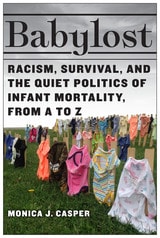
Babylost
Racism, Survival, and the Quiet Politics of Infant Mortality, from A to ZMonica J. Casper
Rutgers University Press, 2021
Back to the Breast
Natural Motherhood and Breastfeeding in AmericaJessica Martucci
University of Chicago Press, 2015
That movement—in which the personal and political were inextricably linked—effectively challenged midcentury norms of sexuality, gender, and consumption, and articulated early environmental concerns about chemical and nuclear contamination of foods, bodies, and breast milk. In its groundbreaking chronicle of the breastfeeding movement, Back to the Breast provides a welcome and vital account of what it has meant, and what it means today, to breastfeed in modern America.

Beyond the Breast-Bottle Controversy
Penny Van Esterik
Rutgers University Press, 1989
--from the Foreword by Michael C. Latham, Cornell University
Penny Van Esterik takes the reader beyond the Nestle boycott and the activist campaigns against infant-formula manufacturers to the issues underlying the controversy. She shows how the controversy is embedded in the problem of urban poverty, the empowerment of women, the medicalization of infant feeding, and the commoditization of infant foods. She argues that the choice between bottle feeding and breast feeding has significant implications for developing countries. Beyond the Breast-Bottle Controversy raises a host of important questions: why has there been no consistent feminist position? How did infant feeding become medicalized in developing and developed countries? What mechanisms encourage the technology and taste transfer necessary for the expansion of bottle feeding? These questions are examined using documentary sources and interdisciplinary research in Thailand, Indonesia, Kenya, and Columbia.
For Van Esterik, the infant-formula controversy is a valuable case study for understanding the relations between women, the environment, and sustainable development. From this perspective, breast feeding has no long-term negative consequences. It depends on renewable resources, works on the principle that as demand increases so does supply, reduces the dependency of women on consumer products and multinational corporations, and puts pressure on governments to improve the health of mothers. On the other hand, the author argues that bottle feeding has definite long-term negative consequences. Her goal is not to have every woman breast-feed her child, but to create living and working conditions so that every woman can do so if she chooses.
Birthing a Better Way
12 Secrets for Natural ChildbirthKalena Cook
University of North Texas Press, 2010
Caring for Life
A Postdevelopment Politics of Infant HygieneKelly Dombroski
University of Minnesota Press, 2024
The transformational possibilities of everyday hygiene and care practices
In order to mitigate the worst forecasts of climate change, many of us need to make drastic adjustments to how we live and what we consume. For Kelly Dombroski, these changes must also happen in the home: in rethinking routines of care and hygiene that still rely on disposable and plastic products. Caring for Life examines the remarkable evolution in Asia-Pacific hygiene practices and amplifies the creative work of ordinary people guarding human and more-than-human life in their everyday practices of care.
Dombroski develops the concept of “guarding life,” a viewpoint that counters homogenous cultural practices and imposed sanitation standards and instead embraces diverse hygiene practices that are networked across varying wisdoms and bodies. She traces how the Chinese diaper-free infant toilet training practice of baniao has traveled to Australia and New Zealand, and she explores the practice of elimination communication, in which babies learn to communicate to their caregivers when they need to eliminate, thus removing the need for diapers. A mother herself, Dombroski conducted ethnographic research while mothering to examine how collectives of mothers draw on Chinese knowledge and their own embodied practices of childcare to create new hybrid forms of infant care.
Caring for Life is a call to action, a theory of change, and a fascinating account of the transformational possibilities of care practices. It shows how experiments in personal care can lead to collective, widespread change, ultimately providing a practical and hopeful vision for environmental action.
Retail e-book files for this title are screen-reader friendly with images accompanied by short alt text and/or extended descriptions.

Don’t Kill Your Baby
Public Health and the Decline of Breastfeeding in the Nineteenth and Twentieth CenturiesJacqueline H. Wolf
The Ohio State University Press, 2001
Great Expectation
A Father's DiaryDan Roche
University of Iowa Press, 2008
With five years of parenting his irrepressible daughter Maeve under his belt, Roche, already forty-five years old, and his wife, Maura, face the prospect of another arrival and the myriad of emotions that come with a second child. From revelling in the joys of pregnancy such as Maura's delight at "having cleavage" and being able to eat whatever she desires; to assuaging the parental anxieties of choosing the right obstetrician, correcting the mistakes one made with the first child, and sending children to college in the future; to navigating the unforeseen, experiencing the unexpected death of a parent, and feeling trepidation toward the thought of having a son, Roche records his emotions with unusual candidness and intimacy.
Reflecting on day-to-day events and their significance in his family’s life together, Roche wonders what he is getting himself into and how much deeper he can immerse himself into parenting. Together, he and his wife face the bittersweet intersections of death and new life, menace and hopefulness. With sincerity and a mature wit, Great Expectation stands as a wise recounting of nine months’ time, with all of its chaos and charms, and offers a fresh perspective for first-time and veteran parents alike.
Mothers and Medicine
A Social History of Infant Feeding, 1890–1950Rima D. Apple
University of Wisconsin Press, 1987
In the nineteenth century, infants were commonly breast-fed; by the middle of the twentieth century, women typically bottle-fed their babies on the advice of their doctors. In this book, Rima D. Apple discloses and analyzes the complex interactions of science, medicine, economics, and culture that underlie this dramatic shift in infant-care practices and women’s lives.
As infant feeding became the keystone of the emerging specialty of pediatrics in the twentieth century, the manufacture of infant food became a lucrative industry. More and more mothers reported difficulty in nursing their babies. While physicians were establishing themselves and the scientific experts and the infant-food industry was hawking the scientific bases of their products, women embraced “scientific motherhood,” believing that science could shape child care practices. The commercialization and medicalization of infant care established an environment that made bottle feeding not only less feared by many mothers, but indeed “natural” and “necessary.” Focusing on the history of infant feeding, this book clarifies the major elements involved in the complex and sometimes contradictory interaction between women and the medical profession, revealing much about the changing roles of mothers and physicians in American society.
“The strength of Apple’s book is her ability to indicate how the mutual interests of mothers, doctors, and manufacturers led to the transformation of infant feeding. . . . Historians of science will be impressed with the way she probes the connections between the medical profession and the manufacturers and with her ability to demonstrate how medical theories were translated into medical practice.”—Janet Golden, Isis
The Afterlife Is Where We Come From
Alma Gottlieb
University of Chicago Press, 2003
In this unique and engaging ethnography of babies, Alma Gottlieb explores how religious ideology affects every aspect of Beng childrearing practices—from bathing infants to protecting them from disease to teaching them how to crawl and walk—and how widespread poverty limits these practices. A mother of two, Gottlieb includes moving discussions of how her experiences among the Beng changed the way she saw her own parenting. Throughout the book she also draws telling comparisons between Beng and Euro-American parenting, bringing home just how deeply culture matters to the way we all rear our children.
All parents and anyone interested in the place of culture in the lives of infants, and vice versa, will enjoy The Afterlife Is Where We Come From.
"This wonderfully reflective text should provide the impetus for formulating research possibilities about infancy and toddlerhood for this century." — Caren J. Frost, Medical Anthropology Quarterly

The Development of Behavioral States and the Expression of Emotions in Early Infancy
New Proposals for InvestigationPeter H. Wolff
University of Chicago Press, 1987
Wolff argues that a coherent psychobiological theory of early human development must begin with knowledge about the infant's behavioral repertory under free field conditions. Many current theories of human development begin instead with assumptions about the organization of behavior derived from studies of psychological function in the adult; moreover, they appeal to instincts, maturational programs, or genomes to explain the apparent lawfulness in the development of these behavioral categories. Such a priori explanations, Wolff contends, beg the whole question of development. As an alternative to theoretical metaphors that portray the infant as a closed system and suggests that development is controlled by prescient programs that anticipate the mature steady state, Wolff proposes a metaphor of the infant as an open, self-organizing system with partial, mutative mechanisms of development. Applying this metaphor, he addresses the essentially unsolved problem of how novel behavioral forms are induced during ontogenesis.
Wolff presents a study of twenty-two infants who were observed for thirty hours each week in their homes during the first months after birth. He builds a week-by-week description of changes in behavioral states of wakefulness and examines how reversible state changes influence developmental transformations in social-affective behavior and sensori-motor intelligence. The observations and informal experiments emphasize expressions of emotion and the infant's changing relations to persons and things. Pointing out that movements are our only clue to what infants "feel" or "think," Wolff gives special emphasis to the systematic variations in spontaneous and environmentally evoked patterns of motor coordination as a function of behavioral state transitions.
Of great importance to psychologists, psychiatrists, pediatricians, and students of development in general, The Development of Behavioral States and the Expression of Emotions in Early Infancy offers a major empirical, methodological, and theoretical rethinking of the subject to which Wolff has made outstanding contributions.

The Essential Lapsit Guide
A Multimedia How-To-Do-It Manual and Programming Guide for Stimulating Literacy Development from 12 to 24 MonthsLinda L. Ernst
American Library Association, 2015
Not just a sourcebook or a reference, but a complete multimedia guide, this innovative, comprehensive resource will help you stimulate the minds of your youngest patrons with rhymes, songs, fingerplays, books, and other creative activities. The engaging materials and methods in this book are equally useful for experienced children's librarians looking for new ideas and new librarians starting to build their own program for the very young. Through researching the latest in early learner and developmental theories, Ernst
- Carefully details the physical, mental, emotional, and social development of children 12 to 24 months
- Guides you through using Lapsit programming to perform effective outreach to all segments of your community
- Shows how to build and maintain effective partnerships with caregivers, child-care providers, early childhood educators, and others
- Offers tips for seeking funding for early childhood services
The Parents’ Guide to Baby Signs
Early Communication with Your InfantLeann Sebrey
Gallaudet University Press, 2009
Experienced ASL instructor Leann Sebrey champions two-way sign communication between parents and their infants who are just months old as a way to bond more closely and reduce frustration, while also maximizing the children’s intelligence and emotional quotients.
Sebrey’s book The Parents’ Guide to Baby Signs: Early Communication with Your Infant lays out an easy, step-by-step process that will instill confidence in parents who have never signed before. She begins by explaining why ASL is best for all children, both deaf and hearing. Sebrey also recognizes the different ways young children learn, encouraging parents and caregivers to sign with infants at all times as a natural part of their interaction. She reveals the first indications of when a baby is ready to communicate, and includes a list of signs to provide parents with a good starting point. Sebrey discusses the moments when infants are most receptive to learn signs and outlines numerous practical techniques with plenty of helpful hints to speed the process. She describes the pleasure of seeing a baby’s first sign, and tells parents how to interpret baby signs, including what to do when a baby uses the wrong signs. Full of easy-to-grasp illustrations of child and family-oriented signs, The Parents’ Guide to Baby Signs is the best how-to book for parents, caregivers, and educators to teach early communication to infants.