Results by title
748 books match the query 'Influence' and 68 start with a
A Blacklist Education
American History, a Family Mystery, and a Teacher Under FireJane S. Smith
Rutgers University Press, 2025
Finalist for the Society of Midland Authors Richard Frisbie Award for Adult Nonfiction
In A Blacklist Education, a mysterious file of family papers triggers a journey through the dark days of political purges in the 1950s. Jane S. Smith tells the story of the anticommunist witch hunt that sent shockwaves through New York City’s public schools as more than a thousand teachers were targeted by Board of Education investigators. Her father was one of them—a fact she learned only long after his death.
Beginning in 1949, amid widespread panic about supposed communist subversion, investigators questioned teachers in their homes, accosted them in their classrooms, and ordered them to report to individual hearings. The interrogations were not published, filmed, open to the public, or reported in the news. By 1956, hundreds of New York City teachers had been fired, often because of uncorroborated reports from paid informers or anonymous accusers.
Most of the targeted teachers resigned or retired without any public process, their names recorded only in municipal files and their futures never known. Their absence became the invisible outline of an educational void, a narrowing of thought that pervaded classrooms for decades. In this highly personal story, family lore and childhood memory lead to restricted archives, forgotten inquisitions, and an eerily contemporary campaign to control who could teach and what was acceptable for students to learn.
A Cold War State of Mind
Brainwashing and Postwar American SocietyMatthew W. Dunne
University of Massachusetts Press, 2013
First popularized during the 1950s, the concept of “brainwashing” is often viewed as an example of Cold War paranoia, an amusing relic of a bygone era. Yet as Matthew W. Dunne shows in this study, over time brainwashing came to connote much more than a sinister form of Communist mind control, taking on broader cultural and political meanings.
Moving beyond well-known debates over Korean War POWs and iconic cultural texts like The Manchurian Candidate, Dunne explores the impact of the idea of brainwashing on popular concerns about freedom, individualism, loyalty, and trust in authority. By the late 1950s the concept had been appropriated into critiques of various aspects of American life such as an insistence on conformity, the alleged “softening” of American men, and rampant consumerism fueled by corporate advertising that used “hidden” or “subliminal” forms of persuasion. Because of these associations and growing anxieties about the potential misuse of psychology, concerns about brainwashing contributed to a new emphasis on individuality and skepticism toward authority in the 1960s. The notion even played an unusual role in the 1968 presidential race, when Republican frontrunner George Romney's claim that he had been “brainwashed” about the Vietnam War by the Johnson administration effectively destroyed his campaign.
In addition to analyzing the evolving meaning of brainwashing over an extended period of time, A Cold War State of Mind explores the class and gender implications of the idea, such as the assumption that working-class POWs were more susceptible to mind control and that women were more easily taken in by the manipulations of advertisers.
A Date Which Will Live
Pearl Harbor in American MemoryEmily S. Rosenberg
Duke University Press, 2005
Rosenberg considers the emergence of Pearl Harbor’s symbolic role within multiple contexts: as a day of infamy that highlighted the need for future U.S. military preparedness, as an attack that opened a "back door" to U.S. involvement in World War II, as an event of national commemoration, and as a central metaphor in American-Japanese relations. She explores the cultural background that contributed to Pearl Harbor’s resurgence in American memory after the fiftieth anniversary of the attack in 1991. In doing so, she discusses the recent “memory boom” in American culture; the movement to exonerate the military commanders at Pearl Harbor, Admiral Husband Kimmel and General Walter Short; the political mobilization of various groups during the culture and history "wars" of the 1990s, and the spectacle surrounding the movie Pearl Harbor. Rosenberg concludes with a look at the uses of Pearl Harbor as a historical frame for understanding the events of September 11, 2001.
A Family of Gods
The Worship of the Imperial Family in the Latin WestGwynaeth McIntyre
University of Michigan Press, 2016
Roman politics and religion were inherently linked as the Romans attempted to explain the world and their place within it. As Roman territory expanded and power became consolidated into the hands of one man, people throughout the empire sought to define their relationship with the emperor by granting honors to him. This collection of practices has been labeled “emperor worship” or “ruler cult,” but this tells only half the story: imperial family members also became an important part of this construction of power and almost half of the individuals deified in Rome were wives, sisters, children, and other family members of the emperor.
In A Family of Gods, Gwynaeth McIntyre expands current “ruler cult” discussions by including other deified individuals, and by looking at how communities in the period 44 BCE to 337 CE sought to connect themselves with the imperial power structure through establishing priesthoods and cult practices. This work focuses on the priests dedicated to the worship of the imperial family in order to contextualize their role in how imperial power was perceived in the provincial communities and the ways in which communities chose to employ religious practices. Special emphasis is given to the provinces in Gaul, Spain, and North Africa.
This book draws on epigraphic evidence but incorporates literary, numismatic, and archaeological evidence where applicable. It will be of interest to scholars of Roman imperial cult as well as Roman imperialism, and religious and political history.
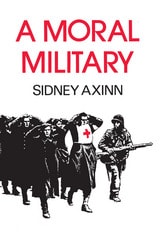
A Moral Military
Sidney Axinn
Temple University Press, 1990
A Moral Military
Sidney Axinn
Temple University Press, 2008
In this new edition of the classic book on the moral conduct of war, Sidney Axinn provides a full-length treatment of the military conventions from a philosophical point of view. Axinn considers these basic ethical questions within the context of the laws of warfare: Should a good soldier ever disobey a direct military order? Are there restrictions on how we fight a war? What is meant by “military honor,” and does it really affect the contemporary soldier? Is human dignity possible under battlefield conditions?
Axinn answers “yes” to these questions. His objective in A Moral Military is to establish a basic framework for moral military action and to assist in analyzing military professional ethics. He argues for the seriousness of the concept of military honor but limits honorable military activity by a strict interpretation of the notion of war crime.
With revisions and expansions throughout, including a new chapter on torture, A Moral Military is an essential guide on the nature of war during a time when the limits of acceptable behavior are being stretched in new directions.
A More Conservative Place
Intellectual Culture in the Bush EraPaul A. Bové
Dartmouth College Press, 2013
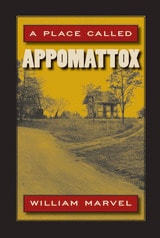
A Place Called Appomattox
William Marvel
Southern Illinois University Press, 2007
In A Place Called Appomattox, William Marvel turns his extensive Civil War scholarship toward Appomattox County, Virginia, and the village of Appomattox Court House, which became synonymous with the end of the Civil War when Robert E. Lee surrendered to Ulysses S. Grant there in 1865. Marvel presents a formidably researched and elegantly written analysis of the county from 1848 to 1877, using it as a microcosm of Southern attitudes, class issues, and shifting cultural mores that shaped the Civil War and its denouement.
With an eye toward correcting cultural myths and enriching the historical record, Marvel analyzes the rise and fall of the village and county from 1848 to 1877, detailing the domestic economic and social vicissitudes of the village, and setting the stage for the flight of Lee’s Army toward Appomattox and the climactic surrender that still resonates today.
Now available for the first time in paperback, A Place Called Appomattox reveals a new view of the Civil War, tackling some of the thorniest issues often overlooked by the nostalgic exaggerations and historical misconceptions that surround Lee’s surrender.
A Power to Translate the World
New Essays on Emerson and International CultureEdited by David LaRocca and Ricardo Miguel-Alfonso
Dartmouth College Press, 2016
A Secret Society History of the Civil War
Mark A. Lause
University of Illinois Press, 2014
Antebellum secret societies ranged politically from those with progressive or even revolutionary agendas to those that pursued conservative or oppressive goals. This book shows how, in the years leading up to the Civil War, these clandestine organizations exacerbated existing sectional tensions in the United States. Lause's research indicates that the pervasive influence of secret societies may have played a part in key events such as the Freesoil movement, the beginning of the Republican party, John Brown's raid on Harpers Ferry, Lincoln's election, and the Southern secession process of 1860-1861.
This exceptional study encompasses both white and African American secret society involvement, revealing the black fraternal experience in antebellum America as well as the clandestine operations that provided assistance to escaped slaves via the Underground Railroad. Unraveling these pervasive and extensive networks of power and influence, A Secret Society History of the Civil War demonstrates that antebellum secret societies played a greater role in affecting Civil War-era politics than has been previously acknowledged.
A Social History of Modern Art, Volume 2
Art in an Age of Bonapartism, 1800-1815Albert Boime
University of Chicago Press, 1990
Heavily illustrated, this volume is an invaluable social history of modern art during the Napoleonic era.
Stimulating and informative, this volume will become a valuable resource for faculty and undergraduates.—R. W. Liscombe, Choice
A THOUSAND WORDS
PORTRAITURE, STYLE, AND QUEER MODERNISMJaime Hovey
The Ohio State University Press, 2006
Portraiture speaks to the complex relationship between identity, sexuality, and art, and the presence of so many portraits in this era suggests that sexual, gender, and racial aspects of character, personality, and personal identity were of major concern to most modernist writers. Yet it took most of the twentieth century for critical work to appear that meaningfully explored these themes, and very little has been said about the queerness of literary portraiture. This book demonstrates that literary portraiture is enamored of its own self-consciousness, with the pleasures of looking at itself seeing itself, and that its texts circulate this pleasure between writers, narrators and other characters, and readers as a perverse aesthetics
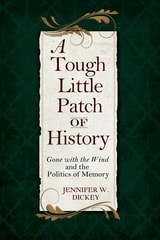
A Tough Little Patch of History
Gone with the Wind and the Politics of MemoryJennifer W. Dickey
University of Arkansas Press, 2014
More than seventy-five years after its publication, Gone with the Wind remains thoroughly embedded in American culture. Margaret Mitchell’s novel and the film produced by David O. Selznick have melded with the broader forces of southern history, southern mythology, and marketing to become, and remain, a cultural phenomenon.
A Tough Little Patch of History (the phrase was coined by a journalist in 1996 to describe the Margaret Mitchell home after it was spared from destruction by fire) explores how Gone with the Wind has remained an important component of public memory in Atlanta through an analysis of museums and historic sites that focus on this famous work of fiction. Jennifer W. Dickey explores how the book and film threw a spotlight on Atlanta, which found itself simultaneously presented as an emblem of both the Old South and the New South. Exhibitions produced by the Atlanta History Center related to Gone with the Wind are explored, along with nearby Clayton County’s claim to fame as “the Home of Gone with the Wind,” a moniker bestowed on the county by Margaret Mitchell’s estate in 1969. There’s a recounting of the saga of “the Dump,” the tiny apartment in midtown Atlanta where Margaret Mitchell wrote the book, and how this place became a symbol for all that was right and all that was wrong with Mitchell’s writing.
A Voltaire for Russia
A. P. Sumarokov's Journey from Poet-Critic to Russian PhilosopheAmanda Ewington
Northwestern University Press, 2010
In A Voltaire for Russia, Amanda Ewington examines the tumultuous literary career of Alexander Petrovich Sumarokov in relation to that of his slightly older French contemporary, Voltaire. Although largely unknown in the English-speaking world, Sumarokov was one of the founding fathers of modern Russian literature, renowned in his own time as a great playwright and prolific
poet.
A Voltaire for Russia polemicizes with long-accepted readings of Sumarokov as an imitator of French neoclassical poets, ultimately questioning the very notion of a Russian “classicism.” Ewington uncovers Sumarokov’s poignantly personal devotion to Voltaire as a new framework for understanding not only his works but also his literary allegiances and agenda, as he sets out to establish a Russian literature and cultivate a reading public.

Abandoned Women
Rewriting the Classics in Dante, Boccaccio, and ChaucerSuzanne Hagedorn
University of Michigan Press, 2003
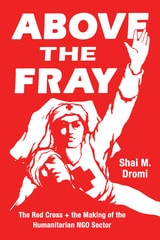
Above the Fray
The Red Cross and the Making of the Humanitarian NGO SectorShai M. Dromi
University of Chicago Press, 2020
Drawing on archival research, Dromi traces the genesis of the Red Cross to a Calvinist movement working in mid-nineteenth-century Geneva. He shows how global humanitarian policies emerged from the Red Cross founding members’ faith that an international volunteer program not beholden to the state was the only ethical way to provide relief to victims of armed conflict. By illustrating how Calvinism shaped the humanitarian field, Dromi argues for the key role belief systems play in establishing social fields and institutions. Ultimately, Dromi shows the immeasurable social good that NGOs have achieved, but also points to their limitations and suggests that alternative models of humanitarian relief need to be considered.
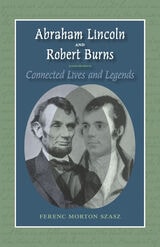
Abraham Lincoln and Robert Burns
Connected Lives and LegendsFerenc Morton Szasz
Southern Illinois University Press, 2008
Today the images of Robert Burns and Abraham Lincoln are recognized worldwide, yet few are aware of the connection between the two. In Abraham Lincoln and Robert Burns: Connected Lives and Legends, author Ferenc Morton Szasz reveals how famed Scots poet Robert Burns—and Scotland in general—influenced the life and thought of one of the most beloved and important U.S. presidents and how the legends of the two men became intertwined after their deaths. This is the first extensive work to link the influence, philosophy, and artistry of these two larger-than-life figures.
Lacking a major national poet of their own in the early nineteenth century, Americans in the fledgling frontier country ardently adopted the poignant verses and songs of Scotland’s Robert Burns. Lincoln, too, was fascinated by Scotland’s favorite son and enthusiastically quoted the Scottish bard from his teenage years to the end of his life. Szasz explores the ways in which Burns’s portrayal of the foibles of human nature, his scorn for religious hypocrisy, his plea for nonjudgmental tolerance, and his commitment to social equality helped shape Lincoln’s own philosophy of life. The volume also traces how Burns’s lyrics helped Lincoln develop his own powerful sense of oratorical rhythm, from his casual anecdotal stories to his major state addresses.
Abraham Lincoln and Robert Burns connects the poor-farm-boy upbringings, the quasi-deistic religious views, the shared senses of destiny, the extraordinary gifts for words, and the quests for social equality of two respected and beloved world figures. This book is enhanced by twelve illustrations and two appendixes, which include Burns poems Lincoln particularly admired and Lincoln writings especially admired in Scotland.
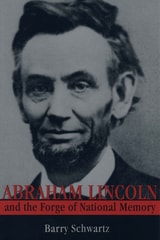
Abraham Lincoln and the Forge of National Memory
Barry Schwartz
University of Chicago Press, 2000
Schwartz draws on a wide array of materials—painting and sculpture, popular magazines and school textbooks, newspapers and oratory—to examine the role that Lincoln's memory has played in American life. He explains, for example, how dramatic funeral rites elevated Lincoln's reputation even while funeral eulogists questioned his presidential actions, and how his reputation diminished and grew over the next four decades. Schwartz links transformations of Lincoln's image to changes in the society. Commemorating Lincoln helped Americans to think about their country's development from a rural republic to an industrial democracy and to articulate the way economic and political reform, military power, ethnic and race relations, and nationalism enhanced their conception of themselves as one people.
Lincoln's memory assumed a double aspect of "mirror" and "lamp," acting at once as a reflection of the nation's concerns and an illumination of its ideals, and Schwartz offers a fascinating view of these two functions as they were realized in the commemorative symbols of an ever-widening circle of ethnic, religious, political, and regional communities. The first part of a study that will continue through the present, Abraham Lincoln and the Forge of National Memory is the story of how America has shaped its past selectively and imaginatively around images rooted in a real person whose character and achievements helped shape his country's future.
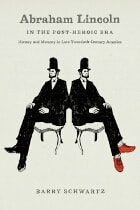
Abraham Lincoln in the Post-Heroic Era
History and Memory in Late Twentieth-Century AmericaBarry Schwartz
University of Chicago Press, 2008
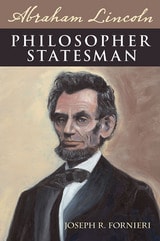
Abraham Lincoln, Philosopher Statesman
Joseph R. Fornieri
Southern Illinois University Press, 2014
2015 ISHS Superior Achievement Award
What constitutes Lincoln’s political greatness as a statesman? As a great leader, he saved the Union, presided over the end of slavery, and helped to pave the way for an interracial democracy. His great speeches provide enduring wisdom about human equality, democracy, free labor, and free society. Joseph R. Fornieri contends that Lincoln’s political genius is best understood in terms of a philosophical statesmanship that united greatness of thought and action, one that combined theory and practice. This philosophical statesmanship, Fornieri argues, can best be understood in terms of six dimensions of political leadership: wisdom, prudence, duty, magnanimity, rhetoric, and patriotism. Drawing on insights from history, politics, and philosophy, Fornieri tackles the question of how Lincoln’s statesmanship displayed each of these crucial elements.
Providing an accessible framework for understanding Lincoln’s statesmanship, this thoughtful study examines the sixteenth president’s political leadership in terms of the traditional moral vision of statecraft as understood by epic political philosophers such as Aristotle and St. Thomas Aquinas. Fornieri contends that Lincoln’s character is best understood in terms of Aquinas’s understanding of magnanimity or greatness of soul, the crowning virtue of statesmanship. True political greatness, as embodied by Lincoln, involves both humility and sacrificial service for the common good. The enduring wisdom and timeless teachings of these great thinkers, Fornieri shows, can lead to a deeper appreciation of statesmanship and of its embodiment in Abraham Lincoln.
With the great philosophers and books of western civilization as his guide, Fornieri demonstrates the important contribution of normative political philosophy to an understanding of our sixteenth president. Informed by political theory that draws on the classics in revealing the timelessness of Lincoln’s example, his interdisciplinary study offers profound insights for anyone interested in the nature of leadership, statesmanship, political philosophy, political ethics, political history, and constitutional law.

Abstract Expressionism
The International ContextMarter, Joan
Rutgers University Press, 2007
Bringing together fifteen original and path-breaking essays by world-class authorities on Abstract Expressionism as well as by younger scholars, this anthology looks beyond the canonical painters to explore the broader connections among abstract artists of the post–World War II era. Moving from the margins to the center, the essays recognize the contributions of artists working far beyond New York City. Topics include Jackson Pollock’s contact with Mexican muralists and the legacy of Abstract Expressionism for leftist artists in Latin America, the relevance of Jean-Paul Sartre and Samuel Beckett as sources of philosophical thought, the significance of northern European CoBrA painters such as Asger Jorn, the impact of Japanese Gutai artists, and connections with the revolutionary art of Italy, Belgium, and France. Abstract Expressionism is also described as a model for contemporaneous developments in the former Soviet Union.
As the first book to consider the movement in relation to post–World War II abstraction on four continents, this book brings a fresh perspective to this widely studied school of painting. Scholars and students alike will find this anthology essential reading in creating a more complete and nuanced understanding of Abstract Expressionism.
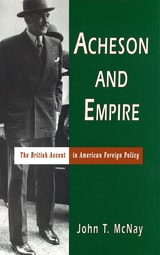
Acheson and Empire
The British Accent in American Foreign PolicyJohn T. McNay
University of Missouri Press, 2001
Acheson and Empire offers a compelling reassessment of Dean Acheson's policies toward the former colonial world during his period as secretary of state from 1949 to 1953. John T. McNay argues that Acheson inherited through his own personal history a way of understanding the world that encouraged imperial-style international relationships. This worldview represented a well-developed belief system rooted in his Ulster Protestant heritage that remained consistent throughout his life.
By exploring relationships of the United States with Britain and countries formerly or then controlled by Britain, such as India, Ireland, Iran, and Egypt, McNay shows the significance of Acheson's beliefs. McNay argues that Acheson's support of existing imperial relationships was so steadfast that it often led other nations to perceive that the United States was nothing more than a front for British interests. He believes this approach to foreign policy damaged American relations with emerging countries and misled the British regarding possibilities of an Anglo-American partnership.
Acheson and Empire contends that the widely accepted view of Acheson as a foreign policy realist is misleading and that historians should acknowledge that his affinity for the British Empire went beyond his clothing and mannerisms. McNay maintains that the widely accepted view of Acheson as one of a group of "wise men" who shaped the Cold War world by basing their decisions on cold calculation of American interests should be reconsidered.
Drawing from extensive research in archival sources, including the Truman Library, the National Archives, the Public Record Office in London, and Acheson's personal papers at Yale, Acheson and Empire offers a fresh look at Dean Acheson that runs counter to previous biographies and many histories of the Cold War.
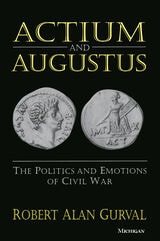
Actium and Augustus
The Politics and Emotions of Civil WarRobert Alan Gurval
University of Michigan Press, 1998
Actium and Augustus marks a turning point as well. Robert Alan Gurval's unusual approach is to examine contemporary views of the battle and its immediate political and social consequences. He starts with a consideration of the official celebration and public commemoration of the Actian victory and then moves on to other questions. What were the "Actian" monuments that Octavian erected on the battle site and later in Rome? What role did the Actian victory play in the political formation of the Principate and its public ideology? What was the response of contemporary poetry? Throughout, this volume concentrates on contemporary views of Actium and its results.
Written to include the general reader, Actium and Augustus presents a thoughtful examination of a complex period. All Greek and Latin quotations are translated, and extensive illustrations present graphic evidence about the issues Romans faced.
Robert Alan Gurval is Associate Professor of Classics, University of California, Los Angeles, and has been a recipient of the Rome Prize awarded by the American Academy in Rome.
Active Romanticism
The Radical Impulse in Nineteenth-Century and Contemporary Poetic PracticeEdited by Julie Carr and Jeffrey C. Robinson
University of Alabama Press, 2015
A collection of essays highlighting the pervasive, yet often unacknowledged, role of Romantic poetry and poetics on modern and contemporary innovative poetry.
Literary history generally locates the primary movement toward poetic innovation in twentieth-century modernism, an impulse carried out against a supposedly enervated “late-Romantic” poetry of the nineteenth century. The original essays in Active Romanticism challenge this interpretation by tracing the fundamental continuities between Romanticism’s poetic and political radicalism and the experimental movements in poetry from the late nineteenth century to the present day.
According to editors July Carr and Jeffrey C. Robinson, “active romanticism” is a poetic response, direct or indirect, to pressing social issues and an attempt to redress forms of ideological repression; at its core, “active romanticism” champions democratic pluralism and confronts ideologies that suppress the evidence of pluralism. “Poetry fetter’d, fetters the human race,” declared poet William Blake at the beginning of the nineteenth century. No other statement from the era of the French Revolution marks with such terseness the challenge for poetry to participate in the liberation of human society from forms of inequality and invisibility. No other statement insists so vividly that a poetic event pushing for social progress demands the unfettering of traditional, customary poetic form and language.
Bringing together work by well-known writers and critics, ranging from scholarly studies to poets’ testimonials, Active Romanticism shows Romantic poetry not to be the sclerotic corpse against which the avant-garde reacted but rather the wellspring from which it flowed.
Offering a fundamental rethinking of the history of modern poetry, Carr and Robinson have grouped together in this collection a variety of essays that confirm the existence of Romanticism as an ongoing mode of poetic production that is innovative and dynamic, a continuation of the nineteenth-century Romantic tradition, and a form that reacts and renews itself at any given moment of perceived social crisis.
Afromodernism
Six Turning PointsKobena Mercer
Duke University Press, 2027
After Brecht
British Epic TheaterJanelle G. Reinelt
University of Michigan Press, 1996
The book has been enriched by the author's in-depth conversations with the playwrights. The topics covered include contemporary politics and the theater, the National Theatre, the Royal Shakespeare Company, and such well-known fringe companies as Foco Novo, Joint Stock, Portable Theatre, and 7:84. Reinelt examines each playwright within an interpretive frame drawn from an application of Brecht's theories and practice to the historically specific situation of post-war British theater.
The book will appeal to those interested in the relationship between politics and art and contemporary European theater and its antecedents.
"After Brecht represents the best and most detailed engagement with the contemporary British theater scene to date." --Stanton B. Garner, Jr.
"This fine study . . . confronts issues that are important to all students and practitioners of the theater. Sensitive to the uniqueness of each of the playwrights in her study, Reinelt demonstrates that Brechtian theory can be modified in many ways by those who share the belief that 'politics and aesthetics are inseparably linked.'" --Choice
Janelle Reinelt is Chair of the Department of Dramatic Art and Dance, University of California-Davis.
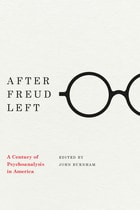
After Freud Left
A Century of Psychoanalysis in AmericaEdited by John Burnham
University of Chicago Press, 2012
From August 29 to September 21, 1909, Sigmund Freud visited the United States, where he gave five lectures at Clark University in Worcester, Massachusetts. This volume brings together a stunning gallery of leading historians of psychoanalysis and of American culture to consider the broad history of psychoanalysis in America and to reflect on what has happened to Freud’s legacy in the United States in the century since his visit.
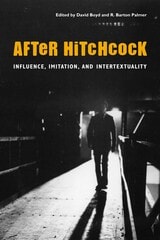
After Hitchcock
Influence, Imitation, and IntertextualityEdited by David Boyd and R. Barton Palmer
University of Texas Press, 2006
Alfred Hitchcock is arguably the most famous director to have ever made a film. Almost single-handedly he turned the suspense thriller into one of the most popular film genres of all time, while his Psycho updated the horror film and inspired two generations of directors to imitate and adapt this most Hitchcockian of movies. Yet while much scholarly and popular attention has focused on the director's oeuvre, until now there has been no extensive study of how Alfred Hitchcock's films and methods have affected and transformed the history of the film medium.
In this book, thirteen original essays by leading film scholars reveal the richness and variety of Alfred Hitchcock's legacy as they trace his shaping influence on particular films, filmmakers, genres, and even on film criticism. Some essays concentrate on films that imitate Hitchcock in diverse ways, including the movies of Brian de Palma and thrillers such as True Lies, The Silence of the Lambs, and Dead Again. Other essays look at genres that have been influenced by Hitchcock's work, including the 1970s paranoid thriller, the Italian giallo film, and the post-Psycho horror film. The remaining essays investigate developments within film culture and academic film study, including the enthusiasm of French New Wave filmmakers for Hitchcock's work, his influence on the filmic representation of violence in the post-studio Hollywood era, and the ways in which his films have become central texts for film theorists.
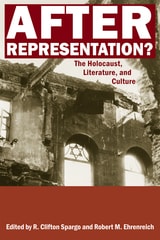
After Representation?
The Holocaust, Literature, and CultureSpargo, R. Clifton
Rutgers University Press, 2010
As experts in the study of literature and culture, the scholars in this collection examine the shifting cultural contexts for Holocaust representation and reveal how writersùwhether they write as witnesses to the Holocaust or at an imaginative distance from the Nazi genocideùarticulate the shadowy borderline between fact and fiction, between event and expression, and between the condition of life endured in atrocity and the hope of a meaningful existence. What imaginative literature brings to the study of the Holocaust is an ability to test the limits of language and its conventions. After Representation? moves beyond the suspicion of representation and explores the changing meaning of the Holocaust for different generations, audiences, and contexts.
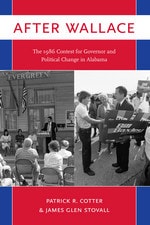
After Wallace
The 1986 Contest for Governor and Political Change in AlabamaPatrick R. Cotter
University of Alabama Press, 2009
With the retirement of an aging and ill George Wallace, both the issues and candidates contending for the office were able to set the course of Alabama politics for generations to follow. Whereas the Wallace regimes were particular to Alabama, and the gubernatorial campaign was conducted in a partial vacuum with his absence, Alabama also experienced a wave of partisan realignment. A once solidly Democratic South was undergoing a tectonic political shift as white voters in large numbers abandoned their traditional Democratic political home for the revived Republicans, a party shaped in many respects by the Wallace presidential bids of 1968 and 1972 and the Reagan revolution of the 1980s.
Alabama's own Democratic Party contributed to this massive shift with self-destructive campaign behavior that disgusted many of its traditional voters who wound up staying home or voting for a little-known Republican. From the gubernatorial election of 1986 came the shaky balance between the two parties that exists today.
After Wallace recollects and analyzes how these shifts occurred, citing extensive newspaper coverage from the time as well as personal observations and poll data collected by the authors. This volume is certain to be a valuable work for any political scientist, especially those with an interest in Alabama or southern politics.
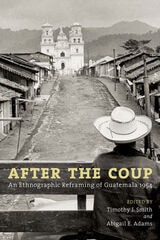
After the Coup
An Ethnographic Reframing of Guatemala 1954Edited by Timothy J. Smith and Abigail E. Adams
University of Illinois Press, 2011
Recent research and the release of newly declassified U.S. government documents underscore the importance of reading Guatemala's current history through the lens of 1954. Scholars and researchers who have worked in Guatemala from the 1940s to the present articulate how the coup fits into ethnographic representations of Guatemala. Highlighting the voices of individuals with whom they have lived and worked, the contributors also offer an unmatched understanding of how the events preceding and following the coup played out on the ground.
Contributors are Abigail E. Adams, Richard N. Adams, David Carey Jr., Christa Little-Siebold, Judith M. Maxwell, Victor D. Montejo, June C. Nash, and Timothy J. Smith.
Agents of Liberations
Holocaust Memory in Contemporary Art and Documentary FilmZoltán Kékesi
Central European University Press, 2015
Alexandre Kojève and the Specters of Russian Philosophy
Trevor Wilson
Northwestern University Press, 2025
Recounts Kojève’s key role in the pivotal exchange of ideas between Eastern and Western European intellectuals in the early twentieth century
This book shines critical new light on the story of Alexandre Kojève’s intellectual origins and his role in the emigration of Russian philosophy into the West in the early twentieth century. Trevor Wilson illustrates how Kojève, at once adversarial to the insular communities of émigré philosophy and yet dependent on their networks and ideas for professional success, navigated the specters of the Russian tradition in pursuit of an autonomous self-definition as a philosopher and intellectual.
Alexandre Kojève and the Specters of Russian Philosophy analyzes the philosopher’s complicated relationship to the interwar diaspora and the complex role played by the Russian tradition in his intellectual formation. Wilson examines Kojève’s early writings in the émigré press on Russian religious philosophy, Soviet politics, and Eurasianism and argues for their enduring relevance for understanding Kojève in his mature period. Crucially, he contextualizes Kojève’s famed seminars on Hegel and examines how Kojève’s thought became embedded in the politics of the Cold War. Based on newly transcribed and translated archival material, he highlights a previously unacknowledged, transnational exchange of ideas between Eastern and Western European intellectuals and shows how it played a pivotal role in twentieth-century intellectual history—and its legacy in the twenty-first.
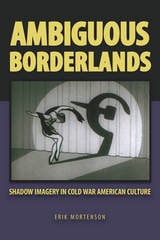
Ambiguous Borderlands
Shadow Imagery in Cold War American CultureErik Mortenson
Southern Illinois University Press, 2016
After contextualizing the postwar use of shadow imagery in the wake of the atomic bomb, Ambiguous Borderlands looks at shadows in print works, detailing the reemergence of the pulp fiction crime fighter the Shadow in the late-1950s writings of Sylvia Plath, Amiri Baraka, and Jack Kerouac. Using Freudian and Jungian conceptions of the unconscious, Mortenson then discusses Kerouac’s and Allen Ginsberg’s shared dream of a “shrouded stranger” and how it shaped their Beat aesthetic. Turning to the visual, Mortenson examines the dehumanizing effect of shadow imagery in the Cold War photography of Robert Frank, William Klein, and Ralph Eugene Meatyard. Mortenson concludes with an investigation of the use of chiaroscuro in 1950s film noir and the popular television series The Twilight Zone, further detailing how the complexities of Cold War society were mirrored across these media in the ubiquitous imagery of light and dark.
From comics to movies, Beats to bombs, Ambiguous Borderlands provides a novel understanding of the Cold War cultural context through its analysis of the image of the shadow in midcentury media. Its interdisciplinary approach, ambitious subject matter, and diverse theoretical framing make it essential reading for anyone interested in American literary and popular culture during the fifties and sixties.
America's Blessings
How Religion Benefits Everyone, Including AtheistsRodney Stark
Templeton Press, 2013
A few years ago, a debate between atheists and religious believers spilled out from the halls of academia and the pews of America’s churches and into the public spotlight. A crop of atheist manifestos led the charge, surmounting and holding the tops of the nonfiction bestseller lists. This debate brought on an outpouring of religious rebuttals as both sides exchanged spirited volleys, accusations were leveled; myths, stereotypes, and strawmen arguments were perpetuated; and bitter hostility filled the air. Today many of these misconceptions and myths linger on, along with the generally acrimonious spirit of the debate.
In America’s Blessings, distinguished researcher Rodney Stark seeks to clear the air of this hostility and debunk many of the debate’s most widely perpetuated misconceptions by drawing from an expansive pool of sociological findings. Stark rises above the fray and focuses exclusively on facts by examining the measurable effects of religious faith and practice on American society. His results may surprise many atheists and believers alike.
Starting with a historical overview, Stark traces America’s religious roots from the country’s founding to the present day, showing that religiosity in America has never been consistent, static, or monolithic. Interestingly, he finds that religious practice is now more prevalent than ever in America, despite any claims to the contrary. From here, Stark devotes whole chapters to unpacking the latest research on how religion affects the different facets of modern American life, including crime, family life, sexuality, mental and physical health, sophistication, charity, and overall prosperity. The cumulative effect is that when translated into comparisons with western European nations, the United States comes out on top again and again. Thanks in no small part to America’s rich religious culture, the nation has far lower crime rates, much higher levels of charitable giving, better health, stronger marriages, and less suicide, to note only a few of the benefits.
In the final chapter, Stark assesses the financial impact of these religious realities. It turns out that belief benefits the American economy—and all 300 million citizens, believers, and nonbelievers alike—by a conservative estimate of $2.6 trillion a year. Despite the atheist outcry against religion, the remarkable conclusion is clear: all Americans, from the most religious among us to our secular neighbors, really ought to count our blessings.
America's Gothic Fiction
The Legacy of Magnalia Christi AmericanaDorothy Z. Baker
The Ohio State University Press, 2007
America's Japan and Japan's Performing Arts
Cultural Mobility and Exchange in New York, 1952-2011Barbara E. Thornbury
University of Michigan Press, 2013
America's Philosopher
John Locke in American Intellectual LifeClaire Rydell Arcenas
University of Chicago Press, 2022
The influence of polymath philosopher John Locke (1632–1704) can still be found in a dizzying range of fields, as his writings touch on issues of identity, republicanism, and the nature of knowledge itself. Claire Rydell Arcenas’s new book tells the story of Americans’ longstanding yet ever-mutable obsession with this English thinker’s ideas, a saga whose most recent manifestations have found the so-called Father of Liberalism held up as a right-wing icon.
The first book to detail Locke’s trans-Atlantic influence from the eighteenth century until today, America’s Philosopher shows how and why interpretations of his ideas have captivated Americans in ways few other philosophers—from any nation—ever have. As Arcenas makes clear, each generation has essentially remade Locke in its own image, taking inspiration and transmuting his ideas to suit the needs of the particular historical moment. Drawing from a host of vernacular sources to illuminate Locke’s often contradictory impact on American daily and intellectual life from before the Revolutionary War to the present, Arcenas delivers a pathbreaking work in the history of ideas.
America's Religious Crossroads
Faith and Community in the Emerging MidwestStephen T. Kissel
University of Illinois Press, 2021
Perceptive and broad in scope, America’s Religious Crossroads illuminates the integral relationship between communal and spiritual growth in early Midwestern history.
America's Teilhard
Susan Kassman Sack
Catholic University of America Press, 2019
America's Vietnam
The Longue Durée of U.S. Literature and EmpireMarguerite Nguyen
Temple University Press, 2018
America’s Vietnam challenges the prevailing genealogy of Vietnam’s emergence in the American imagination—one that presupposes the Vietnam War as the starting point of meaningful Vietnamese-U.S. political and cultural involvements. Examining literature from as early as the 1820s, Marguerite Nguyen takes a comparative, long historical approach to interpreting constructions of Vietnam in American literature. She analyzes works in various genres published in English and Vietnamese by Monique Truong and Michael Herr as well as lesser-known writers such as John White, Harry Hervey, and Võ Phiến. The book’s cross-cultural prism spans Paris, Saigon, New York, and multiple oceans, and its departure from Cold War frames reveals rich cross-period connections.
America’s Vietnam recounts a mostly unexamined story of Southeast Asia’s lasting and varied influence on U.S. aesthetic and political concerns. Tracking Vietnam’s transition from an emergent nation in the nineteenth century to a French colony to a Vietnamese-American war zone, Nguyen demonstrates that how authors represent Vietnam is deeply entwined with the United States’ shifting role in the world. As America’s longstanding presence in Vietnam evolves, the literature it generates significantly revises our perceptions of war, race, and empire over time.
American Guides
The Federal Writers’ Project and the Casting of American CultureWendy Griswold
University of Chicago Press, 2016
Griswold’s subject here is the Project’s American Guides, an impressively produced series that set out not only to direct travelers on which routes to take and what to see throughout the country, but also to celebrate the distinctive characteristics of each individual state. Griswold finds that the series unintentionally diversified American literary culture’s cast of characters—promoting women, minority, and rural writers—while it also institutionalized the innovative idea that American culture comes in state-shaped boxes. Griswold’s story alters our customary ideas about cultural change as a gradual process, revealing how diversity is often the result of politically strategic decisions and bureaucratic logic, as well as of the conflicts between snobbish metropolitan intellectuals and stubborn locals. American Guides reveals the significance of cultural federalism and the indelible impact that the Federal Writers’ Project continues to have on the American literary landscape.
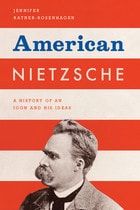
American Nietzsche
A History of an Icon and His IdeasJennifer Ratner-Rosenhagen
University of Chicago Press, 2011
If you were looking for a philosopher likely to appeal to Americans, Friedrich Nietzsche would be far from your first choice. After all, in his blazing career, Nietzsche took aim at nearly all the foundations of modern American life: Christian morality, the Enlightenment faith in reason, and the idea of human equality. Despite that, for more than a century Nietzsche has been a hugely popular—and surprisingly influential—figure in American thought and culture.
In American Nietzsche, Jennifer Ratner-Rosenhagen delves deeply into Nietzsche's philosophy, and America’s reception of it, to tell the story of his curious appeal. Beginning her account with Ralph Waldo Emerson, whom the seventeen-year-old Nietzsche read fervently, she shows how Nietzsche’s ideas first burst on American shores at the turn of the twentieth century, and how they continued alternately to invigorate and to shock Americans for the century to come. She also delineates the broader intellectual and cultural contexts within which a wide array of commentators—academic and armchair philosophers, theologians and atheists, romantic poets and hard-nosed empiricists, and political ideologues and apostates from the Left and the Right—drew insight and inspiration from Nietzsche’s claims for the death of God, his challenge to universal truth, and his insistence on the interpretive nature of all human thought and beliefs. At the same time, she explores how his image as an iconoclastic immoralist was put to work in American popular culture, making Nietzsche an unlikely posthumous celebrity capable of inspiring both teenagers and scholars alike.
A penetrating examination of a powerful but little-explored undercurrent of twentieth-century American thought and culture, American Nietzsche dramatically recasts our understanding of American intellectual life—and puts Nietzsche squarely at its heart.
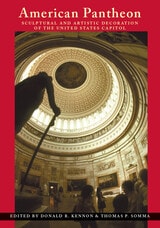
American Pantheon
Sculptural and Artistic Decoration of the United States CapitolDonald R. Kennon
Ohio University Press, 2002
Like the ancient Roman Pantheon, the U.S. Capitol was designed by its political and aesthetic arbiters to memorialize the virtues, events, and persons most representative of the nation's ideals—an attempt to raise a particular version of the nation's founding to the level of myth.
American Pantheon examines the influences upon not only those virtues and persons selected for inclusion in the American pantheon, but also those excluded. Two chapters address the exclusion of slavery and African Americans from the art in the Capitol, a silence made all the more deafening by the major contributions of slaves and free black workers to the construction of the building. Two other authors consider the subject of women emerging as artists, subjects, patrons, and proponents of art in the Capitol, a development that began to emerge only in the second half of the nineteenth century.
The Rotunda, the Capitol's principal ceremonial space, was designed in part as an art museum of American history—at least the authorized version of it. It is explored in several of the essays, including discussions of the influence of the early-nineteenth-century Italian sculptors who provided the first sculptural reliefs for the room and the contributions of the mid-nineteenth-century Italian American artist Constantino Brumidi, to the mix of allegory, mythology, and history that permeates the space and indeed the Capitol itself.
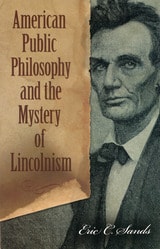
American Public Philosophy and the Mystery of Lincolnism
Eric C. Sands
University of Missouri Press, 2009
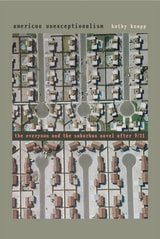
American Unexceptionalism
The Everyman and the Suburban Novel after 9/11Kathy Knapp
University of Iowa Press, 2014
The novels in question all take place in the sprawling terrain that stretches out beyond the Twin Towers—the postwar suburbs that since the end of World War II have served, like the Twin Towers themselves, as a powerful advertisement of dominance to people around the globe, by projecting an image of prosperity and family values. These suburban tales and their everyman protagonists grapple, however indirectly, with the implications of the apparent decline of the economic, geopolitical, and moral authority of the United States. In the context of perceived decay and diminishing influence, these novels actively counteract the narrative of American exceptionalism frequently peddled in the wake of 9/11.
If suburban fiction has historically been faulted for its limited vision, this newest iteration has developed a depth of field that self-consciously folds the personal into the political, encompasses the have-nots along with the haves, and takes in the past when it imagines the future, all in order to forge a community of readers who are now accountable to the larger world. American Unexceptionalism traces the trajectory by which recent suburban fiction overturns the values of individualism, private property ownership, and competition that originally provided its foundation. In doing so, the novels examined here offer readers new and flexible ways to imagine being and belonging in a setting no longer characterized by stasis, but by flux.
American Women Modernists
The Legacy of Robert Henri, 1910-1945Edited by Marian Wardle
Rutgers University Press, 2005
Seldom recognized, yet contributing significantly to the structure of early American modernism is a group of women who were once the art students of the popular and perhaps most influential American art teacher of the twentieth century, Robert Henri (1865-1929). Henri encouraged an art that was expressive of personal emotions and experience and that was grounded in life. He preached equality among different media and approaches to art. Giving heed to his teachings, his women students engaged in a wide variety of artistic production. Collectively, the stunning variety and power of their work in painting, sculpture, printmaking, textiles, decorative arts, and furniture broadens our understanding of American modernism and illuminates the role of women artists in shaping it. Yet, these women have remained largely unstudied, and virtually unknown, even among art historians.
The seven new essays included in this volume move beyond the famed Ashcan School-the small group of Henri's male students who worked in a narrow range of urban realist subjects-to recover the lesser known work of his women students. The contributors, who include well-known scholars of art history, American studies, and cultural studies demonstrate how these women participated in the "modernizing" of women's roles during this era; how gender controlled their art, productivity, sales, and reception; how their many styles, media, and subjects enrich our understanding of modern American art; and how the work of modern women artists relates to women's involvement in other areas of modern American society and culture, including labor and social reform, patronage, literature, dance, and music.
Lavishly illustrated and complemented by short biographies of more than 400 of Henri's students, this delightful collection adds a long-ignored but deserving dimension to an expanded story of American modernism and to women's contributions to the arts.
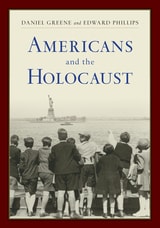
Americans and the Holocaust
A ReaderDaniel Greene
Rutgers University Press, 2021
Americans and the Holocaust explores these enduring questions by gathering together more than one hundred primary sources that reveal how Americans debated their responsibility to respond to Nazism. Drawing on groundbreaking research conducted for the United States Holocaust Memorial Museum’s Americans and the Holocaust exhibition, these carefully chosen sources help readers understand how Americans’ responses to Nazism were shaped by the challenging circumstances in the United States during the 1920s, 1930s, and 1940s, including profound economic crisis, fear of communism, pervasive antisemitism and racism, and widespread isolationism.
Collecting newspaper and magazine articles, popular culture materials, and government records, Americans and the Holocaust is a valuable resource for students and historians seeking to shed light on this dark era in world history.
To explore further, visit the United States Holocaust Memorial Museum's digital exhibit, available here: https://exhibitions.ushmm.org/americans-and-the-holocaust
Published in association with the United States Holocaust Memorial Museum.
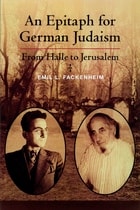
An Epitaph for German Judaism
From Halle to JerusalemEmil Fackenheim
University of Wisconsin Press, 2007
“An ‘epoch-making’ autobiography.”—Arnold Ages, Jewish Tribune
Ancient Greek Law in the 21st Century
Edited by Paula Perlman
University of Texas Press, 2018
The ancient Greeks invented written law. Yet, in contrast to later societies in which law became a professional discipline, the Greeks treated laws as components of social and political history, reflecting the daily realities of managing society. To understand Greek law, then, requires looking into extant legal, forensic, and historical texts for evidence of the law in action. From such study has arisen the field of ancient Greek law as a scholarly discipline within classical studies, a field that has come into its own since the 1970s.
This edited volume charts new directions for the study of Greek law in the twenty-first century through contributions from eleven leading scholars. The essays in the book’s first section reassess some of the central debates in the field by looking at questions about the role of law in society, the notion of “contracts,” feuding and revenge in the court system, and legal protections for slaves engaged in commerce. The second section breaks new ground by redefining substantive areas of law such as administrative law and sacred law, as well as by examining sources such as Hellenistic inscriptions that have been comparatively neglected in recent scholarship. The third section evaluates the potential of methodological approaches to the study of Greek law, including comparative studies with other cultures and with modern legal theory. The volume ends with an essay that explores pedagogy and the relevance of teaching Greek law in the twenty-first century.