Results by title
27 books match the query 'Infrastructure (Economics)'
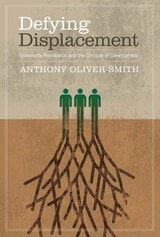
Defying Displacement
Grassroots Resistance and the Critique of DevelopmentBy Anthony Oliver-Smith
University of Texas Press, 2010
The uprooting and displacement of people has long been among the hardships associated with development and modernity. Indeed, the circulation of commodities, currency, and labor in modern society necessitates both social and spatial mobility. However, the displacement and resettlement of millions of people each year by large-scale infrastructural projects raises serious questions about the democratic character of the development process.
Although designed to spur economic growth, many of these projects leave local people struggling against serious impoverishment and gross violations of human rights. Working from a political-ecological perspective, Anthony Oliver-Smith offers the first book to document the fight against involuntary displacement and resettlement being waged by people and communities around the world.
Increasingly over the last twenty-five years, the voices of people at the grass roots are being heard. People from many societies and cultures are taking action against development-forced displacement and resettlement (DFDR) and articulating alternatives. Taking the promise of democracy seriously, they are fighting not only for their place in the world, but also for their place at the negotiating table, where decisions affecting their well-being are made.
Development in Multiple Dimensions
Social Power and Regional Policy in IndiaAlexander Lee
University of Michigan Press, 2019
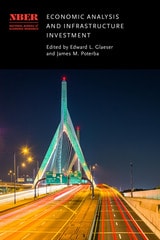
Economic Analysis and Infrastructure Investment
Edited by Edward L. Glaeser and James M. Poterba
University of Chicago Press, 2021
Economic Analysis and Infrastructure Investment explores the links between infrastructure investment and economic outcomes, analyzing key economic issues in the funding and management of infrastructure projects. It includes new research on the short-run stimulus effects of infrastructure spending, develops new estimates of the stock of US infrastructure capital, and explores incentive aspects of public-private partnerships with particular attention to their allocation of risk. The volume provides a reference for researchers seeking to study infrastructure issues and for policymakers tasked with determining the appropriate level and allocation of infrastructure spending.
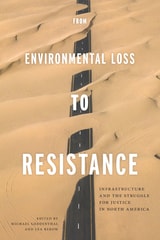
From Environmental Loss to Resistance
Infrastructure and the Struggle for Justice in North AmericaMichael Loadenthal
University of Massachusetts Press, 2020
In this new collection, a range of contributors—among them researchers, practitioners, organizers, and activists—explore the ways in which people counter or cope with feelings of despair, leverage action for positive change, and formulate pathways to achieve environmental justice goals. These essays pay particular attention to issues of race, class, economic liberalization, and geography; place contemporary environmental struggles in a critical context that emphasizes justice, connection, and reconciliation; and raise important questions about the challenges and responses that concern those pursuing environmental justice.
Contributors include the volume editors, Carol J. Adams, Randall Amster, Jan Inglis, Eileen Delehanty Pearkes, Zoë Roller, and Michael Truscello.
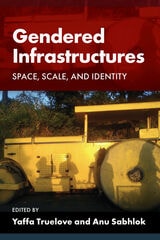
Gendered Infrastructures
Space, Scale, and IdentityYaffa Truelove
West Virginia University Press, 2024
The first book to take a feminist geographical approach to infrastructure, Gendered Infrastructures delves into the complex relationships between identity, social relations, and infrastructure. By drawing on feminist scholarship to enable new frameworks for critical study, this edited volume explores the gendered nature of infrastructures as diverse as Senegal’s waste disposal, Vietnam’s cement industry, and Lilongwe’s water kiosks. The chapters consider how infrastructural assemblages rework and shape gendered relations, identities, and meanings across space, while tracing the intersectionality of relations and uneven geographies that surround infrastructure. Ultimately, the contributors show how gender is always present in the quotidian building blocks that organize the socio-material world and daily life.
Edited by Yaffa Truelove and Anu Sabhlok, and the third book in Amy Trauger and Jennifer Fluri’s Gender, Feminism, and Geography series, the original essays in Gendered Infrastructures respond to and build upon a “new infrastructural turn in critical scholarship”—one that has helped enliven studies of identity across scale. The volume is relevant to geographers, anthropologists, architects, sociologists, urban researchers, and other interdisciplinary scholars interested in the gendered and social dimensions of infrastructure.
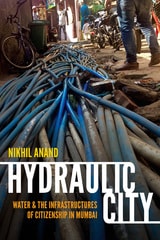
Hydraulic City
Water and the Infrastructures of Citizenship in MumbaiNikhil Anand
Duke University Press, 2017
Infrastructural Attachments
Austerity, Sovereignty, and Expertise in KenyaEmma Park
Duke University Press, 2024
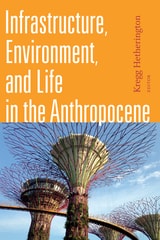
Infrastructure, Environment, and Life in the Anthropocene
Kregg Hetherington, editor
Duke University Press, 2019
Contributors. Nikhil Anand, Andrea Ballestero, Bruce Braun, Ashley Carse, Gastón R. Gordillo, Kregg Hetherington, Casper Bruun Jensen, Joseph Masco, Shaylih Muehlmann, Natasha Myers, Stephanie Wakefield, Austin Zeiderman
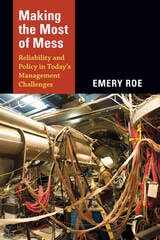
Making the Most of Mess
Reliability and Policy in Today's Management ChallengesEmery Roe
Duke University Press, 2013
Throughout, Roe focuses on the global financial mess of 2008 and its ongoing aftermath, showing how mismanagement has allowed it to morph into other national and international messes. More effective management is still possible for this and many other policy messes but that requires better recognition of patterns and formulation of scenarios, as well as the ability to translate pattern and scenario into reliability. Developing networks of professionals who respond to messes is particularly important. Roe describes how these networks enable the avoidance of bad or worse messes, take advantage of opportunities resulting from messes, and address societal and professional challenges. In addition to finance, he draws from a wide range of case material in other policy arenas. Roe demonstrates that knowing how to manage policy messes is the best approach to preventing crises.

Media Rurality
Patrick Brodie and Darin Barney, editors
Duke University Press, 2026
Contributors. Christopher Ali, Patrick Bresnihan, Patrick Brodie, Darin Barney, Jenna Burrell, Jordan B. Kinder, Burç Köstem, Cindy Lin, Emily Ng, Lisa Parks, Anne Pasek, Esther Peeren, Nicole Starosielski, Ishita Tiwary, Hunter Vaughan, Ayesha Vemuri, Megan Wiessner, Assatu Wisseh
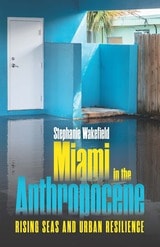
Miami in the Anthropocene
Rising Seas and Urban ResilienceStephanie Wakefield
University of Minnesota Press, 2025
Reimagining adaptation amidst climate change–driven mutations of urban space and life
Between its susceptibility to flooding and an ever-expanding real estate market powered by global surges of people and capital, Miami is an epicenter of the urban Anthropocene and a living laboratory for adaptation to sea level rise. Miami in the Anthropocene explores the social, environmental, and technical transformations involved in climate adaptation infrastructure and imaginaries in a global city seen as climate change ground zero.
Using Miami as a compelling microcosm for understanding the complex interplay between urbanization and environmental upheaval in the twenty-first century, Stephanie Wakefield shows how “aqua-urban futures” are being imagined for the city, from governmental scenario exercises for severe weather events to proposals to transform the city’s metropolitan area into an archipelago of islands connected by bridges. She examines the shifts reweaving the fabric of urban life and presents designs that imagine dramatic new ways of living with water.
Grounded in the dynamic landscape of Miami but reaching far beyond its shores, Miami in the Anthropocene delves into the broader debates shaping urban thought and practice in the Anthropocene. Focusing on postresilience urban designs, Wakefield illuminates the path toward a future where cities embrace opportunities for evolution rather than merely for survival.

Oil Beach
How Toxic Infrastructure Threatens Life in the Ports of Los Angeles and BeyondChristina Dunbar-Hester
University of Chicago Press, 2023
San Pedro Bay, which contains the contiguous Ports of Los Angeles and Long Beach, is a significant site for petroleum shipping and refining as well as one of the largest container shipping ports in the world—some forty percent of containerized imports to the United States pass through this so-called America’s Port. It is also ecologically rich. Built atop a land- and waterscape of vital importance to wildlife, the heavily industrialized Los Angeles Harbor contains estuarial wetlands, the LA River mouth, and a marine ecology where colder and warmer Pacific Ocean waters meet. In this compelling interdisciplinary investigation, award-winning author Christina Dunbar-Hester explores the complex relationships among commerce, empire, environment, and the nonhuman life forms of San Pedro Bay over the last fifty years—a period coinciding with the era of modern environmental regulation in the United States. The LA port complex is not simply a local site, Dunbar-Hester argues, but a node in a network that enables the continued expansion of capitalism, propelling trade as it drives the extraction of natural resources, labor violations, pollution, and other harms. Focusing specifically on cetaceans, bananas, sea birds, and otters whose lives are intertwined with the vitality of the port complex itself, Oil Beach reveals how logistics infrastructure threatens ecologies as it circulates goods and capital—and helps us to consider a future where the accumulation of life and the accumulation of capital are not in violent tension.
Operatic Infrastructures
Materiality and Meaning in 1890s London, Paris, and New YorkFlora Willson
University of Chicago Press, 2026
An exploration of the fundamental relationship between opera and urban modernity in three iconic cities: London, Paris, and New York.
At the end of the nineteenth century, London, Paris, and New York were quintessential modern metropolises and vital centers for opera. In Operatic Infrastructures, Flora Willson examines opera’s roots in the material worlds of these cities. Reaching beyond histories of opera as spectacle, she investigates the physical underpinnings of opera at the century’s end as an inter-urban, multimedia network.
Operatic Infrastructures considers emergent technologies such as the telephone and the subway, but it also retrieves the hidden, forgotten, and otherwise effaced traces of systems such as storage facilities and colonial trade routes. It takes seriously the mundane aspects of materiality, from the blandest clichés of newspaper columns to the fine print of insurance certificates. In doing so, the book reveals just how far these interfaces with modern urban life reached into opera’s own systems of meaning-making and performance in the 1890s—making it impossible to demarcate neatly between “opera” and its “context.” Without such operatic infrastructures, Willson shows, there would be no opera at all.
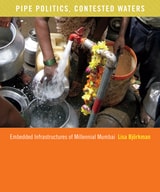
Pipe Politics, Contested Waters
Embedded Infrastructures of Millennial MumbaiLisa Bjorkman
Duke University Press, 2015
Despite Mumbai's position as India's financial, economic, and cultural capital, water is chronically unavailable for rich and poor alike. Mumbai's dry taps are puzzling, given that the city does not lack for either water or financial resources. In Pipe Politics, Contested Waters, Lisa Björkman shows how an elite dream to transform Mumbai into a "world class" business center has wreaked havoc on the city’s water pipes. In rich ethnographic detail, Pipe Politics explores how the everyday work of getting water animates and inhabits a penumbra of infrastructural activity—of business, brokerage, secondary markets, and sociopolitical networks—whose workings are reconfiguring and rescaling political authority in the city. Mumbai’s increasingly illegible and volatile hydrologies, Björkman argues, are lending infrastructures increasing political salience just as actual control over pipes and flows becomes contingent on dispersed and intimate assemblages of knowledge, power, and material authority. These new arenas of contestation reveal the illusory and precarious nature of the project to remake Mumbai in the image of Shanghai or Singapore and gesture instead toward the highly contested futures and democratic possibilities of the actually existing city.
Powerless
The People's Struggle for EnergyDiana Hernández
Russell Sage Foundation, 2025
Approximately one in ten households in the U.S. are energy insecure and four in ten are at risk for energy insecurity. These statistics alone do not convey the acute pain of utility shutoffs, or the relentless toll of chronic energy hardships marked by difficult choices and harsh living conditions. Drawing on survey data and interviews with one hundred energy-insecure individuals and families, Hernández and Laird detail the experience of energy insecurity. Individuals and families suffering from energy insecurity endure economic hardships, such as difficulty paying utility bills, utility debt, and disconnection from utility services. They also struggle with physical challenges, such as poor housing conditions and poor or dysfunctional heating and cooling systems. They are often forced to make difficult choices about what bills to pay. These decisions are sometimes referred to as “heat or eat?” choices, as families cannot afford to pay for heating and food at the same time. Energy insecure individuals and families employ a variety of strategies to keep energy costs down to avoid having to make these hard choices. This includes deliberate underconsumption of energy, enduring physical discomfort, and using dangerous alternatives such as open flames, ovens, or space heaters to try to maintain a comfortable temperature in their home. To be energy insecure is to suffer. Despite the heavy toll of energy insecurity, most people confront these difficulties behind closed doors, believing it is a private matter. Thus, the enormous social crisis of energy insecurity goes unnoticed.
Hernández and Laird argue that household energy is a basic human right and detail policies and practices that would expand access to consistent, safe, clean, and affordable energy. Their proposals include improving the current energy safety net, which is limited and often does not serve the most energy insecure due to stringent program requirements and administrative burdens. They also suggest redesigning rates to accommodate income, promoting enrollment and expansion of discount programs, reforming utility disconnection policies, improving energy literacy, and ensuring an equitable shift to renewable energy resources.
Powerless creates a comprehensive picture of the complex social and environmental issue of energy insecurity and shows how energy equity is not just an aspiration but an achievable reality.
Reconstructors
Land, Work, and Engineering After the Civil WarJohn Dean Davis
University of Chicago Press, 2026
Explores the institutional and environmental transformations that occurred during the Reconstruction Era.
While the Reconstruction Era in America saw a paradigmatic realignment of the country’s core institutions and values, there was a physical quality to Reconstruction as well: the country was not only rebuilding the South after the Civil War, but flat-out building as it expanded westward.
In Reconstructors, John Dean Davis details how the Army Corps of Engineers and its subcontractors designed and redesigned the infrastructural landscape to support the republic’s rebirth. The Corps’ projects not only transformed the landscape; they created markets, fostered a distinctive expansionist culture, and—for a time—enacted a less discriminatory economic and social agenda across the South and West. Davis aims to bring federal power, environmentalism, and capitalism into a frame that reveals the landscape's power to further ideology.
Shifting Sands
Landscape, Memory, and Commodities in China's Contemporary BorderlandsXiaoxuan Lu
University of Texas Press, 2023
How China’s borderlands transformed politically and culturally throughout the twentieth and twenty-first centuries.
China’s land borders, shared with fourteen other nations, are the world’s longest. Like all borders, they are not just lines on a map but also spaces whose histories and futures are defined by their frontier status. An ambitious appraisal of China’s borderlands, Shifting Sands addresses the full scope and importance of these regions, illustrating their transformation from imperial backwaters to hotbeds of resource exploitation and human development in the age of neoliberal globalization.
Xiaoxuan Lu brings to bear an original combination of archival research, fieldwork, cartography, and landscape analysis, broadening our understanding of the political economy and cultural changes in China’s borderlands in the twentieth and twenty-first centuries. While conventional wisdom looks to the era of Deng Xiaoping for China’s “opening,” Lu shows the integration of China’s borderlands into national and international networks from Sun Yat-sen onward. Yet, while the state has left a firm imprint on the borderlands, they were hardly created by China alone. As the Chinese case demonstrates, all borderlands are transnational, their physical and socioeconomic landscapes shaped by multidirectional flows of materials, ideas, and people.
The Aesthetic Life of Infrastructure
Race, Affect, EnvironmentEdited by Kelly M. Rich, Nicole M. Rizzuto, and Susan Zieger
Northwestern University Press, 2023
A critical reading of the unstable structures that organize biological and social life
This timely and radically interdisciplinary volume uncovers the aesthetics and politics of infrastructure. From roads and bridges to harbors and canals, infrastructure is conventionally understood as the public works that allow for the circulation of capital. Yet this naturalized concept of infrastructure, driven by capital’s restless expansion, is haunted by imperial tendencies to occupy territory, extract resources, and organize life. Infrastructure thus undergirds the living nexus of modernity in an ongoing project of racialization, affective embodiment, and environmental praxis. Rather than merely making visible infrastructure’s modes of power, however, The Aesthetic Life of Infrastructure brings literary methods to bear on the interpretive terrain, reading infrastructural space and temporalities to show that their aesthetic and sensorial experience cannot be understood apart from histories of production and political economies.
Building on critical infrastructure studies in anthropology, geography, and media studies, this collection demonstrates the field’s vitality to scholars working across the humanities, including in literary, visual, and cultural studies. By querying the presumed invisibility of infrastructure’s hidden life, the volume’s contributors revitalize ongoing literary debates about reading surface and depth. How, they ask, might infrastructure and aesthetics then function as epistemic tools for rethinking each other? And what urgency do they acquire in light of current crises that bear on death, whether biological, social, or planetary?
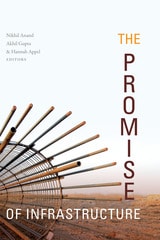
The Promise of Infrastructure
Nikhal Anand, Akhil Gupta, and Hannah Appel, editors
Duke University Press, 2018
A School for Advanced Research Advanced Seminar
Contributors. Nikhil Anand, Hannah Appel, Geoffrey C. Bowker, Dominic Boyer, Akhil Gupta, Penny Harvey, Brian Larkin, Christina Schwenkel, Antina von Schnitzler
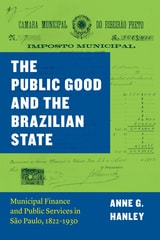
The Public Good and the Brazilian State
Municipal Finance and Public Services in São Paulo, 1822–1930Anne G. Hanley
University of Chicago Press, 2018
In The Public Good and the Brazilian State, Anne G. Hanley assembles an economic history of public revenues as they developed in nineteenth-century Brazil. Specifically, Hanley investigates the financial life of the municipality—a district comparable to the county in the United States—to understand how the local state organized and prioritized the provision of public services, what revenues paid for those services, and what happened when the revenues collected failed to satisfy local needs. Through detailed analyses of municipal ordinances, mayoral reports, citizen complaints, and financial documents, Hanley sheds light on the evolution of public finance and its effect on the early economic development of Brazilian society. This deeply researched book offers valuable insights for anyone seeking to better understand how municipal finance informs histories of inequality and underdevelopment.
The Public Infrastructure of Work and Play
Michael A. Pagano
University of Illinois Press, 2018
The latest volume in the Urban Agenda series looks at pressing infrastructure issues discussed at the 2017 UIC Urban Forum. Topics include: competing notions of the infrastructure ideal; what previous large infrastructure programs can teach the Trump Administration; how infrastructure influences city design; the architecture of the cities of tomorrow; who benefits from infrastructure improvements; and evaluations of projects like the Chicago Riverwalk and grassroots efforts to reclaim neighborhood parks from gangs.
Contributors: Philip Ashton, Beverly S. Bunch, Bill Burton, Charles Hoch, Sean Lally, and Sanjeev Vidyarthi
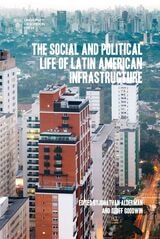
The Social and Political Life of Latin American Infrastructures
Edited by Jonathan Alderman and Geoff Goodwin
University of London Press, 2022
From roads, railways, statues, and bridges, infrastructure provides a unique lens through which to view our own national histories and societies. Serving as an important conduit between individuals and the state, infrastructure can help mediate citizenship, reshape social relations between people both within and across communities, and has the capacity to underpin—or indeed, undermine—nation-building.
Over the last century, infrastructure has transformed Latin America. Roads, railways, and airports have increased connectivity between spaces, peoples, and markets. Cables, switches, and tunnels have connected households to electricity grids, water systems, and digital technology. Public buildings, parks, and monuments have reshaped towns and cities and emerged as sites to construct and contest citizenship. Infrastructure has been welcomed and celebrated in Latin America, but it has also been resisted and destroyed.
Based on recent, original research, the essays in this collection cover a range of pressing infrastructural considerations, including sustainability, water conflict, extractive mining, and public housing in Brazil, Chile, Cuba, Colombia, Ecuador, and Mexico to better understand how infrastructure has reshaped Latin America over the past century.
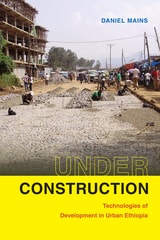
Under Construction
Technologies of Development in Urban EthiopiaDaniel Mains
Duke University Press, 2019
Urban Dwellings, Haitian Citizenships
Housing, Memory, and Daily Life in HaitiVincent Joos
Rutgers University Press, 2022

Waste Works
Vital Politics in Urban GhanaBrenda Chalfin
Duke University Press, 2023

White Care
The Impact of Race on American InfrastructureCotten Seiler
University of Chicago Press, 2026
Infrastructure delivers to its users a range of benefits, from health, safety, and sanitation to mobility, energy, and education. It is, as Cotten Seiler argues, how modern states show care for their populations. White Care recounts the rise and fall of public infrastructure in the United States, unearthing its origins as an investment in those Americans deemed most highly evolved, showing the political stakes of its desegregation, and accounting for its current state of dilapidation.
From the late nineteenth century through much of the twentieth, government investments in physical (“hard”) and social (“soft”) infrastructure constituted a regime of care that Seiler calls “custodial liberalism.” This regime achieved legitimacy with the New Deal, which conferred upon white citizens a bounty of life-enhancing public works. But custodial liberalism began to unravel in the postwar decades, as Americans of color gained access to public schools, housing, swimming pools, parks, and other sites from which they had long been excluded. As the infrastructural commons were desegregated, white Americans withdrew from the social compact that had empowered them and turned toward neoliberalism, with its program of austerity and privatization. This racialized renunciation has deprived everyone—including themselves—of a cleaner, greener, healthier, safer, more affordable, and more functional environment.
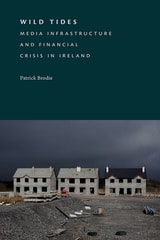
Wild Tides
Media Infrastructure and Financial Crisis in IrelandPatrick Brodie
Duke University Press, 2026