Results by title
6 books match the query 'Inland navigation'
Captain W. W. Withenbury's 1838-1842 "Red River Reminiscences"
Jacques D. Bagur
University of North Texas Press, 2014
Deckhand
Life on Freighters of the Great LakesNelson "Mickey" Haydamacker with Alan D. Millar
University of Michigan Press, 2009
Long before popular television shows such as Dirty Jobs and The Deadliest Catch, everyday men and women---the unsung heroes of the job world---toiled in important but mostly anonymous jobs. One of those jobs was deckhand on the ore boats.
With numerous photographs and engaging stories, Deckhand offers an insider's view of both the mundane and the intriguing duties performed by deckhands on these gritty cargo vessels. Boisterous port saloons, monster ice jams, near drownings, and the daily drudgery of soogeying---cleaning dirt and grime off the ships---are just a few of the experiences Mickey Haydamacker had as a young deckhand working on freighters of the Great Lakes in the early 1960s. Haydamacker sailed five Interlake Steamship Company boats, from the modern Elton Hoyt 2nd to the ancient coal-powered Colonel James Pickands with its backbreaking tarp-covered hatches.
Deckhand will appeal to shipping buffs and to anyone interested in Great Lakes shipping and maritime history as it chronicles the adventures of living on the lakes from the seldom-seen view of a deckhand.
Gibbons v. Ogden, Law, and Society in the Early Republic
Thomas H. Cox
Ohio University Press, 2009
Gibbons v. Ogden, Law, and Society in the Early Republic examines a landmark decision in American jurisprudence, the first Supreme Court case to deal with the thorny legal issue of interstate commerce.
Decided in 1824, Gibbons v. Ogden arose out of litigation between owners of rival steamboat lines over passenger and freight routes between the neighboring states of New York and New Jersey. But what began as a local dispute over the right to ferry the paying public from the New Jersey shore to New York City soon found its way into John Marshall’s court and constitutional history. The case is consistently ranked as one of the twenty most significant Supreme Court decisions and is still taught in constitutional law courses, cited in state and federal cases, and quoted in articles on constitutional, business, and technological history.
Gibbons v. Ogden initially attracted enormous public attention because it involved the development of a new and sensational form of technology. To early Americans, steamboats were floating symbols of progress—cheaper and quicker transportation that could bring goods to market and refinement to the backcountry. A product of the rough-and-tumble world of nascent capitalism and legal innovation, the case became a landmark decision that established the supremacy of federal regulation of interstate trade, curtailed states’ rights, and promoted a national market economy. The case has been invoked by prohibitionists, New Dealers, civil rights activists, and social conservatives alike in debates over federal regulation of issues ranging from labor standards to gun control. This lively study fills in the social and political context in which the case was decided—the colorful and fascinating personalities, the entrepreneurial spirit of the early republic, and the technological breakthroughs that brought modernity to the masses.
Mastering the Inland Seas
How Lighthouses, Navigational Aids, and Harbors Transformed the Great Lakes and AmericaTheodore J. Karamanski
University of Wisconsin Press, 2020
Karamanski explores both the navigational and sailing tools of First Nations peoples and the dismissive and foolhardy attitude of early European maritime sailors. He investigates the role played by commercial boats in the Underground Railroad, as well as how the federal development of crucial navigational resources exacerbated sectionalism in the antebellum United States. Ultimately Mastering the Inland Sea shows the undeniable environmental impact of technologies used by the modern commercial maritime industry. This expansive story illuminates the symbiotic relationship between infrastructure investment in the region's interconnected waterways and North America's lasting economic and political development.
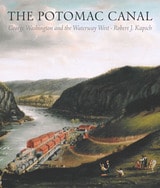
Potomac Canal
George Washington and the Waterway WestROBERT J. KAPSCH
West Virginia University Press, 2007
The Potomac Canal: George Washington and the Waterway West is a history of a new nation’s first effort to link the rich western agricultural lands with the coastal port cities of the east. The Potomac Canal Company was founded in 1785, and was active until it was overtaken by the Chesapeake and Ohio Canal Company in 1828. During its operation, the canal system was used to ship flour from mills in the foothills of Appalachia to the tidewater of the Chesapeake, where the flour was shipped to the Caribbean as trade for sugar and other goods. This trade soon became the basis of agricultural wealth in West Virginia’s eastern panhandle and throughout the Appalachian Piedmont. Coal was also shipped via the canal system from the upper reaches of the Potomac River to workshops at Harpers Ferry and beyond. This industrial trade route laid the foundation for what would eventually become the Chesapeake and Ohio Canal and the Baltimore and Ohio Railroad.
Working with Water
Wisconsin WaterwaysBobbie Malone and Jefferson J. Gray
Wisconsin Historical Society Press, 2001
"Water, water, everywhere . . ." Working with Water, the latest in the popular New Badger History series, teaches young readers about the many ways water has shaped Wisconsin’s history, from glaciers to stewardship. It touches on geography and hydrography; transportation networks of Indians and fur traders; the Erie Canal; shipwrecks, lighthouses, shipping, and shipbuilding; fishing, ricing, "pearling" (clamming), and cranberry cultivation; lumbering, milling, and papermaking; recreation, resorts, tourism, and environmentalism.
The companion Teacher’s Guide and Student Materials engages students in hands-on exploration. It highlights historical processes and encourages multiple learning styles.