Results by title
6 books match the query 'Inness, Sherrie A.'

Breaking Boundaries
Women'S Regional WritingSherrie A. Inness
University of Iowa Press, 1997
These lively essays reveal the generational continuum of women's regional literature, which has always offered a voice to women and their concerns. By exploring the multiplicity of connections between women and regional writing and the subversive potential of regional writing to put forth social criticisms and correctives, Breaking Boundaries charts some of the major ways in which this literary genre is of particular importance to today's writers.
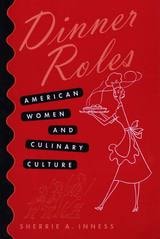
Dinner Roles
American Women and Culinary CultureSherrie A. Inness
University of Iowa Press, 2001
Who cooks dinner in American homes? It's no surprise that “Mom” remains the overwhelming answer. Cooking and all it entails, from grocery shopping to chopping vegetables to clearing the table, is to this day primarily a woman's responsibility. How this relationship between women and food developed through the twentieth century and why it has endured are the questions Sherrie Inness seeks to answer in Dinner Roles: American Women and Culinary Culture.
By exploring a wide range of popular media from the first half of the twentieth century, including cookbooks, women's magazines, and advertisements, Dinner Roles sheds light on the network of sources that helped perpetuate the notion that cooking is women's work. Cookbooks and advertisements provided valuable information about the ideals that American society upheld. A woman who could prepare the perfect Jell-O mold, whip up a cake with her new electric mixer, and still maintain a spotless kitchen and a sunny disposition was the envy of other housewives across the nation.
Inness begins her exploration not with women but with men-those individuals often missing from the kitchen who were taught their own set of culinary values. She continues with the study of juvenile cookbooks, which provided children with their first cooking lessons. Chapters on the rise of electronic appliances, ethnic foods, and the 1950s housewife all add to our greater understanding of women's evolving roles in American culinary culture.

Intimate Communities
Representation and Social Transformation in Women's College Fiction, 1895–1910Sherrie A. Inness
University of Wisconsin Press, 1995
While other scholars have argued that the Progressive Era was the “golden age” for women’s single-sex education, pointing to the many positive depictions of the women’s college student, Inness suggests that these representations actually helped to perpetuate the status quo and did little to advance women’s social rights.
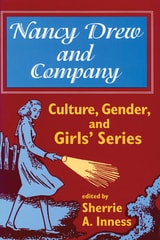
Nancy Drew and Company
Culture, Gender, and Girls’ SeriesEdited by Sherrie A. Inness
University of Wisconsin Press, 1997

Pilaf, Pozole, and Pad Thai
American Women and Ethnic FoodSherrie A. Inness
University of Massachusetts Press, 2001
For many Americans, eating ethnic food is so commonplace as to be taken for granted. Yet, whether we acknowledge it or not, such foods create a powerful social language that speaks of cultural traditions and tastes that have been handed down from one generation to the next and, in some cases, appropriated and commodified by American commercial culture. Ethnic cooking represents both a source of sustenance and a complex form of communication.
In this volume, eleven scholars explore the role of ethnic food in American culture, with a particular focus on women. The first six chapters offer personal accounts of the ways in which ethnic meals are embedded in women's memories and fortify their connections to one another. From a Sicilian-born mother who affirms her allegiance to her heritage through the loving preparation of traditional tomato sauce and pasta, to a Swedish American woman whose dozens of boxes of recipe cards document a process of cultural assimilation, to an Armenian American who uses a shared passion for cooking to forge a relationship with her lover's family—these essays speak in a personal voice about the power of food as a marker of women's identity. The final five chapters take a more analytic approach, scrutinizing the social and political aspects of ethnic food and the phenomenon of “culinary tourism.” One essay offers a brilliant meditation on the gendered discourse of cooking in the Mexican American community, showing how food preparation provides many Chicanas with a vital language of self-expression. Another essay probes the author's penchant for Thai food and other cuisines from economically dominated cultures, situating it in the context of a larger system of privilege and oppression and as a form of cultural colonialism. By going beyond the obvious, these essays challenge our assumptions and expand our understanding of the significance of ethnic food in women's lives.
Contributors include Meredith E. Abarca, Arlene Voski Avakian, Linda Murray Berzok, Benay Blend, Lynn Z. Bloom, Paul Christensen, Cathie English, Doris Friedensohn, Lisa Heldke, Heather Schell, and Leanne Trapedo Sims.
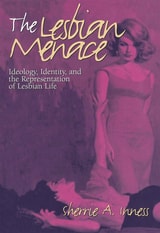
The Lesbian Menace
Ideology, Identity, and the Representation of Lesbian LifeSherrie A. Inness
University of Massachusetts Press, 1997
Electroshock. Hysterectomy. Lobotomy. These are only three of the many “cures” to which lesbians have been subjected in this century. How does a society develop such a profound aversion to a particular minority? In what ways do images in the popular media perpetuate cultural stereotypes about lesbians, and to what extent have lesbians been able to subvert and revise those images? This book addresses these and other questions by examining how lesbianism has been represented in American popular culture in the twentieth century and how conflicting ideologies have shaped lesbian experiences and identity.
In the first section, “Inventing the Lesbian,” Sherrie A. Inness explores depictions of lesbians in popular texts aimed primarily at heterosexual consumers. She moves from novels of the 1920s to books about life at women's colleges and boarding schools, to such contemporary women's magazines as Cosmopolitan, Glamour, and Vogue.
In the next section, “Forms of Resistance,” Inness probes the ways in which lesbians have refashioned texts intended for a heterosexual audience or created their own narratives. One chapter shows how lesbian readers have reinterpreted the Nancy Drew mysteries, looking at them from a distinctly “queer” perspective. Another chapter addresses the changing portrayal of lesbians in children's books over the past two decades.
The last section, “Writing in the Margins,” scrutinizes the extent to which lesbians, themselves a marginalized group, have created a society that relegates some of its own members to the outskirts. Topics include the geographic politics of lesbianism, the complex issue of "passing," and the meaning of butch identity in twentieth-century lesbian culture.