Results by title
2 books match the query 'Insatiability'

Insatiability
Stanislaw Ignacy Witkiewicz, translated from the Polish by Louis Iribarne
Northwestern University Press, 1994
Witkiewicz's 1927 masterpiece, made famous in Polish dissident and Nobel laureate Czesław Miłosz's The Captive Mind, is one of the most unforgettable depictions of the tensions and trade-offs between ideological loyalty and individual conscience in world literature. Futuristic, experimental, and remarkably prophetic, Insatiability traces the choices of a young Pole as his divided nation both opposes and welcomes a communitarian invasion from the east offering a narcotic that both removes anxieties and induces obedience. An anti-Utopian classic, it foretold the irresoluble and sometimes deadly choices that faced Eastern European thinkers, writers, and politicians during the years of Soviet domination.
[more]
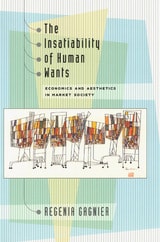
The Insatiability of Human Wants
Economics and Aesthetics in Market SocietyRegenia Gagnier
University of Chicago Press, 2000
What is the relationship between our conception of humans as producers or creators; as consumers of taste and pleasure; and as creators of value? Combining cultural history, economics, and literary criticism, Regenia Gagnier's new work traces the parallel development of economic and aesthetic theory, offering a shrewd reading of humans as workers and wanters, born of labor and desire.
The Insatiability of Human Wants begins during a key transitional moment in aesthetic and economic theory, 1871, when both disciplines underwent a turn from production to consumption models. In economics, an emphasis on the theory of value and the social relations between land, labor, and capital gave way to more individualistic models of consumerism. Similarly, in aesthetics, theories of artistic production or creativity soon bowed to models of taste, pleasure, and reception.
Using these developments as a point of departure, Gagnier deftly traces the shift in Western thought from models of production to consumption. From its exploration of early market logic and Kantian thought to its look at the aestheticization of homelessness and our own market boom, The Insatiability of Human Wants invites us to contemplate alternative interpretations of economics, aesthetics, and history itself.
[more]