Results by title
7 books match the query 'Insecurity'
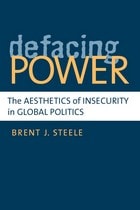
Defacing Power
The Aesthetics of Insecurity in Global PoliticsBrent J. Steele
University of Michigan Press, 2012
"Combining a rich and varied set of theoretical insights with a subtle analysis of the politics of American foreign policy, Defacing Power marks an important contribution toward understanding the power of identity in world politics. Engagingly written and rigorously argued, Steele's challenging analysis is incisive, important, and rewarding."
---Michael C. Williams, Graduate School of Public and International Affairs, University of Ottawa
"Brent Steele's marvelous excavation of the aesthetic dimensions of power is strikingly irreverent, inasmuch as he displays no commitment to ex ante disciplinary or substantive constraints in his quest to disclose those moments of creative action so often overlooked by theories and theorists wedded to the grandiose and the transhistorical. Steele samples and remixes a myriad of sources, arranging them so as to produce a transgressively insightful account of how 'work on the Self,' often condemned as self-indulgent by prior generations of intellectuals, might just point in the direction of a more sustainably secure world."
---Patrick Thaddeus Jackson, School of International Service, American University
"Defacing Power successfully integrates work from Dewey to Morgenthau to Foucault, as well as a wide range of contemporary international relations scholars, in its genealogy of power conceptualizations and characteristics. This book is theoretically sophisticated and serious. It should be of interest to students of international politics, international theory, social theory, and foreign policy."
---Cecelia Lynch, Center for Global Peace and Conflict Studies, University of California, Irvine
Defacing Power investigates how nation-states create self-images in part through aesthetics and how these images can be manipulated to challenge those states' power. Although states have long employed media, such as radio, television, and film, for their own image-making purposes, counterpower agents have also seized upon new telecommunications technologies. Most recently, the Internet has emerged as contested territory where states and other actors wage a battle of words and images.
Moving beyond theory, Brent Steele illustrates his provocative argument about the vulnerability of power with examples from recent history: the My Lai Massacre and the Tet Offensive, September 11 and the al-Qaeda communiqués, the atrocities at Fallujah and Abu Ghraib, and the U.S. response to the Asian tsunami of December 2004. He demonstrates how a nation-state---even one as powerful as the United States---comes to feel threatened not only by other nation-states or terrorist organizations but also by unexpected events that challenge its self-constructed image of security. At the same time, Steele shows that as each generation uses available media to create and re-create a national identity, technological innovations allow for the shifting, upheaval, and expansion of the cultural structure of a nation.
Brent J. Steele is Associate Professor of Political Science at the University of Kansas.
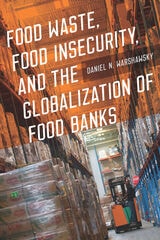
Food Waste, Food Insecurity, and the Globalization of Food Banks
Daniel N. Warshawsky
University of Iowa Press, 2023
Based on fifteen years of in-depth fieldwork on four continents, Daniel Warshawsky illustrates how and why food banks proliferate across the globe even though their impacts may be limited. He suggests that we need to reformulate the role of food banks. The mission of food banks needs to be more realistic, as food surpluses cannot reduce food insecurity on a significant scale. Food banks need to regain their institutional independence from the state and corporations, and incorporate the knowledge and experiences of the food insecure in the daily operations of the food system. These collective changes can contribute to a future where food banks play a smaller but more targeted role in food systems.

Human Rights along the U.S.–Mexico Border
Gendered Violence and InsecurityEdited by Kathleen Staudt, Tony Payan, and Z. Anthony Kruszewski
University of Arizona Press, 2009
From the Pacific to the Gulf of Mexico, scholars from both sides of the 2,000-mile border reflect expertise in disciplines ranging from international relations to criminal justice, conveying a more complex picture of the region than that presented in other studies.
Initial chapters offer an overview of routine sexual assaults on women migrants, the harassment of Central American immigrants at the hands of authorities and residents, corruption and counterfeiting along the border, and near-death experiences of border crossers. Subsequent chapters then connect analysis with solutions in the form of institutional change, social movement activism, policy reform, and the spread of international norms that respect human rights as well as good governance.
These chapters show how all facets of the border situation—globalization, NAFTA, economic inequality, organized crime, political corruption, rampant patriarchy—promote gendered violence and other expressions of hyper-masculinity. They also show that U.S. immigration policy exacerbates the problems of border violence—in marked contrast to the border policies of European countries.
By focusing on women’s everyday experiences in order to understand human security issues, these contributions offer broad-based alternative approaches and solutions that address everyday violence and inattention to public safety, inequalities, poverty, and human rights. And by presenting a social and democratic international feminist framework to address these issues, they offer the opportunity to transform today’s security debate in constructive ways.

Insecurity
Richard Grusin
University of Minnesota Press, 2022
Investigating insecurity as the predominant logic of life in the present moment
Challenging several key concepts of the twenty-first century, including precarity, securitization, and resilience, this collection explores the concept of insecurity as a predominant logic governing recent cultural, economic, political, and social life in the West. The essays illuminate how attempts to make human and nonhuman systems secure and resilient end up having the opposite effect, making insecurity the default state of life today.
Unique in its wide disciplinary breadth and variety of topics and methodological approaches—from intellectual history and cultural critique to case studies, qualitative ethnography, and personal narrative—Insecurity is written predominantly from the viewpoint of the United States. The contributors’ analyses include the securitization of nongovernmental aid to Palestine, Bangladeshi climate refugees, and the privatization of U.S. military forces; the history of the concept of insecurity and the securitization of finance; racialized urban development in Augusta, Georgia; Amazon’s Mechanical Turk and the consequences of the Marie Kondo method; and the intricate politics of sexual harassment in the U.S. academy.
Contributors: Neel Ahuja, U of California, Santa Cruz; Aneesh Aneesh, U of Wisconsin, Milwaukee; Lisa Bhungalia, Kent State U; Jennifer Doyle, U of California, Riverside; Annie McClanahan, U of California, Irvine; Andrea Miller, Florida Atlantic U; Mark Neocleous, Brunel U London; A. Naomi Paik, U of Illinois, Chicago; Maureen Ryan, U of South Carolina; Saskia Sassen, Columbia U.

Living with Insecurity in a Brazilian Favela
Urban Violence and Daily LifePenglase, R. Ben
Rutgers University Press, 2015
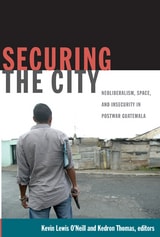
Securing the City
Neoliberalism, Space, and Insecurity in Postwar GuatemalaKevin Lewis O Neill and Kedron Thomas, eds.
Duke University Press, 2011
Contributors. Peter Benson, Manuela Camus, Avery Dickins de Girón, Edward F. Fischer, Deborah Levenson, Thomas Offit, Kevin Lewis O’Neill, Kedron Thomas, Rodrigo José Véliz

Surveillance in the Time of Insecurity
Monahan, Torin
Rutgers University Press, 2010
Surveillance in the Time of Insecurity fuses advanced theoretical accounts of state power and neoliberalism with original research from the social settings in which insecurity dynamics play out in the new century. Torin Monahan explores the counterterrorism-themed show 24, Rapture fiction, traffic control centers, security conferences, public housing, and gated communities, and examines how each manifests complex relationships of inequality, insecurity, and surveillance. Alleviating insecurity requires that we confront its mythic dimensions, the politics inherent in new configurations of security provision, and the structural obstacles to achieving equality in societies.