Results by title
14 books match the query 'Inspiration'
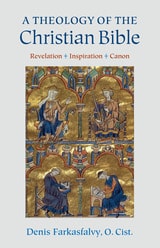
A Theology of the Christian Bible
Revelation - Inspiration - CanonDenis Farkasfalvy
Catholic University of America Press, 2018
Agape Love
Tradition In Eight World ReligionsSir John Templeton
Templeton Press, 1999
The tradition of agape, or unconditional love, is not exclusive to any religion. It is a primary underlying principle found in religions worldwide. The concept of altruistic love challenges the spiritual person to "love your enemies" or to "love without thought of return." It is a love that flows out to others through compassion, kindness, tenderness, and charitable giving.
Buddhists have a path of compassion, where caring for others becomes the motivating force behind existence. Hindus have a branch of yoga, the heart-centered path, that leads to enlightenment through an overwhelming love for God that takes the form of loving all humanity. Eastern religions, such as Taoism and Confucianism, see transcendent love as essential to true wisdom.
Love is a universal theme of love found in all religious traditions, Buddhist, Christian, Islam, or others. As we realize that all religions have this spiritual principle of love at their core, we can develop a sense of shared humanity. The religious tradition of agape love examined in this book will inspire those who are learning to grow in compassion and love for all people.

BG's ABCs
Tackling Football and LifeWritten by Brandon Graham and Lesley Van Arsdall; Illustrated by Mr. Tom
Temple University Press, 2025
BG’s ABCs emphasizes a never give up mindset while also teaching lessons of kindness and respect. Using BG’s ABCs as a guide, young readers are sure to achieve victory while also developing a zest for life!

Blooming through the Ashes
An International Anthology on Violence and the Human SpiritEdited by Clifford Chanin and Aili McConnon
Rutgers University Press, 2008
The twentieth century is frequently characterized in terms of its unprecedented levels of bloodshed. More human beings were killed or allowed to die by human cause than ever before in history. The impact of the century’s carnage does not end with the lives that were taken; the atrocities continue to take their toll on those who survived, on those who bore witness, and on succeeding generations.
Blooming through the Ashes features over sixty writings about this historic violence and its aftermath in a global anthology that brings together the work of Nobel laureates Seamus Heaney, Toni Morrison, Czeslaw Milosz, Wole Soyinka, Elie Wiesel, Imre Kertesz, Alexandr Solzhenitsyn, Eugenio Montale, and Pablo Neruda. In non-fiction and fiction, these writers and others reflect on the litany of man-made violence that marred the twentieth century and that shadows the twenty-first, including the Holocaust, the Gulag, the Chinese Cultural Revolution, apartheid, repression in Latin America, genocides in Rwanda, Cambodia, and the attacks of 9/11.
The texts are arranged thematically, rather than by event, in order to highlight the shared themes of memory expressed across culture and geography. Starting with visceral reactions to a violent event, chapters proceed through recognitions of loss, and move into statements of public remembrance through which future generations attempt to understand the impact of past violence.
Golden Nuggets
from Sir John TempletonJohn Marks Templeton
Templeton Press, 1998
For young or old, rich or poor, this wisdom will find many applications in people's lives. This inspiring collection of time wisdom by Sir John Templeton, presented in a beautiful gift book, is perfect for a person seeking deeper meaning in life. Practical and uplifting advice based on a lifetime of experience is gathered in an attractive package for personal use or as a perfect gift. Juxtaposed to his sayings are short essays that elaborate on the ideas and make them easier to understand and apply. Themes, such as thanksgiving, forgiveness, positive thinking, love, humility, and happiness, arrange the thoughts.
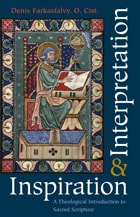
Inspiration and Interpretation
A Theological Introduction to Sacred ScriptureDenis Farkasfalvy
Catholic University of America Press, 2010
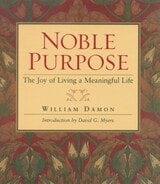
Noble Purpose
Joy Of Living A Meaningful LifeWilliam Bill Damon
Templeton Press, 2003
This book describes the personal and spiritual benefits of living life in a way that matters, with an awareness that one's life can reflect a sense of higher purpose no matter what the circumstances. The book draws upon religious, philosophical, and literary writings to show how humans in many cultures and historical epochs have pursued noble purposes by answering God's call as each hears it.
Noble purpose can be pursued both in heroic acts and in everyday behavior. The book shows how ordinary people—teachers, business professionals, parents, citizens—can ennoble what they do by being mindful of its deepest meaning. It also points out that humility is a necessary virtue for those who pursue a noble purpose. Great heroes are bold, courageous, and sometimes audacious in their determination to succeed; but they are also humble in their awareness of their own limitations. Moreover, a person must never violate basic moral laws while pursuing a noble purpose—the means must be as moral as the ends.
Purpose brings coherence and satisfaction to people's lives, producing joy in good times and resilience in hard times. It also presents a paradox: hard work in service of noble purpose that transcends personal gain is a surer path to happiness than the self-indulgent pursuit of happiness for its own sake. The closer we come to God's purpose for us, the more satisfied our lives become.
From the inspiration and examples conveyed in this book, we learn that all individuals have the capacity to discover their own God-given abilities, to learn the world's need for the services they can provide, and to experience joy in serving society and God in their special ways. As theologian Frederick Buechner writes, "The place God calls you to is the place where your deep gladness and the world's deep hunger meet."

Poetic Creation
Inspiration or CraftCarl FehrmanTranslated by Karin Petherick
University of Minnesota Press, 1980
Poetic Creation was first published in 1980. Minnesota Archive Editions uses digital technology to make long-unavailable books once again accessible, and are published unaltered from the original University of Minnesota Press editions.
Myths of creativity have changed throughout Western literary history. The Romantic era cherished the idea of creativity as a spontaneous, unpremeditated act, closely related to improvisation. In the twentieth century the myth of the writer as a worker among workers has competed with the Surrealist myth of the spontaneous author who writes in a sort of trance. Yet there can be no doubt that the creative process as such crosses historical boundaries. Carl Fehrman devotes this book to the process of artistic creativity, focusing on the dichotomy between inspiration and effort and using texts and manuscripts from the period of early Romanticism to present.
Fehrman is primarily concerned with the creativity of poets and draws on authorial accounts of the process, the analysis of manuscripts in successive drafts, psychological and linguistic experiments in creativity, and accounts of creativity in other fields. At the heart of the book are case studies: on Coleridge's writings of "Kubla Khan," Poe's composition of "The Raven," And Valery's account of his prolonged work on "Le Cimetiere Marin." Fehrman also deals with literary works that have undergone genre transformation, Ibsen's Brand and Selma Lagerlof;s Gosta Berlings Saga. In closing chapters he draws upon his case studies and other materials to provide fascinating insights into both productivity and its converse, blocked creativity, and in this context discusses the general problem of periodicity in a creative life.
Fehrman works within a Swedish aesthetic tradition which has attracted philosophers, art historians, and literary scholars since the turn of the century, all of them intent on discovering the origins of the work of art. This translation brings his work to Englishspeaking literary scholars and will be of special interest to those concerned with comparative aesthetics and the creative process.

Poetry and Prophecy
The Anthropology of InspirationJohn Leavitt, Editor
University of Michigan Press, 1997
Based on rich ethnographic work in Western and non-Western cultures, the essays represent distinct approaches to the topic, from one person's account of her interactions with a possessing spirit to another's world-spanning statement on prophetic poetics. Each contributor challenges easy assumptions that poetic texts are crafted works, products of skill rather than inspiration, while prophetic speech and writing are best understood as spontaneous performance rather than formal art.
As a whole the collection aims to reorient the anthropological study of possession and oracular experiences toward an awareness of the word, and to draw the attention of literary critics to "inspired" poetry. It will also appeal to readers in performance studies and comparative religion.
Contributors are Marjorie Mandelstam Balzer, James Fernandez, Paul Friedrich, John Leavitt, Dennis Tedlock, Margaret Trawick.
John Harold Leavitt is Professor of Anthropology, University of Montreal.
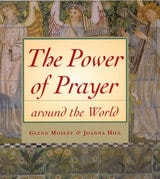
Power Of Prayer Around The World
Glenn Mosley
Templeton Press, 2005
Universally, the power of prayer has been recognized by many cultures for immeasurable time. Whether it be a part of a formal service recited with a congregation of worshipers or an individual, quiet moment, prayer is part of the lives of people from a variety of religions.
There seems to be an innate urge among humanity to connect with a higher source of energy and love when we need guidance or direction, and this is called prayer. By reading the prayers from religions such as Buddhism, Hinduism, Christianity, and Islam, from cultures in Africa, India, Egypt, and China, we begin to share the sense of a common experience.
The deepest inner feelings and longings are similar—concern for family, assistance in healing, a longing for peace, or a wish for greater wisdom. For some people, prayer can be thought of as a way to ask for specific goals or special favors. This type of prayer may or may not be effective. Another type of prayer exists when all selfish desire is put aside and we feel ourselves in communion with God. At this point, our greatest wish is that God's will be done.
There may be pressing concerns that make us turn our sights upward, but we learn to let go of the end result. At this point, prayer becomes a way of opening up to the universal, loving, creative energy that exists and is far greater than any person could imagine. This is the source of miracles, of faith and unconditional love. Prayer then becomes more than a means to an end; it becomes a state of humility and of awe. It can exist whether we are washing the floor or composing a symphony. Prayer is communion with the Divine, a universal loving creative force that exists in a variety of ways for people around the world.
This book brings together an inspirational collection of prayer suitable for all ages and traditions. In addition, it offers insight and guidance about the nature of prayer that will be useful for the serious seeker.
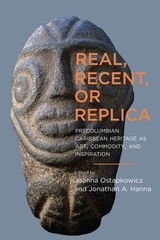
Real, Recent, or Replica
Precolumbian Caribbean Heritage as Art, Commodity, and InspirationEdited by Joanna Ostapkowicz and Jonathan A. Hanna
University of Alabama Press, 2021
A CHOICE OUTSTANDING ACADEMIC TITLE, 2022
Examines the largely unexplored topics in Caribbean archaeology of looting of heritage sites, fraudulent artifacts, and illicit trade of archaeological materials
Real, Recent, or Replica: Precolumbian Caribbean Heritage as Art, Commodity, and Inspiration is the first book-length study of its kind to highlight the increasing commodification of Caribbean Precolumbian heritage. Amerindian art, including “Taíno” art, has become highly coveted by collectors, spurring a prolific and increasingly sophisticated black market of forgeries, but also contemporary artistic engagement, openly appreciated as modern artworks taking inspiration from the past. The contributors to this volume contend with difficult subject matter including the continued looting of archaeological sites in the region, the seismic increase of forgeries, and the imbalance of power and economic relations between the producers and consumers of neo-Amerindian art.
The case studies document the considerable time depth of forgeries in the region (since the late nineteenth century), address the policies put in place by Caribbean governments and institutions to safeguard national patrimony, and explore the impact looted and forged artifacts have on how museums and institutions collect and ultimately represent the Caribbean past to their audiences. Overall, the volume emphasizes the continued desire for the “authentic” Precolumbian artifact, no matter the cost. It provides insights for archaeologists, museum professionals, art historians, and collectors to combat illegal trade and support communities in creating sustainable heritage industries.
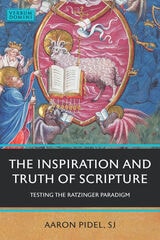
The Inspiration and Truth of Scripture
Testing the Ratzinger ParadigmAaron Pidel, SJ
Catholic University of America Press, 2023
The Word of Truth, Sealed by the Spirit
Perspectives on the Inspiration and Truth of Sacred ScriptureMatthew C. Genung
Saint Paul Seminary Press, 2022

Wholehearted Librarianship
Finding Hope, Inspiration, and BalanceMichael Stephens
American Library Association, 2019