Results by title
10 books match the query 'Intellectual'
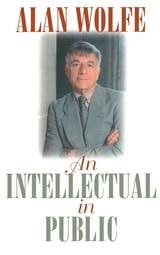
An Intellectual in Public
Alan Wolfe
University of Michigan Press, 2004
". . . proof that the spirit of the free-ranging public intellectual is still very much alive."
-Newsday
"Alan Wolfe is one of liberalism's last and most loyal sons. His mind is naturally decent and diversified; large enough and fair enough to contain both conviction and doubt. His profound respect for real people does not interfere with his profound respect for real thought. The criticism that he practices is, I fear, a dying art, but it is also one of the glories of American democracy."
-Leon Wieseltier, New Republic
"Alan Wolfe is one of America's indispensable essayists. On a broad range of topics-race, religion, politics, the marketplace, the university, and more-he combines a scholar's erudition with a historian's feel for the past and a journalist's keen attunement to the shifting patterns of the current scene. Above all he is a true writer, graceful but fearless, who ponders the deep questions so often ignored in the clamor of our ongoing civic conversation. Anyone who wonders what the term 'public intellectual' really means will find the answer-in fact many answers-in this scintillating collection."
-Sam Tanenhaus, Vanity Fair
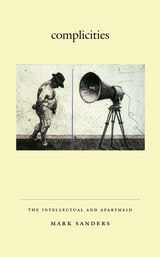
Complicities
The Intellectual and ApartheidMark Sanders
Duke University Press, 2002
Sanders gives detailed analyses of widely divergent thinkers: Afrikaner nationalist poet N. P. van Wyk Louw, Drum writer Bloke Modisane, Xhosa novelist A. C. Jordan, Afrikaner dissident Breyten Breytenbach, and Black Consciousness leader Steve Biko. Drawing on theorists including Derrida, Sartre, and Fanon, and paying particular attention to the linguistic intricacy of the literary and political texts considered, Sanders shows how complicity emerges as a predicament for intellectuals across the ideological and social spectrum. Through discussions of the colonial intellectuals Olive Schreiner and Sol T. Plaatje and of post-apartheid feminist critiques of the Truth and Reconciliation Commission, Complicities reveals how sexual difference joins with race to further complicate issues of collusion.
Complicities sheds new light on the history and literature of twentieth-century South Africa as it weighs into debates about the role of the intellectual in public life.
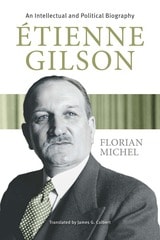
Etienne Gilson
An Intellectual and Political BiographyFlorian Michel
Catholic University of America Press, 2023
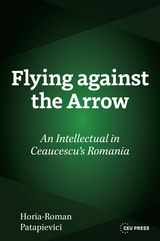
Flying Against the Arrow
An Intellectual in Ceausescu's RomaniaHoria-Roman Patapievici
Central European University Press, 2003
The ‘unbearable 80s’, as the last decade of the Ceauşescu era has been called in Romania, are in the focus of this quasi-autobiographical work. The book vividly portrays the difficulties encountered by a young intellectual trying to shape himself under the oppressive regime and provides a stark depiction of a man’s intellectual suffocation under hard-line socialist rule.
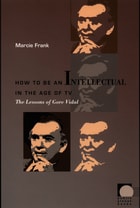
How to Be an Intellectual in the Age of TV
The Lessons of Gore VidalMarcie Frank
Duke University Press, 2005
Frank highlights the connections between Vidal’s attitudes toward TV, sex, and American politics as they have informed his literary and political writings and screen appearances. She deftly situates his public persona in relation to those of Andy Warhol, Jacqueline Susann, Mary McCarthy, Susan Sontag, and others. By describing Vidal’s shrewd maneuvering between different media, Frank suggests that his career offers a model to aspiring public intellectuals and a refutation to those who argue that electronic media have eviscerated public discourse.
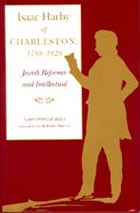
Isaac Harby of Charleston, 1788-1828
Jewish Reformer and IntellectualGary Phillip Zola
University of Alabama Press, 1994
The visionary voice who helped shape American Judaism—and Charleston’s cultural soul.
Isaac Harby of Charleston, 1788–1828 is a richly detailed biography that brings to life one of early America’s most fascinating and underappreciated Jewish intellectuals. Gary Phillip Zola offers a compelling portrait of Harby—a playwright, newspaper editor, drama critic, educator, and religious reformer—who emerged as a central figure in Charleston’s vibrant cultural scene during the early 19th century. At a time when Charleston was experiencing both economic prosperity and cultural efflorescence, Harby stood at the crossroads of literary ambition and religious innovation.
A descendant of Sephardic Jews, Harby was deeply engaged in the intellectual and civic life of his city. He founded a literary journal at just eighteen, established a private academy, and wrote prolifically on politics, education, and religion. But his most enduring legacy lies in his role as a pioneer of Reform Judaism in America. As a founding member of the Reformed Society of Israelites in 1825, Harby advocated for a rational, modernized approach to Jewish worship—one that emphasized universal ethics and intellectual engagement over ritual formalism. His efforts, though controversial in his time, laid the groundwork for the broader Reform movement that would flourish later in the century.
Drawing on newly uncovered archival materials, including Harby’s personal library and writings, Zola’s biography not only illuminates Harby’s life and thought but also offers a window into the broader cultural, religious, and political transformations of the early American republic. This book is essential reading for anyone interested in American Jewish history, Southern intellectual life, and the roots of religious reform in the United States.
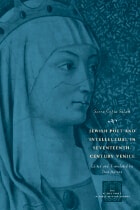
Jewish Poet and Intellectual in Seventeenth-Century Venice
The Works of Sarra Copia Sulam in Verse and Prose Along with Writings of Her Contemporaries in Her Praise, Condemnation, or DefenseSarra Copia Sulam
University of Chicago Press, 2009
The first Jewish woman to leave her mark as a writer and intellectual, Sarra Copia Sulam (1600?–41) was doubly tainted in the eyes of early modern society by her religion and her gender. This remarkable woman, who until now has been relatively neglected by modern scholarship, was a unique figure in Italian cultural life, opening her home, in the Venetian ghetto, to Jews and Christians alike as a literary salon.
For this bilingual edition, Don Harrán has collected all of Sulam’s previously scattered writings—letters, sonnets, a Manifesto—into a single volume. Harrán has also assembled all extant correspondence and poetry that was addressed to Sulam, as well as all known contemporary references to her, making them available to Anglophone readers for the first time. Featuring rich biographical and historical notes that place Sulam in her cultural context, this volume will provide readers with insight into the thought and creativity of a woman who dared to express herself in the male-dominated, overwhelmingly Catholic Venice of her time.
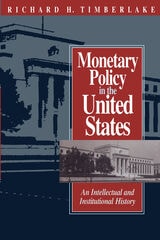
Monetary Policy in the United States
An Intellectual and Institutional HistoryRichard H. Timberlake
University of Chicago Press, 1993
After describing the constitutional principles that the Founding Fathers laid down to prevent state and federal governments from printing money. Timberlake shows how the First and Second Banks of the United States gradually assumed the central banking powers that were originally denied them. Drawing on congressional debates, government documents, and other primary sources, he analyses the origins and constitutionality of the greenbacks and examines the evolution of clearinghouse associations as private lenders of last resort. He completes this history with a study of the legislation that fundamentally changed the power and scope of the Federal Reserve System—the Banking Act of 1935 and the Monetary Control Act of 1980.
Writing in nontechnical language, Timberlake demystifies two centuries of monetary policy. He concludes that central banking has been largely a series of politically inspired government-serving actions that have burdened the private economy.
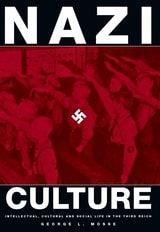
Nazi Culture
Intellectual, Cultural, and Social Life in the Third ReichGeorge L. Mosse
University of Wisconsin Press, 2003
What was life like under the Third Reich? What went on between parents and children? What were the prevailing attitudes about sex, morality, religion? How did workers perceive the effects of the New Order in the workplace? What were the cultural currents—in art, music, science, education, drama, and on the radio?
Professor Mosse’s extensive analysis of Nazi culture—groundbreaking upon its original publication in 1966—is now offered to readers of a new generation. Selections from newspapers, novellas, plays, and diaries as well as the public pronouncements of Nazi leaders, churchmen, and professors describe National Socialism in practice and explore what it meant for the average German.
By recapturing the texture of culture and thought under the Third Reich, Mosse’s work still resonates today—as a document of everyday life in one of history’s darkest eras and as a living memory that reminds us never to forget.
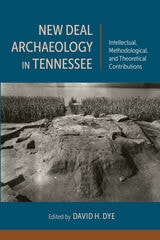
New Deal Archaeology in Tennessee
Intellectual, Methodological, and Theoretical ContributionsEdited by David H. Dye
University of Alabama Press, 2016
Exploring how New Deal innovation transformed archaeology in the American South.
New Deal Archaeology in Tennessee tells the engrossing story of Southeastern archaeology in the 1930s. The Tennessee Valley Authority Act of May 1933 initiated an ambitious program of flood control and power generation by way of a chain of hydroelectric dams on the Tennessee River. The construction of these dams flooded hundreds of thousands of square miles of river bottoms, campsites, villages, and towns that had been homes to Native Americans for centuries. This triggered an urgent need to undertake extensive archaeological fieldwork throughout the region. Those studies continue to influence contemporary archaeology.
The state of Tennessee and the Tennessee Valley were especially well suited research targets thanks to their mild climate and long field seasons. A third benefit in the 1930s was the abundance of labor supplied by Tennesseans unemployed during the Great Depression. Within months of the passage of the Tennessee Valley Authority Act, teams of archaeologists fanned out across the state and region under the farsighted direction of Smithsonian Institution curators Neil M. Judd, Frank H. H. Roberts, and Frank M. Setzler. The early months of 1934 would become the busiest period of archaeological fieldwork in US history.
The twelve insightful essays in New Deal Archaeology in Tennessee document and explore this unique peak in archaeological study. Chapters highlight then-new techniques such as mound “peeling” and stratigraphic excavation adapted from the University of Chicago; the four specific New Deal sites of Watts Bar Reservoir, Mound Bottom, Pack, and Chickamauga Basin; bioarchaeology in the New Deal; and the enduring impact of the New Deal on contemporary fieldwork.
The challenges of the 1930s in recruiting skilled labor, training unskilled ancillary labor, developing and improvising new field methods, and many aspects of archaeological policies, procedures, and best-practices laid much of the foundation of contemporary archaeological practice. New Deal Archaeology in Tennessee offers an invaluable record of that pivotal time for professional, student, and amateur archaeologists.