Results by title
6 books match the query 'Intentionality (Philosophy)'
Intention, Plans and Practical Reason
Michael E. Bratman
CSLI, 1987
Inwardness and Theater in the English Renaissance
Katharine Eisaman Maus
University of Chicago Press, 1995
Reading works by Kyd, Marlowe, Shakespeare, Jonson, and Milton in conjuction with sectarian polemics, gynecological treatises, and accounts of criminal prosecutions, Maus delineates unexplored connections among religious, legal, sexual, and theatrical ideas of inward truth. She reveals what was at stake—ethically, politically, epistemologically, and theologically—when a writer in early modern England appealed to the difference between external show and interior authenticity. Challenging the recent tendency to see early modern selfhood as defined in wholly public terms, Maus argues that Renaissance dramatists continually payed homage to aspects of inner life they felt could never be manifested onstage.
Leading a Human Life
Wittgenstein, Intentionality, and RomanticismRichard Eldridge
University of Chicago Press, 1997
Eldridge sees Wittgenstein as a Romantic protagonist, engaged in an ongoing internal dialogue over the nature of intentional consciousness, ranging over ethics, aesthetics, and philosophy of mind. The picture of the human mind that emerges through this dialogue unsettles behaviorism, cognitivism, and all other scientifically oriented orthodoxies. Leading a human life becomes a creative act, akin to writing a poem, of continuously seeking to overcome both complacency and skepticism. Eldridge's careful reconstruction of the central motive of Wittgenstein's work will influence all subsequent scholarship on it.
Rational Animals
The Teleological Roots of IntentionalityMark Okrent
Ohio University Press, 2007
Rational Animals: The Teleological Roots of Intentionality offers an original account of the intentionality of human mental states, such as beliefs and desires.
The account of intentionality in Rational Animals is broadly biological in its basis, emphasizing the continuity between human intentionality and the levels of intentionality that should be attributed to animal actions and states.
Establishing the goal-directed character of animal behavior, Mark Okrent argues that instrumentally rational action is a species of goal-directed behavior that is idiosyncratic to individual agents and is distinguished by its novelty and flexibility. He also argues that some nonlinguistic animals are capable of instrumental rationality and that in the first instance, the contents of beliefs and desires are individuated by the explanatory role of those states in rationxadally accounting for such instrumentally rational behavior.
The account of instrumental rationality offered in Rational Animals allows for understanding the practical rationality of linguistically competent human beings as a distinctive capacity of social animals capable of undertaking roles governed by socially sanctioned norms.
Rational Animals will be of interest to cognitive scientists, philosophers of mind, philosophers of biology, philosophers of action, ethologists, and those interested in the debates concerning animal intelligence.
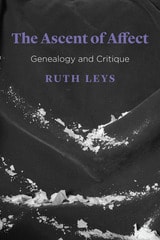
The Ascent of Affect
Genealogy and CritiqueRuth Leys
University of Chicago Press, 2017
Ruth Leys’s brilliant, much anticipated history, therefore, is a story of controversy and disagreement. The Ascent of Affect focuses on the post–World War II period, when interest in emotions as an object of study began to revive. Leys analyzes the ongoing debate over how to understand emotions, paying particular attention to the continual conflict between camps that argue for the intentionality or meaning of emotions but have trouble explaining their presence in non-human animals and those that argue for the universality of emotions but struggle when the question turns to meaning. Addressing the work of key figures from across the spectrum, considering the potentially misleading appeal of neuroscience for those working in the humanities, and bringing her story fully up to date by taking in the latest debates, Leys presents here the most thorough analysis available of how we have tried to think about how we feel.
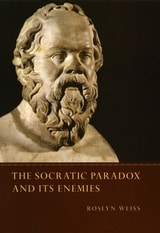
The Socratic Paradox and Its Enemies
Roslyn Weiss
University of Chicago Press, 2006