Results by title
6 books match the query 'Internally displaced persons'
Destroy Them Gradually
Displacement as AtrocityAndrew R. Basso
Rutgers University Press, 2024
Displaced
Life in the Katrina DiasporaEdited by Lynn Weber and Lori Peek
University of Texas Press, 2012
Hurricane Katrina forced the largest and most abrupt displacement in U.S. history. About 1.5 million people evacuated from the Gulf Coast preceding Katrina’s landfall. New Orleans, a city of 500,000, was nearly emptied of life after the hurricane and flooding. Katrina survivors eventually scattered across all fifty states, and tens of thousands still remain displaced. Some are desperate to return to the Gulf Coast but cannot find the means. Others have chosen to make their homes elsewhere. Still others found a way to return home but were unable to stay due to the limited availability of social services, educational opportunities, health care options, and affordable housing.
The contributors to Displaced have been following the lives of Katrina evacuees since 2005. In this illuminating book, they offer the first comprehensive analysis of the experiences of the displaced. Drawing on research in thirteen communities in seven states across the country, the contributors describe the struggles that evacuees have faced in securing life-sustaining resources and rebuilding their lives. They also recount the impact that the displaced have had on communities that initially welcomed them and then later experienced “Katrina fatigue” as the ongoing needs of evacuees strained local resources. Displaced reveals that Katrina took a particularly heavy toll on households headed by low-income African American women who lost the support provided by local networks of family and friends. It also shows the resilience and resourcefulness of Katrina evacuees who have built new networks and partnered with community organizations and religious institutions to create new lives in the diaspora.
Evacuation
The Politics and Aesthetics of Movement in EmergencyPeter Adey
Duke University Press, 2024
From Bureaucracy to Bullets
Extreme Domicide and the Right to HomeBree Akesson
Rutgers University Press, 2022

The New Refugees
Crime and Forced Displacement in Latin AmericaEdited by David James Cantor and Nicolás Rodríguez Serna
University of London Press, 2016
In Latin America, recent years have seen an unprecedented rise in the number of people forced to flee from their homes due to the activities of organized criminal groups. What are the reasons behind this emerging crisis of forced displacement in the Americas? Who are these criminal groups and how do they operate in Central America, Mexico and Colombia? Who are the victims and how can their needs be met in these violent and insecure contexts? Can law and policy offer a humanitarian response to this crisis? As the first book to deal with this rapidly evolving phenomenon, this innovative collection offers a range of fresh perspectives from leading experts working across Latin America.
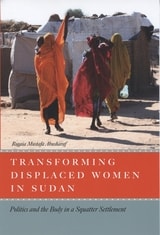
Transforming Displaced Women in Sudan
Politics and the Body in a Squatter SettlementRogaia Mustafa Abusharaf
University of Chicago Press, 2009
Over twenty years of civil war in predominantly Christian Southern Sudan has forced countless people from their homes. Transforming Displaced Women in Sudan examines the lives of women who have forged a new community in a shantytown on the outskirts of Khartoum, the largely Muslim, heavily Arabized capital in the north of the country.
Sudanese-born anthropologist Rogaia Mustafa Abusharaf delivers a rich ethnography of this squatter settlement based on personal interviews with displaced women and careful observation of the various strategies they adopt to reconstruct their lives and livelihoods. Her findings debunk the myth that these settlements are utterly abject, and instead she discovers a dynamic culture where many women play an active role in fighting for peace and social change. Abusharaf also examines the way women’s bodies are politicized by their displacement, analyzing issues such as religious conversion, marriage, and female circumcision.
An urgent dispatch from the ongoing humanitarian crisis in northeastern Africa, Transforming Displaced Women in Sudan will be essential for anyone concerned with the interrelated consequences of war, forced migration, and gender inequality.