Results by title
3 books match the query 'International broadcasting'
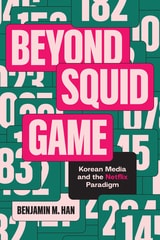
Beyond Squid Game
Korean Media and the Netflix ParadigmBenjamin M. Han
University of Texas Press, 2026
Examining Netflix’s global influence through its complex global-local dynamics in Korean media.
Korea is a global entertainment powerhouse, thanks in no small part to Netflix. Analyzing the artistry and industry behind Netflix-produced Korean hits like Squid Game, The Glory, and Narco-Saints, Benjamin Han argues that Korea is ground zero for an emerging “Netflix Paradigm.” The US-based streaming platform generates massive profits by erasing boundaries of foreign and domestic production, even as it underscores the resilience of the national media within global popular culture.
Beyond Squid Game breaks down the intricate and often ambivalent relationship between Netflix and the Korean media business, drawing on interviews with creative workers navigating the streaming giant’s ever-increasing economic and cultural power. Challenging narratives that present Netflix as a revolutionary disruptor, Han shows how the company has replicated abroad the precarious labor conditions and tensions over intellectual property from which US studios have long benefited. At the same time, Beyond Squid Game underscores the complex dynamics of a globalized media industry in which cultural imperialism thrives on localization and perceived authenticity.

History of International Broadcasting, Volume 1
James Wood
The Institution of Engineering and Technology, 1994
History of International Broadcasting, Volume 2
James Wood
The Institution of Engineering and Technology, 2000