84 books match the query 'International cooperation' and 8 start with a

cover of A COVID Charter, A Better World

A COVID Charter, A Better World

Toby Miller

Rutgers University Press, 2021

With unprecedented speed, scientists have raced to develop vaccines to bring the COVID-19 pandemic under control and restore a sense of normalcy to our lives. Despite the havoc and disruption the pandemic has caused, it’s exposed exactly why we should not return to life as we once knew it. Our current profit-driven healthcare systems have exacerbated global inequality and endangered public health, and we must take this opportunity to construct a new social order that understands public health as a basic human right.  
 
A COVID Charter, A Better World outlines the steps needed to reform public policies and fix the structural vulnerabilities that the current pandemic has made so painfully clear. Leading scholar Toby Miller argues that we must resist neoliberalism’s tendency to view health in terms of individual choices and market-driven solutions, because that fails to preserve human rights. He addresses the imbalance of geopolitical power to explain how we arrived at this point and shows that the pandemic is more than just a virus—it’s a social disease. By examining how the U.S., Britain, Mexico, and Colombia have responded to the COVID-19 crisis, Miller investigates corporate, scientific, and governmental decision-making and the effects those decisions have had on disadvantaged local communities. Drawing from human rights charters ratified by various international organizations, he then proposes a COVID charter, calling for a new world that places human lives above corporate profits.
[more]
cover of A New Green Order?: The World Bank and the Politics of the Global Environment Facility

A New Green Order?

The World Bank and the Politics of the Global Environment Facility

Zoe Young

Pluto Press, 2002

The Global Environment Facility (GEF) is a publicly funded, multi-billion dollar experiment in global resource management. It was set up in 1991 by the World Bank to fund international conventions on climate change and biodiversity.

Investigating the workings of this little known aid fund, Zoe Young takes a critical look at the conflicts involved, focusing on how the GEF's agenda relates to questions of globalisation, knowledge and accountability in the United States and the World Bank.

As our landscapes, fertility, cultures and ecosystems are being destroyed every day, Zoe Young gives a disturbing account of the complex issues that must be addressed before the world's environment can be managed more democratically - and effectively.
[more]
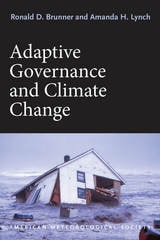
cover of Adaptive Governance and Climate Change

Adaptive Governance and Climate Change

Ronald D. Brunner and Amanda H. Lynch

American Meteorological Society, 2010

While recent years have seen undeniable progress in international acknowledgement both of the dangers of climate change and the importance of working to mitigate it, little has actually been done. Emissions continue to rise, and even the ambitious targets set by international accords would fall far short of the drastic cuts that are needed to prevent catastrophe.

            
With Adaptive Governance and Climate Change, Ronald D. Brunner and Amanda H. Lynch argue that we need to take a new tack, moving away from reliance on centralized, top-down approaches—the treaties and accords that have proved disappointingly ineffective thus far—and towards a more flexible, multi-level approach. Based in the principles of adaptive governance—which are designed to produce programs that adapt quickly and easily to new information and experimental results—such an approach would encourage diversity and innovation in the search for solutions, while at the same time pointedly recasting the problem as one in which every culture and community around the world has an inherent interest.

[more]
cover of Affective Justice: The International Criminal Court and the Pan-Africanist Pushback

Affective Justice

The International Criminal Court and the Pan-Africanist Pushback

Kamari Maxine Clarke

Duke University Press, 2019
Since its inception in 2001, the International Criminal Court (ICC) has been met with resistance by various African states and their leaders, who see the court as a new iteration of colonial violence and control. In Affective Justice Kamari Maxine Clarke explores the African Union's pushback against the ICC in order to theorize affect's role in shaping forms of justice in the contemporary period. Drawing on fieldwork in The Hague, the African Union in Addis Ababa, sites of postelection violence in Kenya, and Boko Haram's circuits in Northern Nigeria, Clarke formulates the concept of affective justice—an emotional response to competing interpretations of justice—to trace how affect becomes manifest in judicial practices. By detailing the effects of the ICC’s all-African indictments, she outlines how affective responses to these call into question the "objectivity" of the ICC’s mission to protect those victimized by violence and prosecute perpetrators of those crimes. In analyzing the effects of such cases, Clarke provides a fuller theorization of how people articulate what justice is and the mechanisms through which they do so.
[more]
cover of All International Politics Is Local: The Diffusion of Conflict, Integration, and Democratization

All International Politics Is Local

The Diffusion of Conflict, Integration, and Democratization

Kristian Skrede Gleditsch

University of Michigan Press, 2002

How does regional interdependence influence the prospects for conflict, integration, and democratization? Some researchers look at the international system at large and disregard the enormous regional variations. Others take the concept of sovereignty literally and treat each nation-state as fully independent. Kristian Skrede Gleditsch looks at disparate zones in the international system to see how conflict, integration, and democracy have clustered over time and space. He argues that the most interesting aspects of international politics are regional rather than fully global or exclusively national. Differences in the local context of interaction influence states' international behavior as well as their domestic attributes.

In All International Politics Is Local, Gleditsch clarifies that isolating the domestic processes within countries cannot account for the observed variation in distribution of political democracy over time and space, and that the likelihood of transitions is strongly related to changes in neighboring countries and the prior history of the regional context. Finally, he demonstrates how spatial and statistical techniques can be used to address regional interdependence among actors and its implications.

Kristian Skrede Gleditsch is Assistant Professor of Political Science at the University of California, San Diego.

[more]
cover of An Alliance Of Women: Immigration And The Politics Of Race

An Alliance Of Women

Immigration And The Politics Of Race

Heather Merrill

University of Minnesota Press, 2006

In the 1980s, Italy transformed from a country of emigration to one of immigration. Italians are now faced daily with the presence of migrants from all over Africa, parts of South and Central America, the Middle East, Asia, and Eastern Europe. While much attention has been paid to the impact on Italians, few studies have focused on the agency of migrants themselves. In An Alliance of Women, Heather Merrill investigates how migrants and Italians struggle over meanings and negotiate social and cultural identities.

Taking as a starting point the Italian crisis over immigration in the early 1990s, Merrill examines grassroots interethnic spatial politics among female migrants and Turin feminists in Northern Italy. Using rich ethnographic material, she traces the emergence of Alma Mater—an anti-racist organization formed to address problems encountered by migrant women. Through this analysis, Merrill reveals the dynamics of an alliance consisting of women from many countries of origin and religious and class backgrounds.

Highlighting an interdisciplinary approach to migration and the instability of group identities in contemporary Italy, An Alliance of Women presents migrants grappling with spatialized boundaries amid growing nativist and anti-immigrant sentiment in Western Europe.

Heather Merrill is assistant professor of geography and anthropology at Dickinson College.

[more]
cover of Anarchy, Order and Integration: How to Manage Interdependence

Anarchy, Order and Integration

How to Manage Interdependence

Harvey Starr

University of Michigan Press, 2000
Most observers agree that the global arena is in the midst of multiple changes. The elements that create and intensify global interdependencies have been expanding rapidly, generating questions about the viability of the state and the viability of the state-centric system that has existed for over 500 years, as well as what sorts of structures and behaviors might replace them. And yet much of the analysis is not helpful in understanding the condition of the international system because it either fails to define the meaning of terms such as interdependence and order or treats these as new problems ignoring many important ideas that have developed over the years about international politics. One of our most accomplished scholars in international affairs, Harvey Starr offers a fresh and original analysis of the nature of the international system. Starr argues that the global system can best be understood as the consequence of states adapting to changing interdependencies. States do remain important in this system, but the reality they adapt to is changing. Thus the environment surrounding states is important not because it is "anarchic," as argued by structural realists such as Waltz, but because environmental conditions have changed, thereby changing the meaning and significance of such structural characteristics as "anarchy." Starr argues that we must recognize that the modes by which states adapt to change in the international system lead to changes in both the states themselves and in their environment. This book will appeal to scholars of international relations in political science and economics as well as to policy makers and analysts interested in understanding change in the international system.
[more]
cover of Automobiles and the Future: Competition, Cooperation, and Change

Automobiles and the Future

Competition, Cooperation, and Change

Robert E. Cole, Editor

University of Michigan Press, 1983

At the time of the U.S.-Japan auto conferences in March 1983, the hoped-for economic recovery as manifested in auto sales had revealed itself quite modestly. Three months later, the indicators were more robust and certainly long overdue for those whose livelihood depends on the health of the industry--some of whom are university professors.
With Japanese import restrictions in place until March 1984 and drastically reduced break-even points for domestic manufactures, rising consumer demand holds great promise for the industry. The rapidly rising stock prices of the auto-makers captures well the sense of heightened optimism, as do the various forecasts for improved profits.
While the news is certainly welcome, it nevertheless should be greeted with caution. As Mr. Perkins noted at the conference, "we have a tendency to forget things very quickly. If we have a boom market this year, there is a good chance that a lot of things we learned will be forgotten."
To put the matter differently and more bluntly, with growing prosperity there is the risk that management will fall back into old habits, making impossible the achievement of sustained quality and productivity improvement. Similarly, the commitment to develop cooperative relations with workers and suppliers will weaken. The union will be under membership pressure to retrieve concessions rather than to take the longer-term view. This longer-term view recognizes that "up-front increases" and adherence to existing work rules increasingly come at the sacrifice of future job security. Government policymakers will turn their attention away from the industry. This may not mean a great deal given how weakly focused their attentions has been during the last three years and how mixed and contradictory government auto policies have been for over a decade.
[more]