Results by title
3 books match the query 'Internet and indigenous peoples'
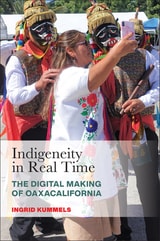
Indigeneity in Real Time
The Digital Making of OaxacaliforniaIngrid Kummels
Rutgers University Press, 2023
Long before the COVID-19 crisis, Mexican Indigenous peoples were faced with organizing their lives from afar, between villages in the Oaxacan Sierra Norte and the urban districts of Los Angeles, as a result of unauthorized migration and the restrictive border between Mexico and the United States. By launching cutting-edge Internet radio stations and multimedia platforms and engaging as community influencers, Zapotec and Ayuujk peoples paved their own paths to a transnational lifeway during the Trump era. This meant adapting digital technology to their needs, setting up their own infrastructure, and designing new digital formats for re-organizing community life in all its facets—including illness, death and mourning, collective celebrations, sport tournaments, and political meetings—across vast distances. Author Ingrid Kummels shows how mediamakers and users in the Sierra Norte villages and in Los Angeles created a transborder media space and aligned time regimes. By networking from multiple places, they put into practice a communal way of life called Comunalidad and an indigenized American Dream—in real time.
[more]
Indigenous Interfaces
Spaces, Technology, and Social Networks in Mexico and Central AmericaEdited by Jennifer Gómez Menjívar and Gloria Elizabeth Chacón; Foreword by Arturo Arias
University of Arizona Press, 2019
Cultural preservation, linguistic revitalization, intellectual heritage, and environmental sustainability became central to Indigenous movements in Mexico and Central America after 1992. While the emergence of these issues triggered important conversations, none to date have examined the role that new media has played in accomplishing their objectives.
Indigenous Interfaces provides the first thorough examination of indigeneity at the interface of cyberspace. Correspondingly, it examines the impact of new media on the struggles for self-determination that Indigenous peoples undergo in Mexico and Central America. The volume’s contributors highlight the fresh approaches that Mesoamerica’s Indigenous peoples have given to new media—from YouTubing Maya rock music to hashtagging in Zapotec. Together, they argue that these cyberspatial activities both maintain tradition and ensure its continuity. Without considering the implications of new technologies, Indigenous Interfaces argues, twenty-first-century indigeneity in Mexico and Central America cannot be successfully documented, evaluated, and comprehended.
Indigenous Interfaces rejects the myth that indigeneity and information technology are incompatible through its compelling analysis of the relationships between Indigenous peoples and new media. The volume illustrates how Indigenous peoples are selectively and strategically choosing to interface with cybertechnology, highlights Indigenous interpretations of new media, and brings to center Indigenous communities who are resetting modes of communication and redirecting the flow of information. It convincingly argues that interfacing with traditional technologies simultaneously with new media gives Indigenous peoples an edge on the claim to autonomous and sovereign ways of being Indigenous in the twenty-first century.
Contributors
Arturo Arias
Debra A. Castillo
Gloria Elizabeth Chacón
Adam W. Coon
Emiliana Cruz
Tajëëw Díaz Robles
Mauricio Espinoza
Alicia Ivonne Estrada
Jennifer Gómez Menjívar
Sue P. Haglund
Brook Danielle Lillehaugen
Paul Joseph López Oro
Rita M. Palacios
Gabriela Spears-Rico
Paul Worley
[more]
Indigenous Peoples Rise Up
The Global Ascendency of Social Media ActivismBronwyn Carlson
Rutgers University Press, 2021
Indigenous Peoples Rise Up: The Global Ascendency of Social Media Activism illustrates the impact of social media in expanding the nature of Indigenous communities and social movements. Social media has bridged distance, time, and nation states to mobilize Indigenous peoples to build coalitions across the globe and to stand in solidarity with one another. These movements have succeeded and gained momentum and traction precisely because of the strategic use of social media. Social media—Twitter and Facebook in particular—has also served as a platform for fostering health, well-being, and resilience, recognizing Indigenous strength and talent, and sustaining and transforming cultural practices when great distances divide members of the same community.
Including a range of international indigenous voices from the US, Canada, Australia, Aotearoa (New Zealand) and Africa, the book takes an interdisciplinary approach, bridging Indigenous studies, media studies, and social justice studies. Including examples like Idle No More in Canada, Australian Recognise!, and social media campaigns to maintain Maori language, Indigenous Peoples Rise Up serves as one of the first studies of Indigenous social media use and activism.
Including a range of international indigenous voices from the US, Canada, Australia, Aotearoa (New Zealand) and Africa, the book takes an interdisciplinary approach, bridging Indigenous studies, media studies, and social justice studies. Including examples like Idle No More in Canada, Australian Recognise!, and social media campaigns to maintain Maori language, Indigenous Peoples Rise Up serves as one of the first studies of Indigenous social media use and activism.
[more]