Results by title
13 books match the query 'Interpersonal communication'

Communication and the Human Condition
W. Barnett Pearce
Southern Illinois University Press, 1989
Starting with the premise that we live in communication (rather than standing outside communication and using it for secondary purposes), Pearce claims that people who live in various cultures and historical epochs not only communicate differently but experience different ways of being human because they communicate differently.
This century, he notes, ushered in the "communication revolution," the discovery that communication is far more important and central to the human condition than ever before realized. Essential to the communication revolution is the recognition that multiple forms of discourse exist in contemporary human society. Further, these forms of discourse are not benign; they comprise alternative ways of being human.
Thus communication theory must encompass all that it "means to live a life, the shape of social institutions and cultural traditions, the pragmatics of social action, and the poetics of social order."

Cyberchiefs
Autonomy and Authority in Online TribesMathieu O'Neil
Pluto Press, 2009
People are inventing new ways of working together on the internet. Decentralised production thrives on weblogs, wikis and free software projects. In Cyberchiefs, Mathieu O’Neil focuses on the regulations of these working relationships. He examines the transformation of leadership and expertise in online networks, and the emergence of innovative forms of participatory politics.
What are the costs and benefits of alternatives to hierarchical organisation? Using case studies of online projects or ‘tribes’ such as the radical Primitivism archive, the Daily Kos political weblog, the Debian free software project, and Wikipedia, O’Neil shows that leaders must support maximum autonomy for participants, and he analyses the tensions generated by this distribution of authority.

Defusing the Angry Patron
A How-To-Do-It Manual for LibrariansRhea Joyce Rubin
American Library Association, 2010
Developing Through Relationships
Alan Fogel
University of Chicago Press, 1993
Fogel explores the origins of communication, personal identity, and cultural participation and argues that from birth communication, self, and culture are inseparable. He shows that the ability to participate as a human being in the world does not come about only with the acquisition of language, as many scholars have thought, but begins during an infant's earliest nonverbal period. According to Fogel, the human mind and sense of self start to develop at birth through communication and relationships between individuals.
Fogel weaves together theory and research from a variety of disciplines, including psychology, biology, linguistics, philosophy, anthropology, and cognitive science. He rejects the objectivist perspective on development in favor of a relational perspective: to treat the mind as an objective, mechanical thing, Fogel contends, is to ignore the interactive character of thinking. He argues that the life of the mind is a dialogue between imagined points of view, like a dialogue between two different people, and he uses this view to explain his relational theory of human development.
Developing through Relationships makes a substantial contribution not only to developmental psychology but also to the fields of communication, cognitive science, linguistics, and biology.

Dialogue Across Difference
Practice, Theory, and Research on Intergroup DialoguePatricia Gurin
Russell Sage Foundation, 2013

Effective Difficult Conversations
Catherine B. Soehner
American Library Association, 2017
Make the Connection
Improve Your Communication at Work and at HomeAdubato, Steve
Rutgers University Press, 2006
In this collection of compelling and practical essays, Emmy Award–winning broadcaster, newspaper columnist, and motivational speaker Steve Adubato shares concrete tips and tools that will help you connect more effectively at work, at home, under pressure, in leadership roles, and in high-tech environments. From avoiding unnecessary arguments with your spouse to coaching a valuable, yet difficult employee, Adubato’s essays delve into the key factors that motivate people to act and respond the way that they do.
You will find answers to some of the most common questions about public speaking as well as advice on overcoming its anxieties. Whether the forum is a PTA meeting or a large professional function, essays explore topics such as:
- Why even practiced speakers sometimes experience stage fright
- How to keep your audience awake and interested in what you are saying
You will learn essential skills for interacting in the workplace, including:
- How to negotiate a good deal and still be honest and straight
- How to keep team projects from falling apart
- How to conduct yourself in confrontational situations, such as receiving a public insult
Drawing on examples set by public figures, including Bill Clinton, Rudy Giuliani, Mario Cuomo, Martha Stewart, Jack Welch, Joe Torre, and many others, Adubato addresses the unique communication challenges that those in leadership positions face. Essays examine:
· What ordinary people can learn from leaders in high-profile positions
· Why so many leaders have difficulty taking responsibility and apologizing for their actions
As technology continues to provide opportunities for quicker and more visual communication, Adubato also lets you know when hi-tech bells and whistles get in the way of making a more personal and human connection. For instance,
· Why do we hide behind e-mail messages when we have something very difficult to say?
· How does communication deteriorate when cell phones and e-mail are competing for our attention?
Finally, Adubato reminds us that communicating at home is no less important or any less difficult than communicating in public or at work. From contemporary challenges to age-old questions, essays explore:
· How you can more effectively talk with your kids about war and terrorism
· What forms of persuasion are more effective than nagging
Filled with timely examples and practical suggestions, Make the Connection is a must-read for everyone looking to improve their professional and personal relationships.

Mobile Cultures
New Media in Queer AsiaChris Berry, Fran Martin, and Audrey Yue, eds.
Duke University Press, 2003
Scholars, artists, and activists from a range of countries, the contributors chronicle the different ways new media galvanize Asian queer communities in Taiwan, South Korea, Japan, Indonesia, Thailand, Malaysia, India, and around the world. They consider phenomena such as the uses of the Internet among gay, lesbian, or queer individuals in Taiwan and South Korea; the international popularization of Japanese queer pop culture products such as Yaoi manga; and a Thai website’s reading of a scientific tract on gay genetics in light of Buddhist beliefs. Essays also explore the politically subversive possibilities opened up by the proliferation of media technologies, examining, for instance, the use of Cyberjaya—Malaysia’s government-backed online portal—to form online communities in the face of strict antigay laws.
Contributors. Chris Berry, Tom Boellstorff, Larissa Hjorth, Katrien Jacobs, Olivia Khoo, Fran Martin, Mark McLelland, David Mullaly, Baden Offord, Sandip Roy, Veruska Sabucco, Audrey Yue
Nursing Wounds
Nurse Practitioners, Doctors, Women Patients, and the Negotiation of MeaningFisher, Sue
Rutgers University Press, 1995
The rise of the nurse practitioner as a new kind of health care professional has blurred the traditional distinction between physicians and nurses. Nurse practitioners argue that they combine both the traditionally male health care delivery of the M.D. and the traditionally female caring attention of the R.N. In her previous work Sue Fisher has analyzed the difficulties that women patients have in getting doctors to listen to their medical concerns. Now she asks whether women fare any better with nurse practitioners.
Nursing Wounds takes us into the examining rooms of nurse practitioners and doctors to listen to how health care professionals and women patients communicate. The nurse practitioners, unlike the doctors, go beyond the medical problem to ask about the social context of the patients' lives. In these exchanges the doctors insist on reinforcing both their professional status and dominant cultural assumptions about women. While the nurse practitioners sometimes do this, they also distance themselves from their professional identities, respond to their patients woman to woman, and undermine traditional understandings about gender arrangements.These differences have important consequences for the delivery of health care.
This compelling and complex analysis employs a range of theoretical perspectives–-from sociolinguistic to postmodern and materialist. Fisher concludes by urging a health care policy that capitalizes on the special strengths of nurse practitioners as providers of primary care who pay real attention to what their patients are saying and who support an alternative, even oppositional, understanding of women's lives.

Streetwise
How Taxi Drivers Establish Customer's TrustworthinessDiego Gambetta
Russell Sage Foundation, 2005
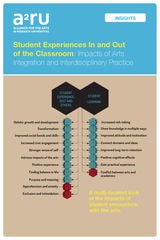
Student Experiences In and Out of the Classroom
Impacts of Arts Integration and Interdisciplinary PracticeGabriel Harp
A2RU Intervals, 2020
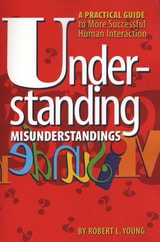
Understanding Misunderstandings
A Practical Guide to More Successful Human InteractionBy Robert L. Young
University of Texas Press, 1999
Have you ever meant one thing, but said another? Reacted angrily when no offense was intended? Wished that the earth would open up and swallow you? Understanding Misunderstandings will help you get out and stay out of these difficulties.
Robert L. Young explains why many common types of misunderstandings arise and how they can be avoided or corrected. In the first part of the book, he breaks the process of misunderstanding down into stages, showing how it can occur when we misspeak, mishear, misinterpret, or react in inappropriate ways. In the second part, he expertly analyzes the kinds of misunderstandings that can arise from differences in culture, social class, race and ethnicity, and gender. Real-life examples illustrate many of the problems and solutions he describes.
Because misunderstanding can destroy friendships and marriages, wreck careers, and lead to clashes between whole segments of society, understanding and diffusing it is of the utmost importance. This reader-friendly book provides the practical guidance to do just that. Educators, business people, psychologists, parents—in fact, everyone who interacts with other people—will benefit from it.

What Do I Say?
Talking with Patients about SpiritualityElizabeth Johnston-Taylor
Templeton Press, 2007
•How do I answer a "why" question?
•What do I say to a patient who believes a miracle will happen to cure them?
•What if I'm not religious? How can I talk about it?