Results by title
4 books match the query 'Interpreters'

Between Worlds
Interpreters, Guides, and SurvivorsFrances Karttunen
Rutgers University Press, 1994
Spanning the globe and the centuries, Frances Karttunen tells the stories of sixteen men and women who served as interpreters and guides to conquerors, missionaries, explorers, soldiers, and anthropologists. These interpreters acted as uncomfortable bridges between two worlds; their own marginality, the fact that they belonged to neither world,underscores the complexity and tension between cultures meeting for the first time. The interpreters include:
o Do–a Marina (La Malinche), who interpreted for Cortes in the conquest of Mexico
o Sacajawea, who accompanied Lewis and Clark on their expedition
o Sarah Winnemucca, a U.S. army scout and Washington lobbyist for the Northern Paiutes
o Gaspar Antonio Chi, Maya Interpreter General for Yucatan
o Guaman Poma de Ayala, eyewitness reporter of the destruction of Inca culture
o Charles Eastman, a Sioux physician at Wounded Knee
o Larin Paraske, an informant for Finnish ethnographers
o Do–a Luz Jimenez, Diego Rivera’s model and a native informant to anthropologists
o Mar’a Sabina, the Mazatec mushroom shaman who became a celebrity in the drug culture of the 1960s
o Ishi, the last surviving Yahi Indian.
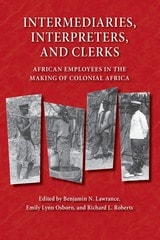
Intermediaries, Interpreters, and Clerks
African Employees in the Making of Colonial AfricaEdited by Benjamin N. Lawrance, Emily Lynn Osborn, and Richard L. Roberts
University of Wisconsin Press, 2006
By uncovering the role of such men (and a few women) in the construction, function, and legal apparatus of colonial states, the essays in this volume highlight a new perspective. They offer important insights on hegemony, collaboration, and resistance, structures and changes in colonial rule, the role of language and education, the production of knowledge and expertise in colonial settings, and the impact of colonization in dividing African societies by gender, race, status, and class.
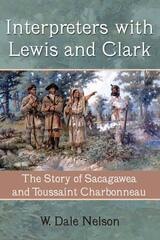
Interpreters with Lewis and Clark
The Story of Sacagawea and Toussaint CharbonneauW. Dale Nelson
University of North Texas Press, 2003
Reading Southern History
Essays on Interpreters and InterpretationsGlenn Feldman
University of Alabama Press, 2001
This collection of essays examines the contributions of some of the most notable interpreters of southern history and culture, furthering our understanding of the best historical work produced on the region.
Historian Glenn Feldman gathers together a group of essays that examine the efforts of important scholars to discuss and define the South's distinctiveness. The volume includes 18 chapters on such notable historians as John Hope Franklin, Anne Firor Scott, Frank L. Owsley, W. J. Cash, and C. Vann Woodward, written by 19 different researchers, both senior historians and emerging scholars, including Jacquelyn Dowd Hall, John Shelton Reed, Bruce Clayton, and Ted Ownby. The essays examine the major work or works of each scholar under consideration as well as that scholar's overall contribution to the study of southern history.
Reading Southern History will enlighten readers on the more compelling themes currently and traditionally explored by southern historians. It will appeal greatly to professors and students as a valuable multidisciplinary introduction to the study of southern history, since several of the essays are on scholars who are working outside the discipline of history proper, in the fields of political science, sociology, journalism, and economics. Feldman's collection, therefore, sheds light on a broad spectrum of themes important in southern history, including the plight of poor whites, race, debates over race and class, the "reconstruction syndrome," continuity versus discontinuity in relation to blacks and whites, and regional culture and distinctiveness.
Reading Southern History will be valuable to students and scholars of women's studies, African American history, working-class history, and ethnic studies, as well as traditional southern history. Most important, the publication makes a significant contribution to the development and ongoing study of the historiography of the South.