Results by title
20 books match the query 'Intersectionality (Sociology)'
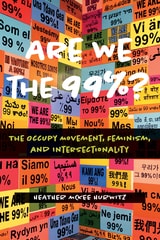
Are We the 99%?
The Occupy Movement, Feminism, and IntersectionalityHeather McKee Hurwitz
Temple University Press, 2021
The protestors that comprised the Occupy Wall Street movement came from diverse backgrounds. But how were these activists—who sought radical social change through many ideologies—able to break down oppressions and obstacles within the movement? And in what ways did the movement perpetuate status-quo structures of inequality?
Are We the 99%? is the first comprehensive feminist and intersectional analysis of the Occupy movement. Heather McKee Hurwitz considers how women, people of color, and genderqueer activists struggled to be heard and understood. Despite cries of “We are the 99%,” signaling solidarity, certain groups were unwelcome or unable to participate. Moreover, problems with racism, sexism, and discrimination due to sexuality and class persisted within the movement.
Using immersive first-hand accounts of activists’ experiences, online communications, and media coverage of the movement, Hurwitz reveals lessons gleaned from the conflicts within the Occupy movement. She compares her findings to those of other contemporary protest movements—nationally and globally—so that future movements can avoid infighting and deploy an “intersectional imperative” to embrace both diversity and inclusivity.

Black Feminism Reimagined
After IntersectionalityJennifer C. Nash
Duke University Press, 2019
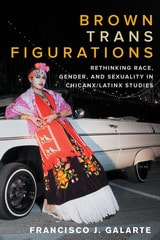
Brown Trans Figurations
Rethinking Race, Gender, and Sexuality in Chicanx/Latinx StudiesBy Francisco J. Galarte
University of Texas Press, 2021
Honorable Mention for the National Women’s Studies Association's 2021 Gloria E. Anzaldúa Book Prize
2021 Finalist Best LGBTQ+ Themed Book, International Latino Book Awards
2022 John Leo & Dana Heller Award for Best Single Work, Anthology, Multi-Authored, or Edited Book in LGBTQ Studies, Popular Culture Association
The Alan Bray Memorial Book Prize, GL/Q Caucus, Modern Language Association (MLA)
2022 AAHHE Book of the Year Award, American Association of Hispanics in Higher Education
Within queer, transgender, and Latinx and Chicanx cultural politics, brown transgender narratives are frequently silenced and erased. Brown trans subjects are treated as deceptive, unnatural, nonexistent, or impossible, their bodies, lives, and material circumstances represented through tropes and used as metaphors. Restoring personhood and agency to these subjects, Francisco J. Galarte advances “brown trans figuration” as a theoretical framework to describe how transness and brownness coexist within the larger queer, trans, and Latinx historical experiences.
Brown Trans Figurations presents a collection of representations that reveal the repression of brown trans narratives and make that repression visible and palpable. Galarte examines the violent deaths of two transgender Latinas and the corresponding narratives that emerged about their lives, analyzes the invisibility of brown transmasculinity in Chicana feminist works, and explores how issues such as transgender politics can be imagined as part of Chicanx and Latinx political movements. This book considers the contexts in which brown trans narratives appear, how they circulate, and how they are reproduced in politics, sexual cultures, and racialized economies.
Disabled Futures
A Framework for Radical InclusionMilo W. Obourn
Temple University Press, 2020
Disabled Futures makes an important intervention in disability studies by taking an intersectional approach to race, gender, and disability. Milo Obourn reads disability studies, gender and sexuality studies, and critical race studies to develop a framework for addressing inequity. They theorize the concept of “racialized disgender”—to describe the ways in which racialization and gendering are social processes with disabling effects—thereby offering a new avenue for understanding race, gender, and disability as mutually constitutive.
Obourn uses readings of literature and popular culture from Lost and Avatar to Octavia Butler’s Xenogenesis trilogy to explore and unpack specific ways that race and gender construct—and are constructed by—historical notions of ability and disability, sickness and health, and successful recovery versus damaged lives. What emerges is not only a more complex and deeper understanding of the intersections between ableism, racism, and (cis)sexism, but also possibilities for imagining alternate and more radically inclusive futures in which all of our identities, experiences, freedoms, and oppressions are understood as interdependent and intertwined.

Fugitive Anthropology
Embodying Activist ResearchEdited by Shanya Cordis, Maya J. Berry, Claudia Chávez Argüelles, Sarah Ihmoud, and R. Elizabeth Velásquez Estrada
University of Texas Press, 2026
A personal, provocative, and boundary-breaking volume on the power relations that racialized, gendered, and sexualized researchers grapple with while conducting activist research.
Fugitive Anthropology is a transnational, intergenerational engagement that extends feminist theory, activist research methodologies, and the discipline of anthropology in new directions. Contributors examine the tensions that arise from conducting politically engaged, collaborative research alongside communities in struggle, in particular theorizing from the experiences of racialized women, queer, trans, and gender nonconforming researchers across distinct geographies. Essays contend with the matrices of colonial, imperial, and patriarchal violence that afflict the researchers and communities with which they seek political alignment.
Articulating an ethnographic practice grounded in Black and Indigenous political struggles and committed to collective liberation, the volume reflects on what it means to navigate violent relations of power, systemic inequities, and current onslaughts shaping field research and US academia. Ultimately, Fugitive Anthropology argues that a feminist ethos—one that embraces embodied knowledges and fugitive sensibilities—forges liberatory spaces that break from dominant masculinist frames of the “political” and challenge colonial regimes within and beyond the neoliberal university.
Gender, Intersections, and Institutions
Intersectional Groups Building Alliances and Gaining Voice in GermanyEdited by Louise K. Davidson-Schmich
University of Michigan Press, 2017

Gendered Pluralism
Belinda Robnett and Katherine Tate
University of Michigan Press, 2023
Focused on structural and political intersectionalities, Gendered Pluralism takes a broader approach to understanding the constellation of factors that drive gender and racial differences on an array of public policy issues. Belinda Robnett and Katherine Tate examine a broader set of actors absent the contextual factors that may drive them to compromise their opinions. Their study examines the ways in which (1) men and women differ on public policy issues and the factors that drive these differences; (2) whites and racial-ethnic minorities differ on public policy issues and the factors that drive these differences; (3) women differ on public policy issues and the factors that drive these differences; (4) African-American men and women differ on public policy issues and the factors that drive these differences; and (5) African-American women differ on public policy issues and the factors that drive these differences.

Hollywood at the Intersection of Race and Identity
Delia Malia Caparoso Konzett
Rutgers University Press, 2020
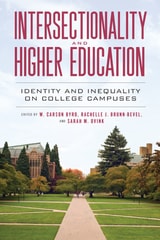
Intersectionality and Higher Education
Identity and Inequality on College CampusesW. Carson Byrd
Rutgers University Press, 2019
Intersectionality as Critical Social Theory
Patricia Hill Collins
Duke University Press, 2019
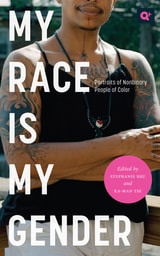
My Race Is My Gender
Portraits of Nonbinary People of ColorStephanie Hsu
Rutgers University Press, 2024
Genderqueer and nonbinary people of color often experience increased marginalization, belonging to an ethnic group that seldom recognizes their gender identity and a queer community that subscribes to white norms. Yet for this very reason, they have a lot to teach about how racial, sexual, and gender identities intersect. Their experiences of challenging social boundaries demonstrate how queer communities can become more inclusive and how the recognition of nonbinary genders can be an anti-racist practice.
My Race is My Gender is the first anthology by nonbinary writers of color to include photography and visual portraits, centering their everyday experiences of negotiating intersectional identities. While informed by queer theory and critical race theory, the authors share their personal stories in accessible language. Bringing together Black, Indigenous, Latine, and Asian perspectives, its six contributors present an intergenerational look at what it means to belong to marginalized queer communities in the U.S. and feel solidarity with a global majority at the same time. They also provide useful insights into how genderqueer and nonbinary activism can both energize and be fueled by such racial justice movements as Black Lives Matter.

Queer Traffic
Sex, Panic, Free TradeJennifer Tyburczy
Duke University Press, 2025
Refounding Democracy through Intersectional Activism
How Progressive Era Feminists Redefined Who We Are, and What It Means TodayWendy Sarvasy
Temple University Press, 2024
Sarvasy shows how these activists worked to incorporate women by combining political democracy with the creation of a welfare state. They embedded this nation-state project within a new humanitarian transnational level as they evolved their multileveled social citizenship.
Refounding Democracy through Intersectional Activism demonstrates how a theory-activist dynamic played out in experimental socializing spaces and democratic conversations. It offers an inspirational method for intersectional activists today.
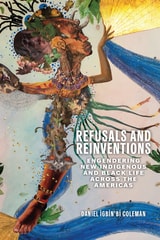
Refusals and Reinventions
Engendering New Indigenous and Black Life across the AmericasDaniel Ìgbín’bí Coleman
The Ohio State University Press, 2024

Rehabilitative Postsocialism
Disability, Sex, and Race in Eastern EuropeKaterina Kolárová
University of Michigan Press, 2025
Winner of the 2019 Tobin Siebers Prize for Disability Studies in the Humanities
Kateřina Kolářová’s Rehabilitative Postsocialism offers a timely interdisciplinary and intersectional analysis of how disability, race, class, and gender operate as ideological tools within the postsocialist Czech Republic (formerly Czechoslovakia). Kolářová presents postsocialism as an analytic that can and should be brought to bear to understand cultural politics, economic formations, and state politics through the present day.
Rehabilitative Postsocialism names disability, sexuality, and race as central yet invisible to negotiations of the postsocialist consensus. Drawing from a rich and varied archive, Rehabilitative Postsocialism maps the formation of new structures of inequalities and social imaginaries of wellness, merit, and justice in order to understand current articulations of global disenchantment with democracy, social justice, and solidarity. The book also makes clear that disability, race, and ethnicity continue to circulate in depictions of Eastern Europe as suspended in a chronic developmental “delay.” Rehabilitative Postsocialism both situates this positioning within its political and historical formation and offers the analytical tools to challenge its continued deployment.

Sideways Selves
Travesti and Jotería Struggles Across the AméricasPJ DiPietro
University of Texas Press, 2025
2026 Sylvia Rivera Award in Transgender Studies, The Center for LGBTQ Studies (CLAGS), CUNY
How trans and non-binary networks engage in decoloniality across hemispheres.
A deeply informed, theoretically rich work of inquiry and critique, Sideways Selves learns from two communities of migrants as they contest their marginalization under the colonial regime of gender—colonial because, as PJ DiPietro affirms, Indigenous and Afro-diasporic conceptions of embodiment have been displaced by the European-Christian order of gender. Following gender-nonconforming Aymara, Kolla, and mixed-race exiles in Buenos Aires and K’iche’, Nahua, and Central American migrants in the San Francisco Bay Area, DiPietro takes stock of a collective, transnational effort to reimagine ideas of personhood and kinship that gender makes unthinkable.
The communities DiPietro studies create new kinds of identities, collective and genderless in nature. Their ways of thinking and doing, though radical, are motivated by old wisdom, storytelling, healing, and religion—brujería, curanderismo, Voudoun, and other practices that colonialism, capitalism, and the nation-state have unsuccessfully tried to erase. In equal measures philosophical and ethnographic, Sideways Selves witnesses and listens as these displaced people—displaced from their homes and from the moral geography of the West—show us what a just, decolonial world could actually be.

The New Politics of Online Feminism
Akane Kanai
Duke University Press, 2026

The Queer Art of History
Queer Kinship after FascismJennifer V. Evans
Duke University Press, 2023

To Exist is to Resist
Black Feminism in EuropeEdited by Akwugo Emejulu and Francesca Sobande
Pluto Press, 2019
Deeply aware that they are constructed as 'Others' living in a racialised and hierarchical continent, the contibutors explore gender, class, sexuality and legal status to show that they are both invisible - presumed to be absent from and irrelevant to European societies - and hyper-visible - assumed to be passive and sexualised, angry and irrational.
Through imagining a future outside the neocolonial frames and practices of contemporary Europe, this book explores a variety of critical spaces including motherhood and the home, friendships and intimate relationships, activism and community, and literature, dance and film.
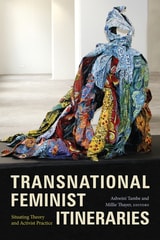
Transnational Feminist Itineraries
Situating Theory and Activist PracticeAshwini Tambe and Millie Thayer, editors
Duke University Press, 2021
Contributors. Mary Bernstein, Isabel Maria Cortesão Casimiro, Rafael de la Dehesa, Carmen L. Diaz Alba, Inderpal Grewal, Cricket Keating, Amy Lind, Laura L. Lovett, Kathryn Moeller, Nancy A. Naples, Jennifer C. Nash, Amrita Pande, Srila Roy, Cara K. Snyder, Ashwini Tambe, Millie Thayer, Catarina Casimiro Trindade