Results by title

18 books match the query 'Inuit'
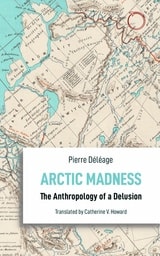
cover of Arctic Madness: The Anthropology of a Delusion

Arctic Madness

The Anthropology of a Delusion

Pierre Déléage

HAU, 2020

The French missionary-linguist Émile Petitot (1838–1916) spent twenty years near the Arctic Circle in Canada, publishing numerous works on First Nations languages and practices. Over time, however, he descended into delirium and began to summon imaginary persecutions, pen improbable interpretations of his Indigenous hosts, and burst into schizoid fury. Delving into thousands of pages in letters and memoirs that Petitot left behind, Pierre Déléage has reconstructed the missionary’s tragic story. He takes us on a gripping journey into the illogic and hyperlogic of a mind entranced with Indigenous peoples against the backdrop of repressive church policies and the emergent social sciences of the nineteenth century. Apocalyptic visions from the Bible and prophetic movements among First Nations peoples merged in the missionary’s deteriorating psyche, triggering paroxysms of violence against his colleagues and himself. Whoever wishes to understand the contradictions of living between radically different societies will find this anthropological novella hard to put down.
[more]
cover of Cartographic Encounters: Perspectives on Native American Mapmaking and Map Use

Cartographic Encounters

Perspectives on Native American Mapmaking and Map Use

Edited by G. Malcolm Lewis

University of Chicago Press, 1998

Ever since a Native American prepared a paper "charte" of the lower Colorado River for the Spaniard Hernando de Alarcón in 1540, Native Americans have been making maps in the course of encounters with whites. This book charts the history of these cartographic encounters, examining native maps and mapmaking from the pre- and post-contact periods.

G. Malcolm Lewis provides accessible and detailed overviews of the history of native North American maps, mapmaking, and scholarly interest in these topics. Other contributions include a study of colonial Aztec cartography that highlights the connections among maps, space, and history; an account of the importance of native maps as archaeological evidence; and an interpretation of an early-contact-period hide painting of an actual encounter involving whites and two groups of warring natives.

Although few original native maps have survived, contemporary copies and accounts of mapmaking form a rich resource for anyone interested in the history of Native American encounters or the history of cartography and geography.
[more]
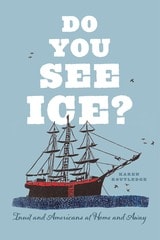
cover of Do You See Ice?: Inuit and Americans at Home and Away

Do You See Ice?

Inuit and Americans at Home and Away

Karen Routledge

University of Chicago Press, 2018

Many Americans imagine the Arctic as harsh, freezing, and nearly uninhabitable. The living Arctic, however—the one experienced by native Inuit and others who work and travel there—is a diverse region shaped by much more than stereotype and mythology. Do You See Ice? presents a history of Arctic encounters from 1850 to 1920 based on Inuit and American accounts, revealing how people made sense of new or changing environments.

Routledge vividly depicts the experiences of American whalers and explorers in Inuit homelands. Conversely, she relates stories of Inuit who traveled to the northeastern United States and were similarly challenged by the norms, practices, and weather they found there. Standing apart from earlier books of Arctic cultural research—which tend to focus on either Western expeditions or Inuit life—Do You See Ice? explores relationships between these two groups in a range of northern and temperate locations. Based on archival research and conversations with Inuit Elders and experts, Routledge’s book is grounded by ideas of home: how Inuit and Americans often experienced each other’s countries as dangerous and inhospitable, how they tried to feel at home in unfamiliar places, and why these feelings and experiences continue to resonate today.

The author intends to donate all royalties from this book to the Elders’ Room at the Angmarlik Center in Pangnirtung, Nunavut.
[more]
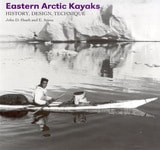
cover of Eastern Arctic Kayaks: History, Design, Technique

Eastern Arctic Kayaks

History, Design, Technique

John Heath

University of Alaska Press, 2004

Eastern Arctic Kayaks is the product of years of kayak study by two of the world's experts. Combining analyses of form and function with historical background and illustrations of kayaking techniques, this volume is a storehouse of information for recreational kayakers and scholarly readers alike.

Drawing from his vast practical experience and extensive study of museum specimens, John D. Heath offers a comprehensive overview of the evolution and construction of Greenland kayaks supplemented with an illustrated series of rolling and sculling techniques. E. Arima examines kayaks of the eastern Canadian Arctic, covering woodworking tools, construction techniques, and the treatment of skins for the kayak cover.

Core chapters on Greenland and eastern Canada are accompanied by essential articles by Greg Stamer on the use of the Greenland paddle and two studies of kayaks in European museums by Harvey Golden and Hugh Collings. A valuable excerpt from John Brand's Little Kayak Book series makes this British publication available to American readers for the first time.

Lavishly illustrated with drawings and historic photographs, Eastern Arctic Kayaks is a landmark study in the history of watercraft--an essential resource for recreational kayakers and maritime historians and for anyone interested in northern Native material culture.

[more]
cover of From the Tundra to the Trenches

From the Tundra to the Trenches

Eddy Weetaltuk

University of Manitoba Press, 2016
[more]
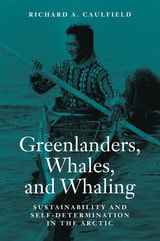
cover of Greenlanders, Whales, and Whaling: Sustainability and Self-Determination in the Arctic

Greenlanders, Whales, and Whaling

Sustainability and Self-Determination in the Arctic

Richard A. Caulfield

Dartmouth College Press, 2000
Whaling has been central to the life of Greenland's Inuit peoples for at least 4000 years, but political, economic, technological, and regulatory changes have altered this ancient practice. Richard A. Caulfield reveals these impacts first by analyzing Home Rule and its success in Greenland, and then by looking at whaling's place in the contemporary Greenlandic economy and its evolving co-management regime. What emerges from his investigation is an intricate web connecting traditions of indigenous peoples, the promises and pitfalls of co-management, the influence of international whaling policies, the complexities of sustainability, and the power of culturally determined views shaping relationships between humans and their environment. Caulfield finds that controversy over whaling often arises from conflicting idea systems, rather than disagreement over biological resource management. Understanding the ways Greenlanders and outside interests have defined and negotiated these conflicts "gives us more than just an insight into how indigenous peoples are coping with a changing world," he writes. "It also provides us with a sense of the challenges we face as well."
[more]
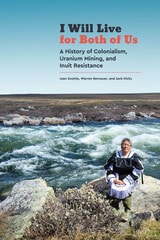
cover of I Will Live for Both of Us: A History of Colonialism, Uranium Mining, and Inuit Resistance

I Will Live for Both of Us

A History of Colonialism, Uranium Mining, and Inuit Resistance

Joan Scottie

University of Manitoba Press, 2022
[more]
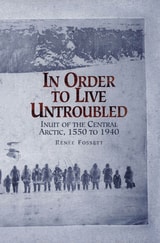
cover of In Order to Live Untroubled: Inuit of the Central Artic 1550 to 1940

In Order to Live Untroubled

Inuit of the Central Artic 1550 to 1940

Renee Fossett

University of Manitoba Press, 2001
Despite the long human history of the Canadian central arctic, there is still little historical writing on the Inuit peoples of this vast region. Although archaeologists and anthropologists have studied ancient and contemporary Inuit societies, the Inuit world in the crucial period from the 16th to the 20th centuries remains largely undescribed and unexplained. In Order to Live Untroubled helps fill this 400-year gap by providing the first, broad, historical survey of the Inuit peoples of the central arctic.Drawing on a wide array of eyewitness accounts, journals, oral sources, and findings from material culture and other disciplines, historian Renee Fossett explains how different Inuit societies developed strategies and adaptations for survival to deal with the challenges of their physical and social environments over the centuries. In Order to Live Untroubled examines how and why Inuit created their cultural institutions before they came under the pervasive influence of Euro-Canadian society. This fascinating account of Inuit encounters with explorers, fur traders, and other Aboriginal peoples is a rich and detailed glimpse into a long-hidden historical world.
[more]
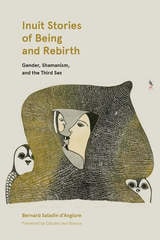
cover of Inuit Stories of Being and Rebirth: Gender, Shamanism, and the Third Sex

Inuit Stories of Being and Rebirth

Gender, Shamanism, and the Third Sex

Bernard Saladin d' Anglure

University of Manitoba Press, 2018
[more]
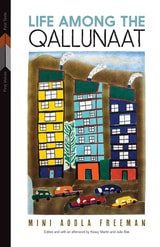
cover of Life Among the Qallunaat

Life Among the Qallunaat

Mini Aodla Freeman

University of Manitoba Press, 2015
[more]
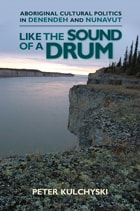
cover of Like the Sound of a Drum: Aboriginal Cultural Politics in Denendeh and Nunavut

Like the Sound of a Drum

Aboriginal Cultural Politics in Denendeh and Nunavut

Peter Kulchyski

University of Manitoba Press, 2005
[more]
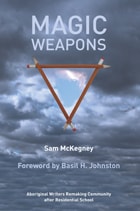
cover of Magic Weapons: Aboriginal Writers Remaking Community after Residential School

Magic Weapons

Aboriginal Writers Remaking Community after Residential School

Sam McKegney

University of Manitoba Press, 2007
The legacy of the residential school system ripples throughout Native Canada, its fingerprints on the domestic violence, poverty, alcoholism, drug abuse, and suicide rates that continue to cripple many Native communities. Magic Weapons is the first major survey of Indigenous writings on the residential school system, and provides groundbreaking readings of life writings by Rita Joe (Mi’kmaq) and Anthony Apakark Thrasher (Inuit) as well as in-depth critical studies of better known life writings by Basil Johnston (Ojibway) and Tomson Highway (Cree). Magic Weapons examines the ways in which Indigenous survivors of residential school mobilize narrative in their struggles for personal and communal empowerment in the shadow of attempted cultural genocide. By treating Indigenous life-writings as carefully crafted aesthetic creations and interrogating their relationship to more overtly politicized historical discourses, Sam McKegney argues that Indigenous life-writings are culturally generative in ways that go beyond disclosure and recompense, re-envisioning what it means to live and write as Indigenous individuals in post-residential school Canada.
[more]
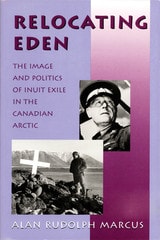
cover of Relocating Eden: The Image and Politics of Inuit Exile in the Canadian Arctic

Relocating Eden

The Image and Politics of Inuit Exile in the Canadian Arctic

Alan Rudolph Marcus

Dartmouth College Press, 1995
In the early 1950s, a number of Inuit men, women, and children were loaded on ships and sent to live in the cold and barren lands of the Canadian High Arctic. Spurred by government agents’ promises of plentiful game, virgin land, and a lifestyle untainted by Western Influences, these “voluntary migrants,” who soon numbered nearly ninety, found instead isolation, hunting limited by game preserve regulations, three months of total darkness each winter, and a government suddenly deaf to their pleas to return home. The question, still unresolved forty years later, is whether these “experiments” were a well-intentioned governmental attempt to protect the Inuit way of life or a ploy to lure innocent people to exile, hunger, and deprivation in order to solidify Canada’s Cold War sovereignty in the far North. Alan Rudolph Marcus outlines the motives behind the relocation, case histories of two settlements, and the aftermath of the migration. Relocating Eden provides a timely and provocative inquiry into issues of continuing importance to Canada and all native peoples.
[more]
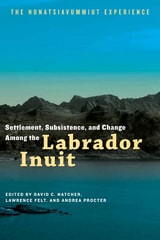
cover of Settlement, Subsistence, and Change Among the Labrador Inuit

Settlement, Subsistence, and Change Among the Labrador Inuit

David Natcher

University of Manitoba Press, 2012

[more]
cover of Skin for Skin: Death and Life for Inuit and Innu

Skin for Skin

Death and Life for Inuit and Innu

Gerald M. Sider

Duke University Press, 2014
Since the 1960s, the Native peoples of northeastern Canada, both Inuit and Innu, have experienced epidemics of substance abuse, domestic violence, and youth suicide. Seeking to understand these transformations in the capacities of Native communities to resist cultural, economic, and political domination, Gerald M. Sider offers an ethnographic analysis of aboriginal Canadians' changing experiences of historical violence. He relates acts of communal self-destruction to colonial and postcolonial policies and practices, as well as to the end of the fur and sealskin trades. Autonomy and dignity within Native communities have eroded as individuals have been deprived of their livelihoods and treated by the state and corporations as if they were disposable. Yet Native peoples' possession of valuable resources provides them with some income and power to negotiate with state and business interests. Sider's assessment of the health of Native communities in the Canadian province of Labrador is filled with potentially useful findings for Native peoples there and elsewhere. While harrowing, his account also suggests hope, which he finds in the expressiveness and power of Native peoples to struggle for a better tomorrow within and against domination.
 
[more]
cover of Wandering Spirits: Loneliness and Longing in Greenland

Wandering Spirits

Loneliness and Longing in Greenland

Janne Flora

University of Chicago Press, 2019

It is common to think of the Arctic as remote, perched at the farthest reaches of the world—a simple and harmonious, isolated utopia. But the reality, as Janne Flora shows us, is anything but. In Wandering Spirits, Flora reveals how deeply connected the Arctic is to the rest of the world and how it has been affected by the social, political, economic, and environmental shifts that ushered in the modern age.
 
In this innovative study, Flora focuses on Inuit communities in Greenland and addresses a central puzzle: their alarmingly high suicide rate. She explores the deep connections between loneliness and modernity in the Arctic, tracing the history of Greenland and analyzing the social dynamics that shaped it. Flora’s thorough, sensitive engagement with the families that make up these communities uncovers the complex interplay between loneliness and a host of economic and environmental practices, including the widespread local tradition of hunting. Wandering Spirits offers a vivid portrait of a largely overlooked world, in all its fragility and nuance, while engaging with core anthropological concerns of kinship and the structure of social relations.
[more]
cover of Words of the Inuit: A Semantic Stroll through a Northern Culture

Words of the Inuit

A Semantic Stroll through a Northern Culture

Louis-Jacques Dorais

University of Manitoba Press, 2020
[more]
cover of Worldviews of the Greenlanders: An Inuit Arctic Perspective

Worldviews of the Greenlanders

An Inuit Arctic Perspective

Birgitte Sonne

University of Alaska Press, 2017

Ninety years ago, Knud Rasmussen’s popular account of his scientific expeditions through Greenland and North America introduced readers to the culture and history of arctic Natives. In the intervening century, a robust field of ethnographic research has grown around the Inuit and Yupiit of North America—but, until now, English-language readers have had little access to the broad corpus of work on Greenlandic natives.
Worldviews of the Greenlanders draws upon extensive Danish and Greenlandic research on Inuit arctic peoples—as well as Birgitte Sonne’s own decades of scholarship and fieldwork—to present in rich detail the key symbols and traditional beliefs of Greenlandic Natives, as well as the changes brought about by contact with colonial traders and Christian missionaries. It includes critical updates to our knowledge of the Greenlanders’ pre-colonial world and their ideas on space, time, and other worldly beings. This expansive work will be a touchstone of Arctic Native studies for academics who wish to expand their knowledge past the boundaries of North America.
[more]
