Results by title
5 books match the query 'Iordachi, Constantin'
Battling over the Balkans
Historiographical Questions and ControversiesJohn R. Lampe
Central European University Press, 2020
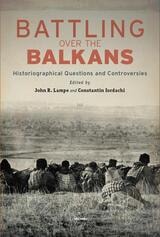
The tumultuous history of the Balkans has been subject to a plethora of conflicting interpretations, both local and external. In an attempt to help overcome the stereotypes that still pervade Balkan history, Battling over the Balkans concentrates on a set of five principal controversies from the precommunist period with which the region’s history and historiography must contend: the pre-1914 Ottoman and Eastern Christian Orthodox legacies; the post-1918 struggles for state-building; the range of European economic and cultural influences across the interwar period, as opposed to diplomatic or political intervention; the role of violence and paramilitary forces in challenging the interwar political regimes in the region; and the fate of ethnic minorities into and after World War II, particularly Jews, Muslims and Roma. In an attempt to give a voice to eminent local authors, the chapters provide samples of new regional scholarship exploring these contested issues—most of them translated into English for the first time—and are prefaced with historiographical overviews addressing the state of the debate on these specific controversies. These translations help bridge the language barriers that often separate scholarly traditions within Southeast Europe, as well as scholars in Southeast Europe and English-speaking academia. This volume will enable readers to identify common patterns and influences that characterize the writing of history in the region, and will stimulate new transnational and comparative approaches to the history of the Balkans.
[more]
Integrating the Rural World
Economy, Society and Politics in Central and South-Eastern Europe, 1848-1939Sorin Radu
Central European University Press, 2026
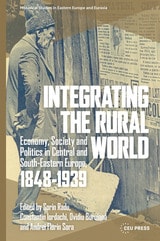
This volume focuses on how the national elites in Central and South-Eastern Europe perceived the peasantry during the process of building the modern state and democratic political systems. The central theme of the discussion is the integration of peasants into the political system, with the aim of transforming them from the dependent subjects of various public figures to active citizens. The politicization of the rural world, in terms of increasing peasants’ participation in public affairs and their identification with ideas concerning the “common good,” was integral to the modern transformation of societies in these regions. The studies in this volume examine the relationship between the peasantry and central and local state institutions, such as the administration, schools and the army; associations of all kinds; and social figures, including intellectuals, teachers, local notables and priests, who sought to uplift the rural world as part of the modernization agenda.
[more]
The Collectivization of Agriculture in Communist Eastern Europe
Comparison and EntanglementsConstantin Iordachi
Central European University Press, 2014
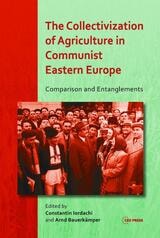
This book explores the interrelated campaigns of agricultural collectivization in the USSR and in the communist dictatorships established in Soviet-dominated Eastern Europe. Despite the profound, long-term societal impact of collectivization, the subject has remained relatively underresearched. The volume combines detailed studies of collectivization in individual Eastern European states with issueoriented comparative perspectives at regional level. Based on novel primarysources, it proposes a reappraisal of the theoretical underpinnings and research agenda of studies on collectivization in Eastern Europe.The contributions provide up-to-date overviews of recent research in the field and promote new approaches to the topic, combining historical comparisons with studies of transnational transfers and entanglements.
[more]
The Rise of Comparative History
Balázs Trencsényi
Central European University Press, 2021
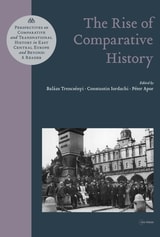
This book—the first of a three-volume overview of comparative and transnational historiography in Europe—focuses on the complex engagement of various comparative methodological approaches with different transnational and supranational frameworks. It considers scales from universal history to meso-regional (i.e. Balkans, Central Europe, etc.) perspectives. In the form of a reader, it displays 18 historical studies written between 1900 and 1943. The collection starts with the French and German methodological discussions around the turn of the twentieth century, stemming from the effort to integrate history with other emerging social sciences on a comparative methodological basis. The volume then turns to the question of structural and institutional comparisons, revisiting various historiographical ventures that tried to sketch out a broader (regional or European-level) interpretative framework to assess the legal systems, patterns of agrarian production, and the common ethnographic and sociocultural features.
In the third part, a number of texts are presented, which put forward a supra-national research framework as an antidote to national exclusivism. While in Western Europe the most obvious such framework was pan-European, in East Central Europe the agenda of comparison was linked usually to a meso-regional framework.
The studies are accompanied by short contextual introductions including biographical information on the respective authors.
[more]
Transforming Peasants, Property and Power
The Collectivization of Agriculture in Romania, 1949–1962Dorin Dobrincu
Central European University Press, 2009
The subject matter of the volume is part of larger research agenda on the process of land collectivization in the former communist camp, focusing on state, identity and property. The main innovation of the volume is to apply recent interdisciplinary approaches to the study of the collectivization process, asking what types of new peasant-state relations it formed and how it transformed notions of self, persons, and things (such as land). The project conceived of changes in the system of ownership as causing changes in the identity and attitude of people; similarly, it regarded the study of personal identities as essential for understanding changes in the system of ownership. This perspective is rare in the area-studies approaches to the topic.
[more]