Results by title
2 books match the query 'Irwin, Mark'
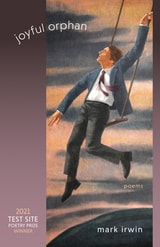
Joyful Orphan
PoemsMark Irwin
University of Nevada Press, 2023
Through poems of witness, species and habitat extinction, war, pandemic, technology, history, and race, Mark Irwin’s elegant collection of poetry explores the collision between metropolis and wilderness, and engages with forms of spirit that cannot be bound. With the incursion of electronic communication, our connections with one another have been radically distorted. Irwin’s poems confront what it means to be human, and how conflict, along with the interface between technology and humanity, can cause us to become orphaned in many different ways. But it is our decision to be joyful.
Excerpt from “Letter”
Times when we touch hope like the hem of a cloud
just as when we touch a body or door, or think
of the dead come back, romancing
us through the warp of memory, lighting a way
by luring . . .
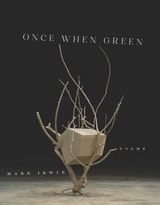
Once When Green
PoemsMark Irwin
University of Massachusetts Press, 2025
“We breathe, and then / vanish,” proclaims a speaker in Once When Green, a new collection by accomplished poet Mark Irwin. While deeply personal, the book engages the earth, “gulls, / gray, quarreling air, their ha-ha-ha-ing at our trace / of garbage and carbon,” and addresses mortality as well as the consequences of global warming—how it impacts humans, animals, and the plant life that sustains us all. Poems here accent the lateness of our attempt to control pollution, while interrogating the natural world through myth and the voicings of different creatures, beings displaced or relegated to other spaces, including apes, birds, and an arcade bear that reflects: “I once thought that was freedom— / but how in a receding wilderness no longer mine?”
Sighting those areas where metropolis and wilderness collide, Irwin conveys the tension between the natural and digital world as a speaker laments: “I am so lonely for a river’s one rushing / minute with scuttling crayfish, nymphs, and eddies blurring clouds, not its / imagined thousand pixels changing colors toward forms / on a screen.” These poems remind us how forms of the spirit cannot be bound by technology and capitalism, imploring “how to become explorers, cartographers / again.”