Results by title
2 books match the query 'Islamic Lands'
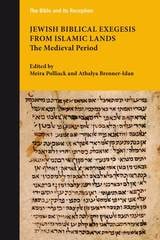
Jewish Biblical Exegesis from Islamic Lands
The Medieval PeriodMeira Polliack
SBL Press, 2019
An accessible point of entry into the rich medieval religious landscape of Jewish biblical exegesis s
Medieval Judeo-Arabic translations of the Hebrew Bible and their commentaries provide a rich source for understanding a formative period in the intellectual, literary, and cultural history and heritage of Jews in Islamic lands. The carefully selected texts in this volume offer intriguing insight into Arabic translations and commentaries by Rabbanite and Karaite Jewish exegetes from the tenth to the twelfth centuries CE, arranged according to the three divisions of the Torah, the Former and Latter Prophets, and the Writings. Each text is embedded within an essay discussing its exegetical context, reception, and contribution.
Features:
- Focus on underrepresented medieval Jewish commentators of the Eastern world
- A list of additional resources, including major Judeo-Arabic commentators in the medieval period
- Previously unpublished texts from the Cairo Geniza
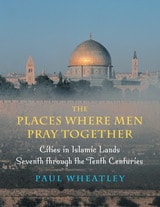
The Places Where Men Pray Together
Cities in Islamic Lands, Seventh through the Tenth CenturiesPaul Wheatley
University of Chicago Press, 2001
Building on the tenth-century geographer al-Maqdisi's writings on urban centers of the Islamic world, buttressed by extensive comparative material from roadbooks, topographies, histories, adab literatures, and gazetteers of the time, Wheatley identifies the main functions of different Islamic urban centers. Chapters on each of the thirteen centers that al-Maqdisi identified, ranging from the Atlantic to the Indus and from the Caspian to the Sudan, form the heart of this book. In each case Wheatley shows how specific agglomeration and accessibility factors combined to make every city functionally distinct as a creator of effective space. He also demonstrates that, far from revolutionizing every aspect of life in these cities, the adoption of Islam often affected the development of these cities less than previously existing local traditions.
The Places Where Men Pray Together is a monumental work that will speak to scholars and readers across a broad variety of disciplines, from historians, anthropologists, and sociologists to religious historians, archaeologists, and geographers.