Results by title
7 books match the query 'Islamic influences'
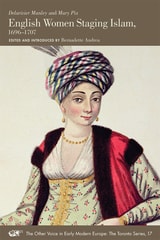
English Women Staging Islam, 1696-1707
Delarivier Manley and Mary Pix
Iter Press, 2012
Islam Translated
Literature, Conversion, and the Arabic Cosmopolis of South and Southeast AsiaRonit Ricci
University of Chicago Press, 2011
In Islam Translated, Ronit Ricci uses the Book of One Thousand Questions—from its Arabic original to its adaptations into the Javanese, Malay, and Tamil languages between the sixteenth and twentieth centuries—as a means to consider connections that linked Muslims across divides of distance and culture. Examining the circulation of this Islamic text and its varied literary forms, Ricci explores how processes of literary translation and religious conversion were historically interconnected forms of globalization, mutually dependent, and creatively reformulated within societies making the transition to Islam.
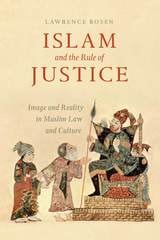
Islam and the Rule of Justice
Image and Reality in Muslim Law and CultureLawrence Rosen
University of Chicago Press, 2018
With Islam and the Rule of Justice, Lawrence Rosen analyzes a number of these misperceptions. Drawing on specific cases, he explores the application of Islamic law to the treatment of women (who win most of their cases), the relations between Muslims and Jews (which frequently involve close personal and financial ties), and the structure of widespread corruption (which played a key role in prompting the Arab Spring). From these case studie the role of informal mechanisms in the resolution of local disputes. The author also provides a close reading of the trial of Zacarias Moussaoui, who was charged in an American court with helping to carry out the 9/11 attacks, using insights into how Islamic justice works to explain the defendant’s actions during the trial. The book closes with an examination of how Islamic cultural concepts may come to bear on the constitutional structure and legal reforms many Muslim countries have been undertaking.

Ottoman Jerusalem
The Living City: 1517-1917 Part 1 & 2Sylvia Auld
Council for British Research in the Levant, 2000
The Feeling of History
Islam, Romanticism, and AndalusiaCharles Hirschkind
University of Chicago Press, 2021
Against this xenophobic tendency, The Feeling of History examines the idea of Andalucismo—a modern tradition founded on the principle that contemporary Andalusia is connected in vitally important ways with medieval Islamic Iberia. Charles Hirschkind explores the works and lives of writers, thinkers, poets, artists, and activists, and he shows how, taken together, they constitute an Andalusian sensorium. Hirschkind also carefully traces the various itineraries of Andalucismo, from colonial and anticolonial efforts to contemporary movements supporting immigrant rights. The Feeling of History offers a nuanced view into the way people experience their own past, while also bearing witness to a philosophy of engaging the Middle East that experiments with alternative futures.
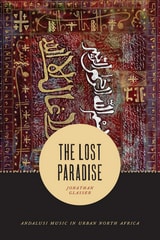
The Lost Paradise
Andalusi Music in Urban North AfricaJonathan Glasser
University of Chicago Press, 2016
Through a historical and ethnographic account of the Andalusi music of Algiers, Tlemcen, and their Algerian and Moroccan borderlands since the end of the nineteenth century, Glasser shows how anxiety about Andalusi music’s disappearance has emerged from within the practice itself and come to be central to its ethos. The result is a sophisticated examination of musical survival and transformation that is also a meditation on temporality, labor, colonialism and nationalism, and the relationship of the living to the dead.
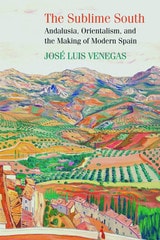
The Sublime South
Andalusia, Orientalism, and the Making of Modern SpainJose Luis Venegas
Northwestern University Press, 2018
The Sublime South: Andalusia, Orientalism, and the Making of Modern Spain is the first systematic study on cultural images of Andalusia as Spain’s “Orient” and the impact they have had on nation-building and modernization since the late nineteenth century. While a wealth of studies have examined how northern Europeans from the Romantic period viewed Spain and Andalusia as Europe’s Orient, little attention has been paid to how contemporary Spanish artists and intellectuals assimilated Romantic legacies to engage in an internal form of orientalism.
José Luis Venegas deftly explores Spain’s shifting engagements with oriental identity and otherness by looking, not just beyond national, ethnic, and racial borders, but at a territory that is institutionally embedded in the nation-state while symbolically placed between inclusion and abjection. The Sublime South shifts the focus and scale of Edward Said’s notion of orientalism by examining how it evolves and manifests transnationally, as the result of European colonialism in Africa and Asia, and intra-nationally, in a European yet orientalized country. Finally, Venegas challenges ethnocentric notions of Iberian cultures and fosters an understanding of the encounters between Western and Muslim cultures beyond opposing, and often mutually negating, essentialisms.