Results by title
477 books match the query 'Italy' and 35 start with a

A Calm Fire
and Other Travel WritingsPhilippe Jaccottet
Seagull Books, 2018
Ultimately, whether in his native Swiss Alps or among the cedars of Lebanon, the same question pervades Philippe Jaccottet’s work: How should we live? More than a simple palliative to a depressing news cycle, Calm Fire captures a true sense of place by celebrating and pondering ways of life through the immersive experience of travel.

A Coin in Nine Hands
A NovelMarguerite Yourcenar
University of Chicago Press, 1994
"A Coin in Nine Hands has . . . passages that move close to poetry and a story that belongs in both literature and history."—Doris Grumbach, Los Angeles Times Book Review
"What lingers at the end of A Coin in Nine Hands is the shadowiness and puppetlike vagueness of the Dictator, and the compelling specificity of the so-called 'common people' revolving all around him."—Anne Tyler, The New Republic
"Within a few pages we have met half the major characters in this haunting, brilliantly constructed novel. . . . The studied perfection, the structural intricacy and brevity remind one of Camus. Yet by comparison, Yourcenar's prose is lavish, emotional and imagistic."—Cynthia King, Houston Post
"Transcends its specific time and place to become a portrait of vividly delineated characters caught in the vise of a tragically familiar political situation."—Publisher's Weekly
Best known as the author of Memoirs of Hadrian and The Abyss, Marguerite Yourcenar (1903-87) achieved countless literary honors and was the first woman ever elected to the Académie Française.
A Ghost in Trieste
Joseph Cary
University of Chicago Press, 1993
Here is the crossroads of East and West. A port held in turn by the Romans, the Venetians, the Austrians, the Germans, the Slavs, and finally the Italians, Trieste is the capital of nowhere, fertile source of a unique literary florescence before the First World War. At times an exile home and an exiled city. "I cannot claim to have walked across it all,:" wrote Saba, the poet of Trieste in 1910 of the city Cary crosses and recrosses, seeking the poetry of the place that inspired its literary giants. Trieste's cultural and historical riches, its geographical splendor of hills and sea and mysterious presence unfold in a series of stories, monologues and literary juxtapositions that reveal the city's charms as well as its seductive hold on the writer's imagination. Throughout, literary and immediate impressions alike are elaborated in paintings and maps, and in handsome line drawings by Nicholas Read.
This "clownish and adolescent Parsifal," this Trieste of the "prickly grace," this place "impaled in my heart like a permanent point," this symbol of the Adriatic, this "city made of books" — here the book remakes the city. The Trieste of allusions magically becomes a city of palpable allure, of warmth and trying contradictions and gritty beauty. Part travel diary, part guide book, part literary history, A Ghost in Trieste is a brilliant introduction to an extraordinary time and place. In Joseph Cary, Trieste has found a new poet, and readers, a remarkably captivating companion and guide.

A History of Earliest Italy
Massimo Pallottino
University of Michigan Press, 1991
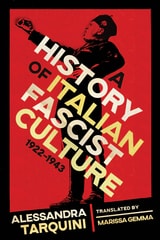
A History of Italian Fascist Culture, 1922–1943
Alessandra Tarquini, Translated by Marissa Gemma
University of Wisconsin Press, 2022
Tarquini sketches the universe of Italian fascism in three broad directions: the regime’s cultural policies, the condition of various art forms and scholarly disciplines, and the ideology underpinning the totalitarian state. She details the choices the ruling class made between 1922 and 1943, revealing how cultural policies shaped the country and how intellectuals and artists contributed to those decisions. The result is a view of fascist ideology as a system of visions, ideals, and, above all, myths capable of orienting political action and promoting a precise worldview.
Building on George L. Mosse’s foundational research, Tarquini provides the best single-volume work available to fully understand a complex and challenging subject. It reveals how the fascists used culture—art, cinema, music, theater, and literature—to build a conservative revolution that purported to protect the traditional social fabric while presenting itself as maximally oriented toward the future.
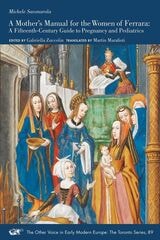
A Mother’s Manual for the Women of Ferrara
A Fifteenth-Century Guide to Pregnancy and PediatricsMichele Savonarola
Iter Press, 2022
Around 1460, Michele Savonarola produced the extraordinary Mother’s Manual for the Women of Ferrara, a gynecological, obstetrical, and pediatric treatise composed in the vernacular so that it could be read not only by the learned but also by pregnant and nursing mothers and the midwives and wet nurses who presided over childbirth. Savonarola’s work is not merely a trivial set of instructions, but the work of a learned scholar who drew on, among others, the ancient Greek physicians Hippocrates and Galen, and Avicenna’s Canon of Medicine. The first of its kind, Savonarola’s Mother’s Manual helps readers understand both the development of late-medieval and early-modern obstetrics and gynecology, as well as the experiences of women who turn to advice books for help with reproductive issues. This book also provides a key to understanding why and how a new genre of book—the midwifery manual or advice book for pregnant women—arose in sixteenth-century Italy and eventually became a popular genre all over Europe from the early modern period to the present day.
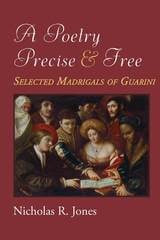
A Poetry Precise and Free
Selected Madrigals of GuariniNicholas R. Jones
University of Michigan Press, 2018
This volume is organized into ten sections, grouping the madrigals around themes such as the anguish of passion, the asymmetry of desire, the incursions of jealousy, and the possibility of mutual bliss. Nicholas R. Jones renders Guarini’s poetry into accessible contemporary English verse that nevertheless stays true to the substance and form of the original texts, reflecting their roots in the Petrarchan poetic tradition and displaying the emotion and musicality that made these lyrics so popular from the start. A substantive introduction provides cultural context for the madrigals and their musical settings; brief commentaries follow each translation to illuminate aspects of poetic and rhetorical craft. An extensive appendix lists the madrigal compositions that set these lyrics for vocal performance.
The book fills a major gap in the scholarship on Guarini’s literary legacy. It will appeal to scholars of literature, Renaissance studies, and musicology, early-music performers, and general readers interested in poetry and classical music.
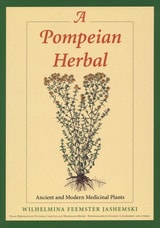
A Pompeian Herbal
Ancient and Modern Medicinal PlantsBy Wilhelmina Feemster Jashemski,
University of Texas Press, 1999
When workmen excavating the ruins of Pompeii eagerly gathered the native medicinal plants growing there, Wilhelmina Jashemski discovered that this was another example of the continuity of life in the shadow of Vesuvius. Many of the plants used for herbal medicine around Pompeii today are the same ones that ancient authorities such as Pliny the Elder and Dioscorides recommended for treating the same types of disorders.
In this book, Jashemski presents an herbal of thirty-six medicinal plants, most of them known to the ancients and still employed today. She describes each plant's contemporary medicinal uses and compares them to ancient practices as recorded in literary sources. Scientific, English, and Italian names and the plant's mythological associations complete the entries, while elegant, full-page portraits depict each plant visually.
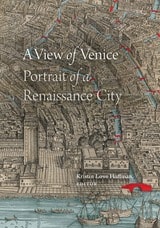
A View of Venice
Portrait of a Renaissance CityKristin Love Huffman, editor
Duke University Press, 2024
Contributors. Karen-edis Barzman, Andrea Bellieni, Patricia Fortini Brown, Valeria Cafà, Stanley Chojnacki, Tracy E. Cooper, Giada Damen, Julia A. DeLancey, Piero Falchetta, Ludovica Galeazzo, Maartje van Gelder, Jonathan Glixon, Richard Goy, Anna Christine Swartwood House, Kristin Love Huffman, Holly Hurlburt, Claire Judde de Larivière, Blake de Maria, Martina Massaro, Cosimo Monteleone, Monique O’Connell, Mary Pardo, Giorgio Tagliaferro, Saundra Weddle, Bronwen Wilson, Rangsook Yoon

Against the Avant-Garde
Pier Paolo Pasolini, Contemporary Art, and NeocapitalismAra H. Merjian
University of Chicago Press, 2020

Aldus Manutius
The Invention of the PublisherOren Margolis
Reaktion Books, 2023
Now in paperback, a fresh reading of Aldus Manutius, preeminent in the history of the printed book.
Aldus Manutius is perhaps the greatest figure in the history of the printed book: in Venice, Europe’s capital of printing, he invented the italic type and issued more first editions of the classics than anyone before or since, as well as Hypnerotomachia Poliphili, the most beautiful and mysterious printed book of the Italian Renaissance.
This is the first monograph in English on Aldus Manutius in over forty years. It shows how Aldus redefined the role of a book printer, from mere manual laborer to a learned publisher. As a consequence, Aldus participated in the same debates as contemporaries such as Leonardo da Vinci and Erasmus of Rotterdam, making this book an insight into their world too.
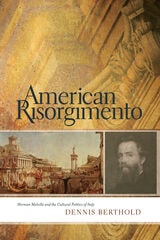
American Risorgimento
Herman Melville and the Cultural Politics of ItalyDennis Berthold
The Ohio State University Press, 2009

An Alliance Of Women
Immigration And The Politics Of RaceHeather Merrill
University of Minnesota Press, 2006
Taking as a starting point the Italian crisis over immigration in the early 1990s, Merrill examines grassroots interethnic spatial politics among female migrants and Turin feminists in Northern Italy. Using rich ethnographic material, she traces the emergence of Alma Mater—an anti-racist organization formed to address problems encountered by migrant women. Through this analysis, Merrill reveals the dynamics of an alliance consisting of women from many countries of origin and religious and class backgrounds.
Highlighting an interdisciplinary approach to migration and the instability of group identities in contemporary Italy, An Alliance of Women presents migrants grappling with spatialized boundaries amid growing nativist and anti-immigrant sentiment in Western Europe.
Heather Merrill is assistant professor of geography and anthropology at Dickinson College.

An American Social Worker in Italy
Jean Charnley
University of Minnesota Press, 1961
An American Social Worker in Italy was first published in 1961. Minnesota Archive Editions uses digital technology to make long-unavailable books once again accessible, and are published unaltered from the original University of Minnesota Press editions.
Mrs. Charnley, an American social worker, spent six months in Italy on a Fulbright grant as a consultant to Italian child welfare agencies and schools of social work. Here, in diary form, she tells of her experiences during those months when she struggled to teach American social work principles to her Italian colleagues. The task was complicated not only by the need to communicate in a newly learned tongue but also by the necessity to tailor American casework philosophies to a vastly different culture. The story abounds in humor and pathos and, at the same time, offers rich information about Italy, its people, and its child-care methods and institutions.
Mrs. Charnley points out that one Italian child in ten spends his first seventeen years in an institution. The nation's laws for the protection of children date back to the Caesars; even the most progressive of the social workers she met hoped for reforms only in terms of decades or centuries. Against this background, the situations in which she found herself were sometimes frustrating, often comic, always challenging. Her determination to help Italy's half-million institutionalized children took her behind the doors of many orphanages and convents, into close contact with the children and the nuns and priests who cared for them. She studied the records of social agencies, analyzed problems with their staffs, and lectured at social work schools.

An Armchair Traveller's History of Apulia
Desmond Seward
Haus Publishing, 2013

An Intimate History of Nazism
Love, Marriage, and Sexuality in the Third ReichElissa Mailänder
University of Wisconsin Press, 2027
Published to great acclaim in French and now available for the first time in English, this groundbreaking book explores how the Nazi regime used sexuality to promote political loyalty, conformity, and cohesion among “ordinary” Germans. Beginning before the collapse of the Weimar Republic and continuing through the postwar American occupation of Germany, Elissa Mailänder’s study highlights the complex and conflicted ways that sexual “liberation,” repression, and violence were used and experienced in the everyday lives of citizens of the Reich. Her analysis draws on a vast array of sources, from legal dossiers to private photographs and letters, as well as public archives, magazines, and movies. Mailänder’s findings are often uncomfortable; she demonstrates, for example, that a significant number of women who were not persecuted by the regime saw shifts in gender and sexual norms as positive developments—ones that some felt were lost under the American occupation, with its own routines of military sexual exploitation. What emerges is a portrait of a regime that was less interested in repressing sexuality than in reinventing it according to a racist, elitist, and homophobic agenda.
An Italian Journey
Jean Giono
Northwestern University Press, 1998
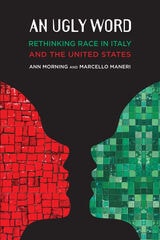
An Ugly Word
Rethinking Race in Italy and the United StatesAnn Morning
Russell Sage Foundation, 2022
Morning and Maneri interviewed over 150 people across the two countries about differences among what they refer to as “descent-based groups.” Using this concept allowed them to sidestep the language of “race” and “ethnicity,” which can be unnecessarily narrow, poorly defined, or even offensive to some. Drawing on these interviews, the authors find that while ways of speaking about group difference vary considerably across the Atlantic, underlying beliefs about it do not. The similarity in American and Italian understandings of difference was particularly evident when discussing sports. Both groups relied heavily on traditional stereotypes of Black physicality to explain Black athletes’ overrepresentation in sports like U.S. football and their underrepresentation in sports like swimming – contradicting the claims that a biological notion of race is a distinctly American phenomenon.
While American and Italian concepts of difference may overlap extensively, they are not identical. Interviews in Italy were more likely to reveal beliefs about groups’ innate, unchangeable temperaments, such as friendly Senegalese and dishonest Roma. And where physical difference was seen by Italians as superficial and unimportant, cultural difference was perceived as deeply meaningful and consequential. In contrast, U.S. interviewees saw cultural difference as supremely malleable—and often ascribed the same fluidity to racial identity, which they believed stemmed from culture as well as biology. In light of their findings, Morning and Maneri propose a new approach to understanding cross-cultural beliefs about descent-based difference that includes identifying the traits people believe differentiate groups, how they believe those traits are acquired, and whether they believe these traits can change.
An Ugly Word is an illuminating, cross-national examination of the ways in which people around the world make sense of race and difference.
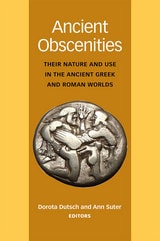
Ancient Obscenities
Their Nature and Use in the Ancient Greek and Roman WorldsDorota Dutsch and Ann Suter, editors
University of Michigan Press, 2015
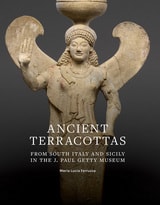
Ancient Terracottas from South Italy and Sicily in the J. Paul Getty Museum
Maria Lucia Ferruzza
J. Paul Getty Trust, The, 2016
Reflecting the Getty's commitment to open content, Ancient Terracottas from South Italy and Sicily in the J. Paul Getty Museum is available online at www.getty.edu/publications/terracottas and may be downloaded for free.

Andrea del Castagno and His Patrons
John R. Spencer
Duke University Press, 1991
Through careful and detailed archival research, Spencer creates a fascinating portrait of Castagno’s patronage as a web, at the center of which was Cosimo de’ Medici, who constituted the focal point of a network of business partnerships, real estate transactions, loans, and special privileges in which the artist’s patrons were enmeshed. The author constructs partial biographies of unknown and lesser-known patrons to show the relation of these patrons to each other and to the artist, demonstrating the degree to which artistic production in Renaissance Italy was tied to politics and economics.
Spencer discusses each of Castagno’s extant and some of his lost paintings, dating the works with greater accuracy than ever before. His understanding of the patrons and of the motivations behind the commissions makes it possible for Spencer to bring new interpretations to many of these works. This book offers a deeper understanding of a particular artist’s life and work while also exploring the larger question of the unique relationship between private patrons and independent artists in the Italian Renaissance.

Antisatire
In Defense of Women, against Francesco BuoninsegniArcangela Tarabotti
Iter Press, 2020
The Other Voice in Early Modern Women: The Toronto Series volume 70

AntoloGaia
Queering the Seventies, A Radical Trans MemoirPorpora Marcasciano
Rutgers University Press, 2024
In this stirring memoir by a member of the first generation of LGBTQ+ activists in Italy, Porpora Marcasciano tells her story and shares the struggles and accomplishments of her fellow activists who achieved so much in the 1970s yet suffered devastating losses during the AIDS epidemic of the 1980s. AntoloGaia offers an insider’s look at the beginnings of the gay liberation movement in Italy and reveals how it was intimately intertwined with other forms of left-wing activism. At the same time, it powerfully conveys the queer joy of a young person from a small village first encountering the vibrant sexual minority communities of Naples, Bologna, and Rome. As Marcasciano starts to embrace her trans identity, she meets the famous anthropologist Pino Simonelli, who introduces her to Naples’s unique femminielli subculture and gives her the name Porporino, which she later shortens to Porpora. In keeping with this story of gender, sexual, and political discovery, AntoloGaia is the first piece of Italian life-writing to use gender-neutral and mixed-gender language.

Apollo and Vulcan
The Art Markets in Italy, 1400-1700Guido Guerzoni
Michigan State University Press, 2011

Aqueduct Hunting in the Seventeenth Century
Raffaele Fabretti's De aquis et aquaeductibus veteris RomaeHarry B. Evans
University of Michigan Press, 2002
Fabretti's treatise, De aquis et aquaeductibus veteris Romae dissertationes tres, is cited as a matter of course by all later scholars working in the area of Roman topography. Its findings--while updated and supplemented by more recent archaeological efforts--have never been fully superseded. Yet despite its enormous importance and impact on scholarly efforts, the De aquis has never yet been translated from the original Latin. Aqueduct Hunting in the Seventeenth Century provides a full translation of and commentary on Fabretti's writings, making them accessible to a broad audience and carefully assessing their scholarly contributions.
Harry B. Evans offers his reader an introduction to Fabretti and his scholarly world. A complete translation and a commentary that focuses primarily on the topographical problems and Fabretti's contribution to our understanding of them are also provided. Evans also assesses the contributions and corrections of later archaeologists and topographers and places the De aquis in the history of aqueduct studies.
Evans demonstrates that Fabretti's conclusions, while far from definitive, are indeed significant and merit wider attention than they have received to date. This book will appeal to classicists and classical archaeologists, ancient historians, and readers interested in the history of technology, archaeology, and Rome and Italy in the seventeenth century.
Harry B. Evans is Professor of Classics, Fordham University.
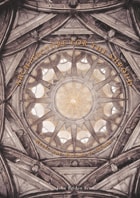
Architecture for the Shroud
Relic and Ritual in TurinJohn Beldon Scott
University of Chicago Press, 2003
In this amply illustrated volume, John Beldon Scott traces the history of the unique relic, focusing especially on the black-marble and gilt-bronze structure Guarino Guarini designed to house and exhibit it. A key Baroque monument, the chapel comprises many unusual architectural features, which Scott identifies and explains, particulary how the chapel's unprecedented geometry and bizarre imagery convey to the viewer the supernatural powers of the object enshrined there. Drawing on early plans and documents, he demonstrates how the architect's design mirrors the Shroud's strange history as well as political aspirations of its owners, the Dukes of Savoy. Exhibiting it ritually, the Savoy prized their relic with its godly vestige as a means to link their dynasty with divine purposes. Guarini, too, promoted this end by fashioning an illusionary world and sacred space that positioned the duke visually so that he appeared close to the Shroud during its ceremonial display. Finally, Scott describes how the additional need for an outdoor stage for the public showing of the relic to the thousands who came to Turin to see it also helped shape the urban plan of the city and its transformation into the Savoyard capital.
Exploring the mystique of this enigmatic relic and investigating its architectural and urban history for the first time, Architecture for the Shroud will appeal to anyone curious about the textile, its display, and the architectural settings designed to enhance its veneration and boost the political agenda of the ruling family.
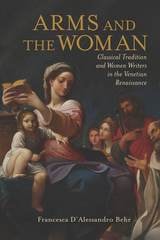
Arms and the Woman
Classical Tradition and Women Writers in the Venetian RenaissanceFrancesca D'Alessandro Behr
The Ohio State University Press, 2018
Arms and the Woman: Classical Tradition and Women Writers in the Venetian Renaissance by Francesca D’Alessandro Behr focuses on the classical reception in the works of female authors active in Venice during the Early Modern Age. Even in this relatively liberal city, women had restricted access to education and were subject to deep-seated cultural prejudices, but those who read and wrote were able, in part, to overcome those limitations.
In this study, Behr explores the work of Moderata Fonte and Lucrezia Marinella and demonstrates how they used knowledge of texts by Virgil, Ovid, and Aristotle to systematically reanalyze the biased patterns apparent both in the romance epic genre and contemporary society. Whereas these classical texts were normally used to bolster the belief in female inferiority and the status quo, Fonte and Marinella used them to envision societies structured according to new, egalitarian ethics. Reflecting on the humanist representation of virtue, Fonte and Marinella insisted on the importance of peace, mercy, and education for women. These authors took up the theme of the equality of genders and participated in the Renaissance querelle des femmes, promoting women’s capabilities and nature.

Arretium (Arezzo)
Edited by Ingrid Edlund-Berry and Cristiana Zaccagnino
University of Texas Press, 2024
A comprehensive examination of the history and excavation of the Etruscan city of Arretium.
Beneath the Italian city of Arezzo lie the remains of Etruscan Arretium. This volume, the first comprehensive treatment of excavations at Arretium, gathers the most up-to-date scholarship on the city and delves into key archaeological discoveries and the stories they tell about life in the Etruscan world.
Chapters explore local history—including the city’s complex political exchanges with Rome—Etruscan religion, Arretium’s role as a center of the arts, and the challenges of excavation amid the bustle of European urban modernity. Editors Ingrid Edlund-Berry and Cristiana Zaccagnino have gathered chapters by expert contributors that detail Arretium’s material culture, including the city’s famed pottery, Arretine ware, which was known across the Mediterranean; terracotta pieces depicting gods and other supernatural beings; and exquisite bronze-work, most notably the piece now known as the Chimaera of Arezzo. One of the few Etruscan cities that continued flourishing after the Roman takeover, Arretium proves to be a trove of archaeological riches and of the historical insights they reveal.
Arte Programmata
Freedom, Control, and the Computer in 1960s ItalyLindsay Caplan
University of Minnesota Press, 2022
Tracing the evolution of the Italian avant-garde’s pioneering experiments with art and technology and their subversion of freedom and control
In postwar Italy, a group of visionary artists used emergent computer technologies as both tools of artistic production and a means to reconceptualize the dynamic interrelation between individual freedom and collectivity. Working contrary to assumptions that the rigid, structural nature of programming limits subjectivity, this book traces the multifaceted practices of these groundbreaking artists and their conviction that technology could provide the conditions for a liberated social life.
Situating their developments within the context of the Cold War and the ensuing crisis among the Italian left, Arte Programmata describes how Italy’s distinctive political climate fueled the group’s engagement with computers, cybernetics, and information theory. Creating a broad range of immersive environments, kinetic sculptures, domestic home goods, and other multimedia art and design works, artists such as Bruno Munari, Enzo Mari, and others looked to the conceptual frameworks provided by this new technology to envision a way out of the ideological impasses of the age.
Showcasing the ingenuity of Italy’s earliest computer-based art, this study highlights its distinguishing characteristics while also exploring concurrent developments across the globe. Centered on the relationships between art, technology, and politics, Arte Programmata considers an important antecedent to the digital age.
As Cruel as Anyone Else
Italians, Colonies and EmpireAngelo Del Boca
Seagull Books, 2024
Between the end of the nineteenth century and over the first half of the twentieth, Italy invaded and occupied the Horn of Africa, Libya, and several other territories. Yet recognition of this history of colonial destruction, racist violence, and genocidal aerial and chemical warfare—carried out not only during the Fascist dictatorship but also under preceding liberal governments—has been consistently repressed beneath the myth that the Italians never truly practiced colonialism.
The late journalist, historian, novelist, campaigner, and former Resistance fighter Angelo Del Boca dismantles this myth. He expertly narrates episodes of state violence committed by Italians both abroad—from Ethiopia to Slovenia, from China to Libya—and “at home” during the civil war following Unification in the 1860s or when the anti-Fascist Resistance faced off against the Republic of Salò after 1943. Attentive to the losses and pain suffered by all sides in war, Del Boca deftly demonstrates how such violence was not only a tool of domination but has also been central to creating and shaping an Italian “people.”
Drawing on a lifetime of interviews as a special correspondent, decades of work in private and state archives, and his own experiences during the Second World War, Del Boca’s popular and influential work has contributed to overturning views of Italian history. Presenting many historical episodes in English for the first time, As Cruel as Anyone Else provides a key to reading contemporary Italy, its place in international politics, and the disturbing permanence of the far-right within mainstream Italian politics.

Assassins against the Old Order
Italian Anarchist Violence in Fin de Siecle EuropeNunzio Pernicone, Fraser Ottanelli
University of Illinois Press, 2018
Nunzio Pernicone and Fraser M. Ottanelli dig into the transnational experiences and the historical, social, cultural, and political conditions behind the phenomenon of anarchist violence in Italy. Looking at political assassinations in the 1890s, they illuminate the public effort to equate anarchy's goals with violent overthrow. Throughout, Pernicone and Ottanelli combine a cutting-edge synthesis of the intellectual origins, milieu, and nature of Italian anarchist violence with vivid portraits of its major players and their still-misunderstood movement.
A bold challenge to conventional thinking, Assassins against the Old Order demolishes a century of myths surrounding anarchist violence and its practitioners.
At the Margins
Minority Groups in Premodern ItalyStephen J. Milner
University of Minnesota Press, 2005
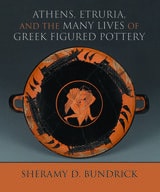
Athens, Etruria, and the Many Lives of Greek Figured Pottery
Sheramy D. Bundrick
University of Wisconsin Press, 2021
Thousands of Greek painted vases have emerged from excavations of tombs, sanctuaries, and settlements throughout Etruria, from southern coastal centers to northern communities in the Po Valley. Using documented archaeological assemblages, especially from tombs in southern Etruria, Bundrick challenges the widely held assumption that Etruscans were hellenized through Greek imports. She marshals evidence to show that Etruscan consumers purposefully selected figured pottery that harmonized with their own local needs and customs, so much so that the vases are better described as etruscanized. Athenian ceramic workers, she contends, learned from traders which shapes and imagery sold best to the Etruscans and employed a variety of strategies to maximize artistry, output, and profit.

Atoms in the Family
My Life with Enrico FermiLaura Fermi
University of Chicago Press, 1995
Autobiography of an Aspiring Saint
Cecilia Ferrazzi
University of Chicago Press, 1996
Born in 1609 into an artisan family, Cecilia Ferrazzi wanted to become a nun. When her parents' death in the plague of 1630 made it financially impossible for her to enter the convent, she refused to marry and as a single laywoman set out in pursuit of holiness. Eventually she improvised a vocation: running houses of refuge for "girls in danger," young women at risk of being lured into prostitution.
Ferrazzi's frequent visions persuaded her, as well as some clerics and acquaintances among the Venetian elite, that she was on the right track. The socially valuable service she was providing enhanced this impresssion. Not everyone, however, was convinced that she was a genuine favorite of God. In 1664 she was denounced to the Inquisition.
The Inquisition convicted Ferrazzi of the pretense of sanctity. Yet her autobiographical act permits us to see in vivid detail both the opportunities and the obstacles presented to seventeenth-century women.