Results by title
2 books match the query 'Iversen, Stefan'
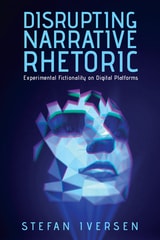
Disrupting Narrative Rhetoric
Experimental Fictionality on Digital PlatformsStefan Iversen
The Ohio State University Press, 2026
Disrupting Narrative Rhetoric investigates how experimental uses of fictionality on digital platforms transform public storytelling, with political and ethical consequences. Focusing on communication that initially misleads only to provoke reflection, Stefan Iversen explores how narrative rhetoric—stories used to persuade within public discourse—can be strategically disrupted to produce what he terms “metanoic reflexivity”: a distinctive mode of afterthought triggered when audiences realize they have read wrong. Drawing from narrative theory, fictionality studies, rhetorical criticism, and digital platform studies, Iversen develops a model for analyzing narratives that play with the boundaries between fiction and nonfiction to motivate action or reconsideration on urgent public issues. These narrative practices—found in humanitarian campaigns, presidential rhetoric, political trolling, and synthetic media—use the digital affordances of platforms like Instagram, X, Reddit, and YouTube to reorient audience expectations and provoke social engagement. Combining theory and close reading, Disrupting Narrative Rhetoric offers a compelling interdisciplinary framework for understanding how narrative experiments can either deepen democratic discourse or contribute to its fragmentation in today’s platformed public spheres.
[more]
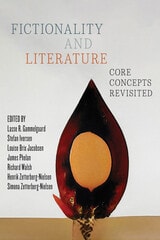
Fictionality and Literature
Core Concepts RevisitedEdited by Lasse R. Gammelgaard, Stefan Iversen, Louise Brix Jacobsen, James Phelan, Richard Walsh, Henrik Zetterberg-Nielsen, and Simona Zetterberg-Nielsen
The Ohio State University Press, 2022
Taking its cues from Richard Walsh’s influential 2007 book, The Rhetoric of Fictionality, Fictionality and Literature sets out to examine the implications of a rhetorical understanding of fictionality. A rhetorical approach understands fictionality and nonfictionality not as binary opposites but as different means to the same end: influencing an audience’s understanding of the world. Arguing that fiction is not just a feature of particular works, such as novels, but an adaptable instrument used to achieve an author’s specific rhetorical goals, the contributors theorize how to reconceive of core literary features and influences such as author, narrator, plot, character, consciousness, metaphor, metafiction/metalepsis, intertextuality, paratext, ethics, and social justice. Combining analyses of a wide range of texts by Colson Whitehead, Charles Dickens, Kazuo Ishiguro, Toni Morrison, Geoffrey Chaucer, and others with historical events such as the Nat Tate biography hoax and the Anders Breivik murders, contributors discuss not only a rhetorical definition of fictionality but also the wider consequences of such a conception. In addition, some chapters within Fictionality and Literature offer alternatives to a rhetorical paradigm, thus expanding the volume’s representation of the current state of the conversation about fictionality in literature.
Contributors:
H. Porter Abbott, Catherine Gallagher, Lasse R. Gammelgaard, Stefan Iversen, Louise Brix Jacobsen, Rikke Andersen Kraglund, Susan S. Lanser, Jakob Lothe, Maria Ma¨kela¨, Greta Olson, Sylvie Patron, James Phelan, Richard Walsh, Wendy Veronica Xin, Henrik Zetterberg-Nielsen, Simona Zetterberg-Nielsen
[more]