Results by title
6 books match the query 'Jackson, Major'
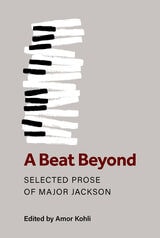
A Beat Beyond
Selected Prose of Major JacksonEdited by Amor Kohli
University of Michigan Press, 2022
In this collection of essays, talks, and reviews, Major Jackson revels in the work of poetry not only to limn and assess the intellectual and spiritual dimensions of poets, but to amplify the controversies and inner conflicts that define our age: political unrest, climate crises, the fallout from bewildering traumas, and the social function of the art of poetry itself. Accessible and critically minded, Jackson returns to the poem as an unparalleled source of linguistic pleasure that structures a multilayered “lyric self.” In his interviews, Jackson illustrates poetry’s distinct ability to mediate the inexplicable while foregrounding the possibilities of human song.
Collected over several decades, these essays find Jackson praising mythmaking in Frank Bidart and Ai’s poetry, expressing bafflement at the silence of white-identified poets in the cause of social and racial justice, unearthing the politics behind Gwendolyn Brooks’s Pulitzer Prize, and marveling at the “hallucinatory speed of thought” in a diverse range of poets including Mei-mei Berssenbrugge, Brenda Hillman, Afaa Michael Weaver, Forrest Gander, and Terrance Hayes. This collection passionately surveys the radical shifts of the art and notes poetry as a necessity for a modern sensibility.
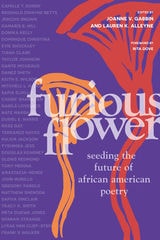
Furious Flower
Seeding the Future of African American PoetryEdited by Joanne V. Gabbin and Lauren K. Alleyne; Foreword by Rita Dove
Northwestern University Press, 2020
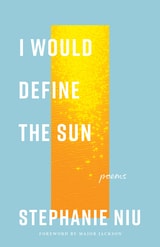
I Would Define the Sun
PoemsStephanie Niu; Foreword by Major Jackson
Vanderbilt University Press, 2025
Finalist for the Kate Tufts Discovery Award, 2026
Stephanie Niu’s I Would Define the Sun, awarded the 2024 Vanderbilt University Literary Prize, is a collection of poems that declare the impossibility of defining something as immense as the sun while striving toward that impossible act. In an era of planetary collapse, filled with bushfires, bleached coral, and burnout, Niu explores what love can do even through estrangement, even through being together at the end of the world. Recycling and folding language through duplexes, sestinas, and echoing couplets, this collection moves across great distances to include Christmas Island, Chinese-American immigration, and the precarity and abundance of the sea through formal and lyric poetry. Refitting the world into a size “made for [her] hands, [her] human tongue,” Niu propels readers into continuous motion as she searches for home.
I Would Define the Sun
PoemsStephanie Niu; Foreword by Major Jackson
Vanderbilt University Press, 2025
Finalist for the Kate Tufts Discovery Award, 2026
Stephanie Niu’s I Would Define the Sun, awarded the 2024 Vanderbilt University Literary Prize, is a collection of poems that declare the impossibility of defining something as immense as the sun while striving toward that impossible act. In an era of planetary collapse, filled with bushfires, bleached coral, and burnout, Niu explores what love can do even through estrangement, even through being together at the end of the world. Recycling and folding language through duplexes, sestinas, and echoing couplets, this collection moves across great distances to include Christmas Island, Chinese-American immigration, and the precarity and abundance of the sea through formal and lyric poetry. Refitting the world into a size “made for [her] hands, [her] human tongue,” Niu propels readers into continuous motion as she searches for home.
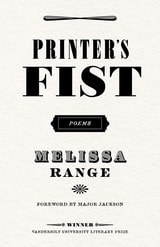
Printer's Fist
PoemsMelissa Range
Vanderbilt University Press, 2026
Melissa Range’s Printer’s Fist, awarded the 2025 Vanderbilt University Literary Prize, is a collection that tells the story of a political movement—its strides and setbacks, its unity and fractures—with a particular emphasis on print culture. Drawing upon more than a decade’s worth of archival research into nineteenth-century antislavery newspapers, pamphlets, broadsides, and more, Range highlights the expansiveness of the movement by focusing not on one, but a chorus of abolitionist voices. Her investment in celebrating Black and women’s histories, in particular, offers an inclusive account of American history, informed not only by thorough research but through a formal, poetic engagement with the past. In exploring how enslaved people’s self-emancipation was a form of resistance that preceded, operated alongside, and intertwined with organized networks of antislavery activists, Printer’s Fist will help facilitate discussions surrounding race, gender, and activism that are grounded in historical fact and emotional truth.