Results by title
3 books match the query 'Jahanbegloo, Ramin'
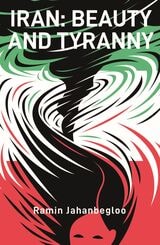
Iran
Beauty and TyrannyRamin Jahanbegloo
Gingko, 2026
Ramin Jahanbegloo turns to ancient philosophy as an antidote to contemporary authoritarianism in Iran.
From the rule of Cyrus the Great to the present day, Iran has been plagued by a recurrent syndrome of tyranny. For Ramin Jahanbegloo, the cure for this persistent cycle lies in a reengagement with the idea of a beautiful society. He presents beauty as an antidote to authoritarianism and as a methodology of freedom: one first taught by the philosophers of ancient Greece, who bound beauty and goodness together in the principle of kalokagathia, and later revived by the German Enlightenment.
A work of hope and faith in the people of Iran, this provocative and timely intervention from the author of The Idea of Persia turns to the past in order to imagine a way forward. Drawing on Hegel, Schiller, Arendt, Camus, and more, Jahanbegloo lays out a vision of how Iran and Iranians might come to live in beautiful freedom.
Nonviolence
An Idea Whose Time Has ComeRamin Jahanbegloo
Haus Publishing, 2023
In this compact book, Ramin Jahanbegloo argues that the time has come for humanity to renew its political, economic, and cultural commitment to the idea of nonviolence. At the core of the work of such towering fighters against oppression as Mahatma Gandhi, Martin Luther King Jr., Nelson Mandela, the Dalai Lama, and Václav Havel, the idea of nonviolence still has much to teach us and much work to do in the ongoing fight for justice worldwide.
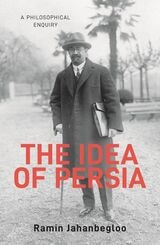
The Idea of Persia
A Philosophical EnquiryRamin Jahanbegloo
Gingko, 2026
This book explores the idea of Persia as a means of investigating the soul of the fascinating nation.
In 1721, the French philosopher Montesquieu posed the question “Comment peut-on être persan?” ("How can one be Persian?") in the title to his famous Persian Letters. After centuries of invasion, murder, destruction, authoritarian rule, decay of political theory, and increasing dissolution in Iran’s politics, this volume is an investigation into what the answer to that question might be today.
The Idea of Persia explores the notion of what it is to be Persian, but not as it has been constituted in the past with reference to the political experience of antiquity, nor as an affirmation of the secular-rational project of modernity. Rather, the book examines the question of what it is to be Persian against the backdrop of centuries in which a common, plural subjectivity of Persian-ness has been continually delayed by those who, with or without ideologies, believed in politics only as a means of ruling or of being ruled without laws or citizenship.
The historical battle for social and political freedoms is still underway in Iran. As the nation wrestles with the possibility of an extended period of political, social, and cultural decline, it is a timely moment to return to the perspective embodied in the enlightened thinking of figures such as the writer and three times prime minister of Iran Mohammed Ali Foroughi (1877–1942) and his vision of a country possessing rational and moral capabilities, and to a possible renaissance of social and political institutions.
The idea of Persia as it is presented here sees hope in the future as the means by which Iranians may liberate themselves from the duality of heroes and saints and remake their political mentality while staying true to an age-old idea of Persia and to freedom as an essential virtue.