Results by title
84 books match the query 'Jameson, Fredric' and 5 start with a
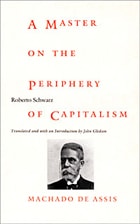
A Master on the Periphery of Capitalism
Machado de AssisRoberto Schwarz
Duke University Press, 2001
Widely acknowledged as the most important novelist to have written in Latin America before 1940, Machado had a surprisingly modern style. Schwarz notes that the unprecedented wit, sarcasm, structural inventiveness, and mercurial changes of tone and subject matter found in The Posthumous Memoirs of Brás Cubas marked a crucial moment in the history of Latin American literature. He argues that Machado’s vanguard narrative reflects the Brazilian owner class and its peculiar status in both national and international contexts, and shows why this novel’s success was no accident. The author was able to confront some of the most prestigious ideologies of the nineteenth century with some uncomfortable truths, not the least of which was that slavery remained the basis of the Brazilian economy.
A Master on the Periphery of Capitalism will appeal to those with interests in Latin American literature, nineteenth century history, and Marxist literary theory.
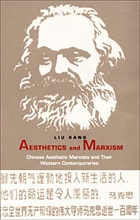
Aesthetics and Marxism
Chinese Aesthetic Marxists and Their Western ContemporariesKang Liu
Duke University Press, 2000
Far from being secondary considerations in Chinese Marxism, aesthetics and culture are in fact principal concerns. In this respect, such Marxists are similar to their Western counterparts, although Europeans have had little understanding of the Chinese experience. Liu traces the genealogy of aesthetic discourse in both modern China and the West since the era of classical German thought, showing where conceptual modifications and divergences have occurred in the two traditions. He examines the work of Mao Zedong, Lu Xun, Li Zehou, Qu Qiubai, and others in China, and from the West he discusses Kant, Schiller, Schopenhauer, and Marxist theorists including Horkheimer, Adorno, Benjamin, and Marcuse. While stressing the diversity of Marxist positions within China as well as in the West, Liu explains how ideas of culture and aesthetics have offered a constructive vision for a postrevolutionary society and have affected a wide field of issues involving the problems of modernity.
Forcefully argued and theoretically sophisticated, this book will appeal to students and scholars of contemporary Marxism, cultural studies, aesthetics, and modern Chinese culture, politics, and ideology.
Against Normalization
Writing Radical Democracy in South AfricaAnthony O'Brien
Duke University Press, 2001
O’Brien brings together an unusual array of contemporary South African writing: cultural theory and debate, worker poetry, black and white feminist writing, Black Consciousness drama, the letters of exiled writers, and postapartheid fiction and film. Paying subtle attention to well-known figures like Nadine Gordimer, Bessie Head, and Njabulo Ndebele, but also foregrounding less-studied writers like Ingrid de Kok, Nise Malange, Maishe Maponya, and the Zimbabwean Dambudzo Marechera, he reveals in their work the construction of a political aesthetic more radically democratic than the current normalization of nationalism, ballot-box democracy, and liberal humanism in culture could imagine. Juxtaposing his readings of these writers with the theoretical traditions of postcolonial thinkers about race, gender, and nation like Paul Gilroy, bell hooks, and Gayatri Spivak, and with others such as Samuel Beckett and Vaclav Havel, O’Brien adopts a uniquely comparatist and internationalist approach to understanding South African writing and its relationship to the cultural settlement after apartheid.
With its appeal to specialists in South African fiction, poetry, history, and politics, to other Africanists, and to those in the fields of colonial, postcolonial, race, and gender studies, Against Normalization will make a significant intervention in the debates about cultural production in the postcolonial areas of global capitalism.
An Innocent Abroad
Lectures in ChinaJ. Hillis Miller
Northwestern University Press, 2015
Since 1988, J. Hillis Miller has traveled to China to lecture on literary theory, especially the role of globalization in literary theory. Over time, he has assisted in the development of distinctively Chinese forms of literary theory, Comparative Literature, and World Literature. The fifteen lectures gathered in An Innocent Abroad span both time and geographic location, reflecting his work at universities across China for more than twenty-five years. More important, they reflect the evolution of Miller’s thinking and of the lectures’ contexts in China as these have markedly changed over the years, especially on either side of Tiananmen Square and in light of China’s economic growth and technological change. A foreword by the leading theorist Fredric Jameson provides additional context.
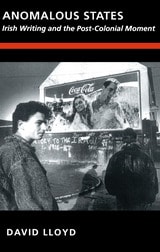
Anomalous States
Irish Writing and the Post-Colonial MomentDavid Lloyd
Duke University Press, 1993
Beginning with Heaney and Beckett, Lloyd shows how in these authors the question of identity connects with the dominance of conservative cultural nationalism and argues for the need to understand Irish culture in relation to the wider experience of colonized societies. A central essay reads Yeats's later works as a profound questioning of the founding of the state. Final essays examine the gradual formation of the state and nation as one element in a cultural process that involves conflict between popular cultural forms and emerging political economies of nationalism and the colonial state. Modern Ireland is thus seen as the product of a continuing process in which, Lloyd argues, the passage to national independence that defines Ireland's post-colonial status is no more than a moment in its continuing history.
Anomalous States makes an important contribution to the growing body of work that connects cultural theory with post-colonial historiography, literary analysis, and issues in contemporary politics. It will interest a wide readership in literary studies, cultural studies, anthropology, and history.