Results by title
412 books match the query 'Japan' and 32 start with a
A Christian Samurai
William J. Farge
Catholic University of America Press, 2016
A Dream of Resistance
The Cinema of Kobayashi MasakiPrince, Stephen
Rutgers University Press, 2017
A Dream of Resistance is the first book in English to explore Kobayashi’s entire career, from the early films he made at Shochiku studio, to internationally-acclaimed masterpieces like The Human Condition, Harakiri, and Samurai Rebellion, and on to his final work for NHK Television. Closely examining how Kobayashi’s upbringing and intellectual history shaped the values of his work, Stephen Prince illuminates the political and religious dimensions of Kobayashi’s films, interpreting them as a prayer for peace in troubled times. Prince draws from a wealth of rare archives, including previously untranslated interviews, material that Kobayashi wrote about his films, and even the young director’s wartime diary. The result is an unprecedented portrait of this singular filmmaker.
A Fictional Commons
Natsume Soseki and the Properties of Modern LiteratureMichael K. Bourdaghs
Duke University Press, 2021
A Games Changer
The International Olympic Committee, Tokyo 2020, and COVID-19Stephen R. Wenn
University of Arkansas Press, 2025
From the emergence of the COVID pandemic in early 2020 through the delayed staging of the Tokyo Olympic games in summer 2021, A Games Changer takes the reader behind the scenes to explore the myriad challenges the International Olympic Committee (IOC) and Japanese officials faced during the months of uncertainty leading up not only to the postponement of the Games but also to their delayed.
Drawing on a thorough review of contemporary newspaper and magazine coverage as well as personal interviews with current and former IOC officials, Stephen R. Wenn and Robert K. Barney examine Japan’s rising excitement in 2019 as preparations for the Games accelerated; whispers of a mysterious disease spreading first in China, then worldwide; organizers’ initial resolve to press forward with the Games; the tumultuous discussions that ultimately resulted in the joint March 2020 decision by Japanese Prime Minister Shinzo Abe and IOC President Thomas Bach to postpone the Games; and the numerous negotiations with venues, media, and sponsors required to extend contracts and protect all parties’ health. Wenn and Barney reveal how human relationships—among planners, politicians, competitors, and vaccine researchers—were vital to presenting an Olympics where, in July and August 2021, world records were set, deferred dreams were achieved, and fears of a superspreader event went unrealized.
While tracing the struggles of multiple athletes who had to pause their Olympic hopes and training as COVID-19 closed the world, Wenn and Barney focus on the journey of Canadian decathlete Damian Warner and his coach, Gar Leyshon. Denied his usual training venues, he prepared for the rescheduled Games with ingenuity, determination, and adaptability, reflective of the resilience demonstrated by Tokyo’s Olympians around the globe. The authors’ close account of Warner’s two days in Tokyo recaptures the excitement and drama of sport that home viewers sorely needed amid pandemic lockdowns and incalculable personal loss.
A History of Japan’s Government-Business Relationship
The Passenger Car IndustryPhyllis A. Genther
University of Michigan Press, 1990

A Page of Madness
Cinema and Modernity in 1920s JapanAaron Gerow
University of Michigan Press, 2008

A Poisonous Cocktail?
Aum Shinrikyo's Path to ViolenceIan Reader
National University of Singapore Press, 1996
This highly acclaimed study describes Aum Shinrikyo’s history, examines the various conflicts it was involved in, and discusses the contents of Asahara’s sermons and prophecies. Reader suggests that the Aum case is not unique but similar to other cases of religious violence.
The March 1995 gas attack on the Tokyo subway system killed 12 people and injured thousands. Massive police raids and the subsequent investigation linked this attack (plus a variety of other criminal activities including murders) to Aum Shinrikyo, a small religious movement whose leader, Asahara Shoko, had prophesied that Armageddon was at hand.
Many questions have been raised by the Aum affair. What were Aum's spiritual roots and the focus of Asahara's teaching? Why did a religious movement ostensibly focused on yoga, meditation, asceticism and the pursuit of enlightenment become involved in violent activities? What factors brought Aum into conflict with society at large, caused it to believe it was the victim of a huge conspiracy to destroy it, and impelled it to experiment with making nerve gasses, build weapons and form its own 'alternative government'?
Ian Reader examines these questions by describing Aum's history, examining the various conflicts it was involved in, and discussing the contents of Asahara's sermons and prophesies. In so doing, he points to a combination of factors which together took Aum down a path of violence. Suggesting that the Aum case is not unique, he shows how it displays similarities with other cases of violence and conflict among religious and political movements in Japan and elsewhere.
A Reckoning
Philippine Trials of Japanese War CriminalsSharon W. Chamberlain
University of Wisconsin Press, 2019
Chamberlain highlights the differing views of Filipinos and Japanese about the trials. The Philippine government aimed to show its commitment to impartial proceedings with just outcomes. In Japan, it appeared that defendants were selected arbitrarily, judges and prosecutors were biased, and lower-ranking soldiers were punished for crimes ordered by their superior officers. She analyzes the broader implications of this divergence as bilateral relations between the two nations evolved and contends that these competing narratives were reimagined in a way that, paradoxically, aided a path toward postwar reconciliation.
A Short History of Tokyo
Jonathan Clements
Haus Publishing, 2020
In this compact history, Jonathan Clements traces Tokyo’s fascinating story from the first forest clearances and the samurai wars to the hedonistic “floating world” of the last years of the Shogunate. He illuminates the Tokyo of the twentieth century with its destruction and redevelopment, boom and bust without forgoing the thousand years of history that have led to the Eastern Capital as we know it. Tokyo is so entwined with the history of Japan that it can be hard to separate them, and A Short History of Tokyo tells both the story of the city itself and offers insight into Tokyo’s position at the nexus of power and people that has made the city crucial to the events of the whole country.
A Storied Sage
Canon and Creation in the Making of a Japanese BuddhaMicah L. Auerback
University of Chicago Press, 2016
Micah L. Auerback follows the changing fortune of the Buddha through the novel uses for the Buddha’s story in high and low culture alike, often outside of the confines of the Buddhist establishment. Auerback argues for the Buddha’s continuing relevance during Japan’s early modern period and links the later Buddhist tradition in Japan to its roots on the Asian continent. Additionally, he examines the afterlife of the Buddha in hagiographic literature, demonstrating that the late Japanese Buddha, far from fading into a ghost of his former self, instead underwent an important reincarnation. Challenging many established assumptions about Buddhism and its evolution in Japan, A Storied Sage is a vital contribution to the larger discussion of religion and secularization in modernity.

AIDS in Industrialized Democracies
Passions, Politics, and PoliciesBayer, Ronald
Rutgers University Press, 1992
In the ten years since the first cases of AIDS were reported, the disease has spread around the world. Every country has had to come up with policies suited to its own conditions, economy, culture, and institutions. The differences among their approaches are striking. This volume, the first international comprehensive comparison of responses to AIDS, is a unique guide to the world's most urgent public health crisis.
Sixteen leading experts in public health, social science, government, and public policy from USA, Canada, Germany, Australia, Spain, Britain, France, the Netherlands, Denmark, Sweden, and Japan candidly recount and analyze the responses of their own nations and comment on the lessons that can be drawn from each country's experience. For each country, they look critically at the tragic statistics of AIDS incidence; the circumstances of AIDS's first appearance; public health traditions of mandatory screening, contact tracing, and quarantine; attitudes toward drug abuse, homosexuality, sex education; publicity about AIDS; legal and customary protections of civil rights, minority groups, medical confidentiality; access to health care and insurance; and the interplay of formal and informal interest groups in shaping policy. The spectrum of AIDS policy ranges from severe "contain-and-control" programs to much more liberal plans based on education, cooperation, and inclusion.
No matter what policy a nation has constructed to deal with AIDS, the coming decade will test how well that policy conforms to democratic ideals. By scrutinizing the responses to AIDS so far, this book aims to give countries around the world a chance to learn from each others' mistakes and triumphs. It will be essential reading for all students and professionals in public health and public policy.

Absolute Erotic, Absolute Grotesque
The Living, Dead, and Undead in Japan's Imperialism, 1895-1945Mark Driscoll
Duke University Press, 2010
Admiral Togo
Nelson of the EastJonathan Clements
Haus Publishing, 2010
Ageing with Smartphones in Japan
Care in a Visual Digital AgeLaura Haapio-Kirk
University College London, 2024
Ageing with Smartphones in Japan examines sixteen months of ethnographic research following older adults, age fifty and up, in urban Kyoto and rural Kochi Prefecture, Japan as they navigate social and personal shifts post-retirement in the age of the smartphone. It attempts to answer what this transition means for friendship, gendered labor, multigenerational living, internal migration, health, as well as life purpose for older adults. This book closely investigates how the smartphone challenges gender-based norms and how older adults creatively navigate them. Using comics, drawings, and fieldwork sketches it also explores how they use digital visual communication to socialize with friends and family.
Aging Issues in the United States and Japan
Edited by Seiritsu Ogura, Toshiaki Tachibanaki, and David A. Wise
University of Chicago Press, 2001
Given the undeniable global importance of the Japanese and U.S. economies, these innovative essays shed welcome new light on the complex correlations between aging and economic behavior. This insightful work not only deepens our understanding of the Japanese and American economic landscapes but, through careful examination of the comparative social and economic data, clarifies the complex relation between aging societies, public policies, and economic outcomes.
Aging and Loss
Mourning and Maturity in Contemporary JapanDanely, Jason
Rutgers University Press, 2015
Based on nearly a decade of research, Aging and Loss examines how the landscape of aging is felt, understood, and embodied by older adults themselves. In detailed portraits, anthropologist Jason Danely delves into the everyday lives of older Japanese adults as they construct narratives through acts of reminiscence, social engagement and ritual practice, and reveals the pervasive cultural aesthetic of loss and of being a burden.
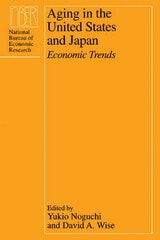
Aging in the United States and Japan
Economic TrendsEdited by Yukio Noguchi and David A. Wise
University of Chicago Press, 1994
With essays on labor force participation and retirement, housing equity and the economic status of the elderly, budget implications of an aging population, and financing social security and health care in the 1990s, this volume covers a broad spectrum of issues related to the economics of aging. Among the book's findings are that workers are retiring at an increasingly earlier age in both countries and that, as the populations age, baby boomers in the United States will face diminishing financial resources as the ratio of retirees to workers sharply increases.
The result of a joint venture between the National Bureau of Economic Research and the Japan Center for Economic Research, this book complements Housing Markets in the United States and Japan (1994) by integrating research on housing markets with economic issues of the aged in the United States and Japan.

Agricultural Development in Japan
The Land Improvement District in Concept and PracticeGil Latz
University of Chicago Press, 1989
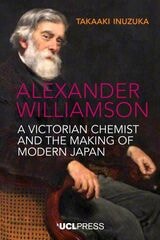
Alexander Williamson
A Victorian Chemist and the Making of Modern JapanTakaaki Inuzuka
University College London, 2021
Alexander Williamson was a leading scientist and professor of chemistry at University College London in the late nineteenth century. He taught and cared for visiting Japanese students, assisting them with their goal of modernizing Japan. This short, accessible biography explores his contribution to nineteenth-century science, as well as his lasting impact on Japanese society. In 1863 five students from the Chōshū clan, with a desperate desire to learn from the West, made their way to England. They were put in the care of Williamson and his wife. Their mission was to learn about cutting-edge Western technology, science, economics, and politics. When they returned home, they rapidly became leading figures in Japanese life. The remarkable story of the part Williamson and University College London played in the modernization of Japan is little known today. This biography will promote a deeper understanding of Williamson’s scientific innovations and his legacy for Anglo-Japanese relations.

All the Fish in the Sea
Maximum Sustainable Yield and the Failure of Fisheries ManagementCarmel Finley
University of Chicago Press, 2011
Carmel Finley reveals that the fallibility of MSY lies at its very inception—as a tool of government rather than science. The foundational doctrine of MSY emerged at a time when the US government was using science to promote and transfer Western knowledge and technology, and to ensure that American ships and planes would have free passage through the world’s seas and skies. Finley charts the history of US fisheries science using MSY as her focus, and in particular its application to halibut, tuna, and salmon fisheries. Fish populations the world over are threatened, and All the Fish in the Sea helps to sound warnings of the effect of any management policies divested from science itself.
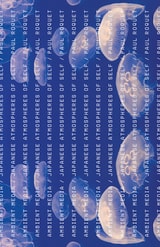
Ambient Media
Japanese Atmospheres of SelfPaul Roquet
University of Minnesota Press, 2016
Ambient Media examines music, video art, film, and literature as tools of atmospheric design in contemporary Japan, and what it means to use media as a resource for personal mood regulation. Paul Roquet traces the emergence of ambient styles from the environmental music and Erik Satie boom of the 1960s and 1970s to the more recent therapeutic emphasis on healing and relaxation.
Focusing on how an atmosphere works to reshape those dwelling within it, Roquet shows how ambient aesthetics can provide affordances for reflective drift, rhythmic attunement, embodied security, and urban coexistence. Musicians, video artists, filmmakers, and novelists in Japan have expanded on Brian Eno’s notion of the ambient as a style generating “calm, and a space to think,” exploring what it means to cultivate an ambivalent tranquility set against the uncertain horizons of an ever-shifting social landscape. Offering a new way of understanding the emphasis on “reading the air” in Japanese culture, Ambient Media documents both the adaptive and the alarming sides of the increasing deployment of mediated moods.
Arguing against critiques of mood regulation that see it primarily as a form of social pacification, Roquet makes a case for understanding ambient media as a neoliberal response to older modes of collective attunement—one that enables the indirect shaping of social behavior while also allowing individuals to feel like they are the ones ultimately in control.
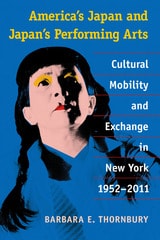
America's Japan and Japan's Performing Arts
Cultural Mobility and Exchange in New York, 1952-2011Barbara E. Thornbury
University of Michigan Press, 2013
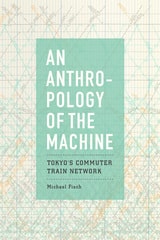
An Anthropology of the Machine
Tokyo's Commuter Train NetworkMichael Fisch
University of Chicago Press, 2018
An Anthropology of the Machine is a creative ethnographic study of the culture, history, and experience of commuting in Tokyo. At the same time, it is a theoretically ambitious attempt to think through our very relationship with technology and our possible ecological futures. Fisch provides an unblinking glimpse into what it might be like to inhabit a future in which more and more of our infrastructure—and the planet itself—will have to operate beyond capacity to accommodate our ever-growing population.

An Armchair Traveller's History of Tokyo
Jonathan Clements
Haus Publishing, 2018
Tokyo, meaning “Eastern Capital,” has only enjoyed that name and status for 150 years. Before that, it was a medieval outpost designed to keep watch over rich farmlands. But this seemingly unassuming geographical location ultimately led to its status as a supercity. Though the imperial court ruled Japan from the sleepy city of Kyoto, the landowners of the Kanto plain where Tokyo lies held the true wealth and power in Japan, which they eventually asserted in a series of bloody civil wars. The Tokyo region became the administrative center of Japan’s Shogun overlords and the site of a vibrant urban culture home to theaters, taverns, and brothels. After the Meiji Restoration in 1868, it became Japan’s true capital, home to the emperors, the seat of government, and a site of rapid urban growth.
Anyone who’s ever longed to look upon Mount Fuji, embody the bravery of the Samurai, or savor the world’s finest sushi will find themselves transported from the comfort of their armchair while reading Clements’s account of Tokyo.

Anime's Identity
Performativity and Form beyond JapanStevie Suan
University of Minnesota Press, 2021
A formal approach to anime rethinks globalization and transnationality under neoliberalism
Anime has become synonymous with Japanese culture, but its global reach raises a perplexing question—what happens when anime is produced outside of Japan? Who actually makes anime, and how can this help us rethink notions of cultural production? In Anime’s Identity, Stevie Suan examines how anime’s recognizable media-form—no matter where it is produced—reflects the problematics of globalization. The result is an incisive look at not only anime but also the tensions of transnationality.
Far from valorizing the individualistic “originality” so often touted in national creative industries, anime reveals an alternate type of creativity based in repetition and variation. In exploring this alternative creativity and its accompanying aesthetics, Suan examines anime from fresh angles, including considerations of how anime operates like a brand of media, the intricacies of anime production occurring across national borders, inquiries into the selfhood involved in anime’s character acting, and analyses of various anime works that present differing modes of transnationality.
Anime’s Identity deftly merges theories from media studies and performance studies, introducing innovative formal concepts that connect anime to questions of dislocation on a global scale, creating a transformative new lens for analyzing popular media.

Anime's Knowledge Cultures
Geek, Otaku, ZhaiJinying Li
University of Minnesota Press, 2024
Unlocking the technosocial implications of global geek cultures
Why has anime, a “low-tech” medium from last century, suddenly become the cultural “new cool” in the information age? Through the lens of anime and its transnational fandom, Jinying Li explores the meanings and logics of “geekdom” as one of the most significant sociocultural groups of our time. In Anime’s Knowledge Cultures, Li shifts the center of global geography in knowledge culture from the computer boys in Silicon Valley to the anime fandom in East Asia.
Drawing from film studies, animation studies, media theories, fan studies, and area studies, she provides broad cultural and theoretical explanations of anime’s appeal to a new body of tech-savvy knowledge workers and consumers commonly known as geeks, otaku, or zhai. Examining the forms, techniques, and aesthetics of anime, as well as the organization, practices, and sensibilities of its fandom, Anime’s Knowledge Cultures is at once a theorization of anime as a media environment as well as a historical and cultural study of transnational geekdom as a knowledge culture. Li analyzes anime culture beyond the national and subcultural frameworks of Japan or Japanese otaku, instead theorizing anime’s transnational, transmedial network as the epitome of the postindustrial knowledge culture of global geekdom.
By interrogating the connection between the anime boom and global geekdom, Li reshapes how we understand the meanings and significance of anime culture in relation to changing social and technological environments.

Anime’s Media Mix
Franchising Toys and Characters in JapanMarc Steinberg
University of Minnesota Press, 2012
In Anime’s Media Mix, Marc Steinberg convincingly shows that anime is far more than a style of Japanese animation. Beyond its immediate form of cartooning, anime is also a unique mode of cultural production and consumption that led to the phenomenon that is today called “media mix” in Japan and “convergence” in the West.
According to Steinberg, both anime and the media mix were ignited on January 1, 1963, when Astro Boy hit Japanese TV screens for the first time. Sponsored by a chocolate manufacturer with savvy marketing skills, Astro Boy quickly became a cultural icon in Japan. He was the poster boy (or, in his case, “sticker boy”) both for Meiji Seika’s chocolates and for what could happen when a goggle-eyed cartoon child fell into the eager clutches of creative marketers. It was only a short step, Steinberg makes clear, from Astro Boy to Pokémon and beyond.
Steinberg traces the cultural genealogy that spawned Astro Boy to the transformations of Japanese media culture that followed—and forward to the even more profound developments in global capitalism supported by the circulation of characters like Doraemon, Hello Kitty, and Suzumiya Haruhi. He details how convergence was sparked by anime, with its astoundingly broad merchandising of images and its franchising across media and commodities. He also explains, for the first time, how the rise of anime cannot be understood properly—historically, economically, and culturally—without grasping the integral role that the media mix played from the start. Engaging with film, animation, and media studies, as well as analyses of consumer culture and theories of capitalism, Steinberg offers the first sustained study of the Japanese mode of convergence that informs global media practices to this day.
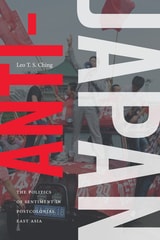
Anti-Japan
The Politics of Sentiment in Postcolonial East AsiaLeo T. S. Ching
Duke University Press, 2019
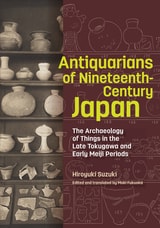
Antiquarians of Nineteenth-Century Japan
The Archaeology of Things in the Late Tokugawa and Early Meiji PeriodsHiroyuki Suzuki
J. Paul Getty Trust, The, 2022
Originally published in Japanese, Antiquarians of Nineteenth-Century Japan looks at the approach toward object-based research across the late Tokugawa and early Meiji periods, which were typically kept separate, and elucidates the intellectual continuities between these eras. Focusing on the top-down effects of the professionalizing of academia in the political landscape of Meiji Japan, which had advanced by attacking earlier modes of scholarship by antiquarians, Suzuki shows how those outside the government responded, retracted, or challenged new public rules and values. He explores the changing process of evaluating objects from the past in tandem with the attitudes and practices of antiquarians during the period of Japan’s rapid modernization. He shows their roots in the intellectual sphere of the late Tokugawa period while also detailing how they adapted to the new era. Suzuki also demonstrates that Japan’s antiquarians had much in common with those from Europe and the United States.
Art historian Maki Fukuoka provides an introduction to the English translation that highlights the significance of Suzuki’s methodological and intellectual analyses and shows how his ideas will appeal to specialists and nonspecialists alike.
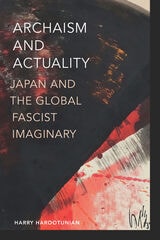
Archaism and Actuality
Japan and the Global Fascist ImaginaryHarry Harootunian
Duke University Press, 2023

Attu Boy
A Young Alaskan's WWII MemoirNick Golodoff
University of Alaska Press, 2015
One of those survivors, Nick Golodoff, became a prisoner of war at just six years old. He was among the dozens of Unangan Attu residents swept away to Hokkaido, and one of only twenty-five to survive. Attu Boy tells Golodoff’s story of these harrowing years as he found both friendship and cruelty at the hands of the Japanese. It offers a rare look at the lives of civilian prisoners and their captors in WWII-era Japan. It also tells of Golodoff’s bittersweet return to a homeland torn apart by occupation and forced internments. Interwoven with other voices from Attu, this richly illustrated memoir is a testament to the struggles, triumphs, and heartbreak of lives disrupted by war.
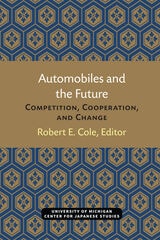
Automobiles and the Future
Competition, Cooperation, and ChangeRobert E. Cole, Editor
University of Michigan Press, 1983